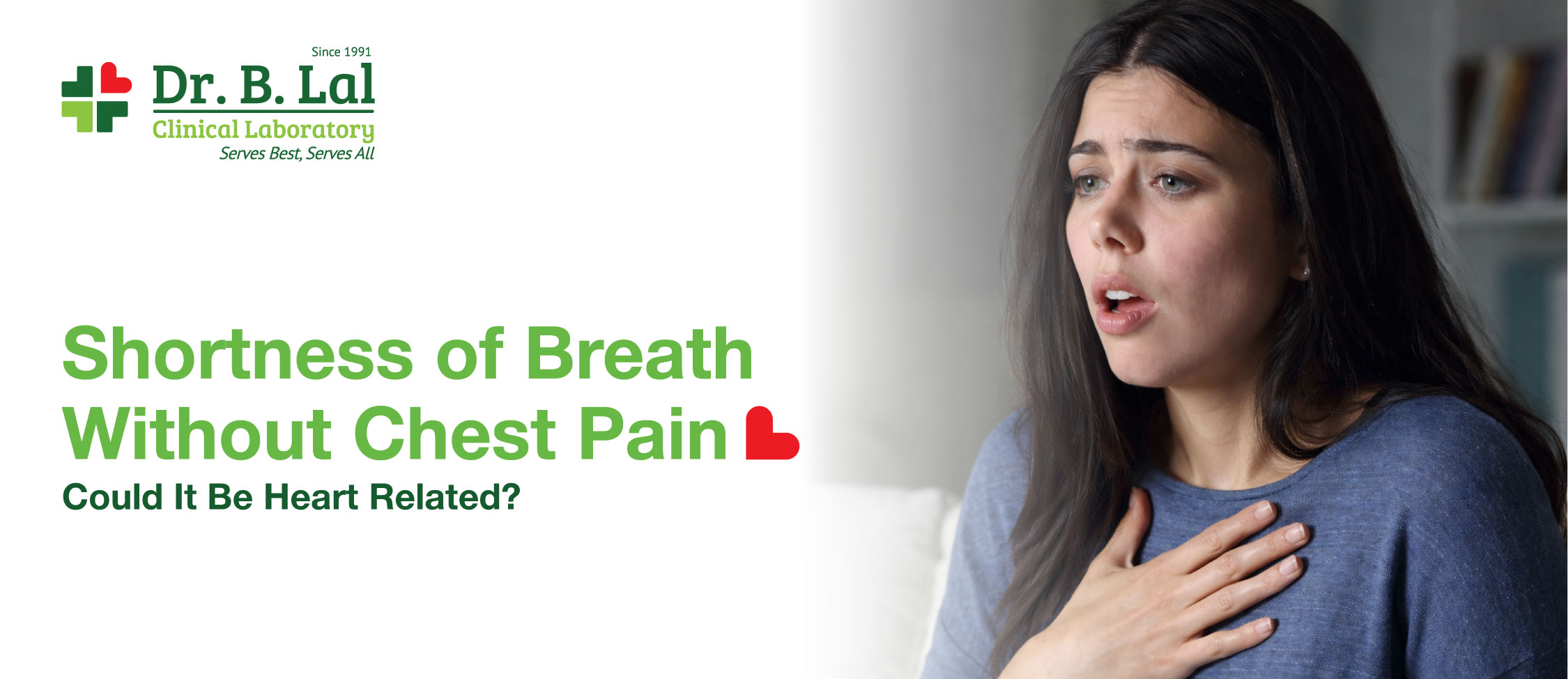
When people think about heart problems, they usually imagine severe chest pain. Tightness. Pressure. Something dramatic. But what if you’re experiencing shortness of breath without chest pain? That’s where confusion starts.
Many people ignore breathlessness if there is no chest discomfort. They assume it’s stress, low stamina, acidity, or maybe just being out of shape. And sometimes, yes, it is harmless. But not always.
In some cases, shortness of breath without chest pain could still be heart related. Let’s understand how.
What Does Shortness of Breath Actually Mean?
Shortness of breath (also called dyspnea) is the feeling that you’re not getting enough air. You may feel:
- Difficulty taking a deep breath
- Tightness while breathing
- Breathlessness during mild activity
- Sudden unexplained air hunger
It can happen during exercise, climbing stairs, or even at rest in more serious cases. Now the important question — does it always involve chest pain if it’s heart-related? No. Not necessarily.
Can Heart Problems Cause Breathlessness Without Chest Pain?
Yes, they can. Especially in:
- Women
- Elderly individuals
- Diabetic patients
These groups often show “atypical” heart symptoms. Instead of classic chest pain, they may experience:
- Unusual fatigue
- Breathlessness
- Nausea
- Dizziness
Which makes diagnosis slightly delayed sometimes.
How Can the Heart Cause Shortness of Breath?
Your heart pumps oxygen-rich blood throughout the body. If the heart isn’t pumping efficiently, oxygen supply reduces.
This can lead to breathlessness.
Here are some heart-related conditions that may cause shortness of breath without chest pain:
1. Heart Failure (Early Stage)
In early heart failure, the heart’s pumping ability weakens gradually.
Symptoms may include:
- Breathlessness during activity
- Swelling in legs
- Fatigue
- Difficulty lying flat
Chest pain may not always be present. Some people only notice that climbing stairs feels unusually exhausting.
2. Silent Heart Attack
This sounds scary, but it does happen. A silent heart attack may not present with dramatic chest pain. Instead, symptoms can be:
- Sudden shortness of breath
- Sweating
- Lightheadedness
- Extreme weakness
Women are more likely to experience these atypical signs. That’s why breathlessness should not be ignored if it feels new or unusual.
3. Coronary Artery Disease
Blocked arteries may reduce blood supply to the heart muscle. Instead of sharp chest pain, some individuals experience:
- Breathlessness during exertion
- Reduced stamina
- Unexplained fatigue
Especially if risk factors like diabetes, high blood pressure, or high cholesterol are present.
When Is Shortness of Breath Likely Not Heart Related?
Not every episode of breathlessness is due to the heart. Common non-cardiac causes include:
- Anxiety or panic attacks
- Asthma
- Lung infections
- Anemia
- Thyroid imbalance
- Obesity
- Deconditioning (low fitness level)
For example, anemia reduces oxygen-carrying capacity of blood, which can mimic heart-related breathlessness.
So proper evaluation is important.
Red Flags You Should Not Ignore
Shortness of breath without chest pain becomes concerning if it is:
- Sudden and severe
- Worsening over days or weeks
- Associated with leg swelling
- Accompanied by dizziness or fainting
- Occurring even at rest
- Present with excessive sweating
If you experience these symptoms, medical consultation is important. Especially if you have risk factors like:
- Diabetes
- High blood pressure
- Smoking history
- Family history of heart disease
- High cholesterol
Why Women Often Miss Heart Symptoms
This is important. Women frequently experience non-classic heart symptoms. Instead of crushing chest pain, they may feel:
- Unusual breathlessness
- Back pain
- Jaw pain
- Fatigue
- Nausea
Because these symptoms don’t look like “heart attack” signs shown in movies, they are often ignored. And delay can be risky.
How Doctors Evaluate Breathlessness
If you report shortness of breath without chest pain, your doctor may suggest:
- ECG
- Echocardiography
- Stress test
- Chest X-ray
- Blood tests (including hemoglobin and thyroid)
Sometimes the cause turns out to be simple. Sometimes it needs further investigation.But guessing at home is not advisable.
Can Anxiety Cause Breathlessness Without Chest Pain?
Yes, very commonly. Anxiety-related breathlessness often feels like:
- Inability to take a full breath
- Tight chest
- Rapid breathing
- Tingling in hands
It may come and go suddenly.
But anxiety should be considered only after ruling out physical causes, especially if symptoms are new.
When to Seek Emergency Care
Seek immediate medical help if shortness of breath:
- Starts suddenly and is severe
- Is associated with fainting
- Occurs with sweating and nausea
- Happens with irregular heartbeat
Even without chest pain, these can signal serious heart or lung problems.
Better to be cautious than regret later.
Final Thoughts
So, shortness of breath without chest pain — could it be heart related? Yes, it could. Not always. But sometimes. The absence of chest pain does not completely rule out heart problems, especially in women, elderly individuals, and diabetics. If breathlessness feels unusual, persistent, or worsening, it’s better to get evaluated rather than assuming it’s just stress or low stamina.
Because heart symptoms don’t always follow textbook patterns. And listening to your body early can prevent bigger complications later.