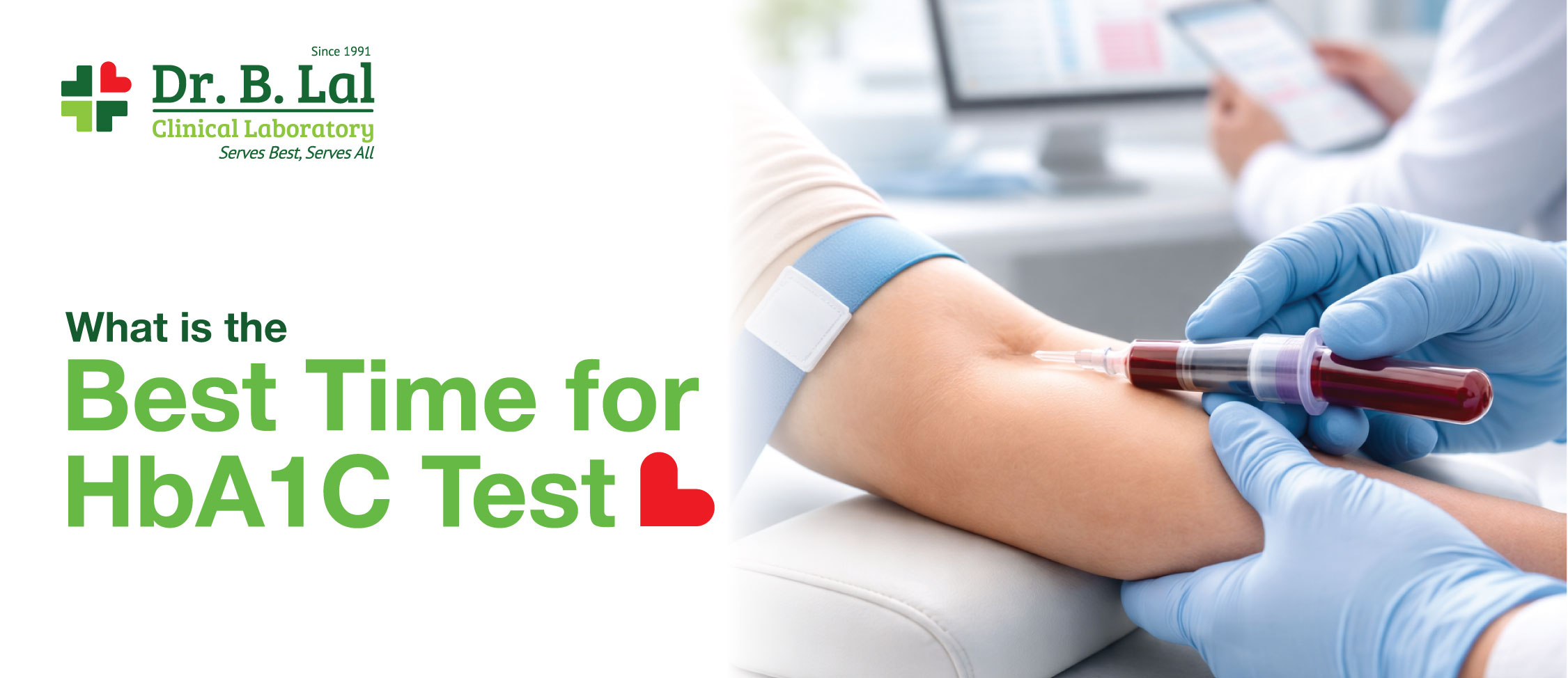
If you’ve ever been advised a diabetes test, you might have come across the HbA1C test. It’s one of the most commonly recommended tests to understand long-term blood sugar levels.
But many people still get confused about one thing — what is the best time for HbA1C test? Should it be done fasting? Morning only? After meals?
The answer is actually simpler than most people think. Still, there are a few small details that are worth knowing.
What Is HbA1C Test?
HbA1C (also called glycated hemoglobin test) measures the average blood sugar levels over the past 2–3 months.
Unlike fasting or random sugar tests, which show sugar levels at a particular moment, HbA1C gives a broader picture.
It works by measuring how much glucose is attached to hemoglobin in red blood cells.
So instead of showing “today’s sugar,” it shows a trend over time.
What Is the Best Time for HbA1C Test?
The most important point — HbA1C test can be done at any time of the day.
Yes, you don’t need to fast. You don’t need to schedule it strictly in the morning either.
You can do the test:
- In the morning
- In the afternoon
- Even after meals
Food intake does not significantly affect HbA1C levels because the test reflects long-term sugar control.
That’s why it is very convenient.
Do You Need Fasting for HbA1C Test?
No, fasting is not required for HbA1C test.
You can eat and drink normally before giving the sample.
However, if your doctor has advised other tests along with HbA1C (like fasting blood sugar or lipid profile), then fasting may be required for those tests.
So always check what tests are included.
Why HbA1C Timing Is Flexible
HbA1C measures average glucose exposure over several weeks, not immediate sugar levels.
Because of this:
- A single meal does not affect the result
- Time of day does not matter much
- Minor daily fluctuations are not relevant
That’s what makes HbA1C different from other diabetes tests.
It focuses more on patterns rather than momentary values.
When Should You Get an HbA1C Test Done?
Even though there is no “best time of day,” there are certain situations when HbA1C testing becomes important.
You should consider it if:
- You have symptoms like frequent urination or excessive thirst
- You have family history of diabetes
- You are overweight or sedentary
- Your previous blood sugar levels were borderline
- You are already diagnosed with diabetes (for monitoring)
Doctors usually recommend doing HbA1C every 3 months in diabetic patients.
What Is a Normal HbA1C Level?
HbA1C results are usually interpreted as:
- Below 5.7% → Normal
- 5.7% – 6.4% → Prediabetes
- 6.5% or higher → Diabetes
For people already diagnosed with diabetes, doctors may set individual target ranges.
Again, interpretation should always be done in context of overall health.
Can HbA1C Results Be Affected by Other Factors?
Yes, in some cases HbA1C results may be influenced by factors other than blood sugar.
These include:
- Anemia
- Certain hemoglobin disorders
- Recent blood loss or transfusion
- Kidney or liver disease
So if results don’t match symptoms, doctors may order additional tests.
Why HbA1C Test Is Important
HbA1C helps in:
- Diagnosing diabetes
- Monitoring long-term sugar control
- Adjusting treatment plans
- Reducing risk of complications
It gives a more stable and reliable picture compared to single-time sugar readings.
That’s why it is widely used.
Final Thoughts
So, what is the best time for HbA1C test?
Honestly, there is no strict timing. You can do it at any time of the day, with or without fasting.
What matters more is regular monitoring and following your doctor’s advice.
HbA1C is a powerful test because it shows long-term trends, not just temporary fluctuations.
And when it comes to diabetes, understanding trends is what really helps in managing the condition better.
Sometimes simple tests like this can give a lot of clarity about your health, more than we expect.