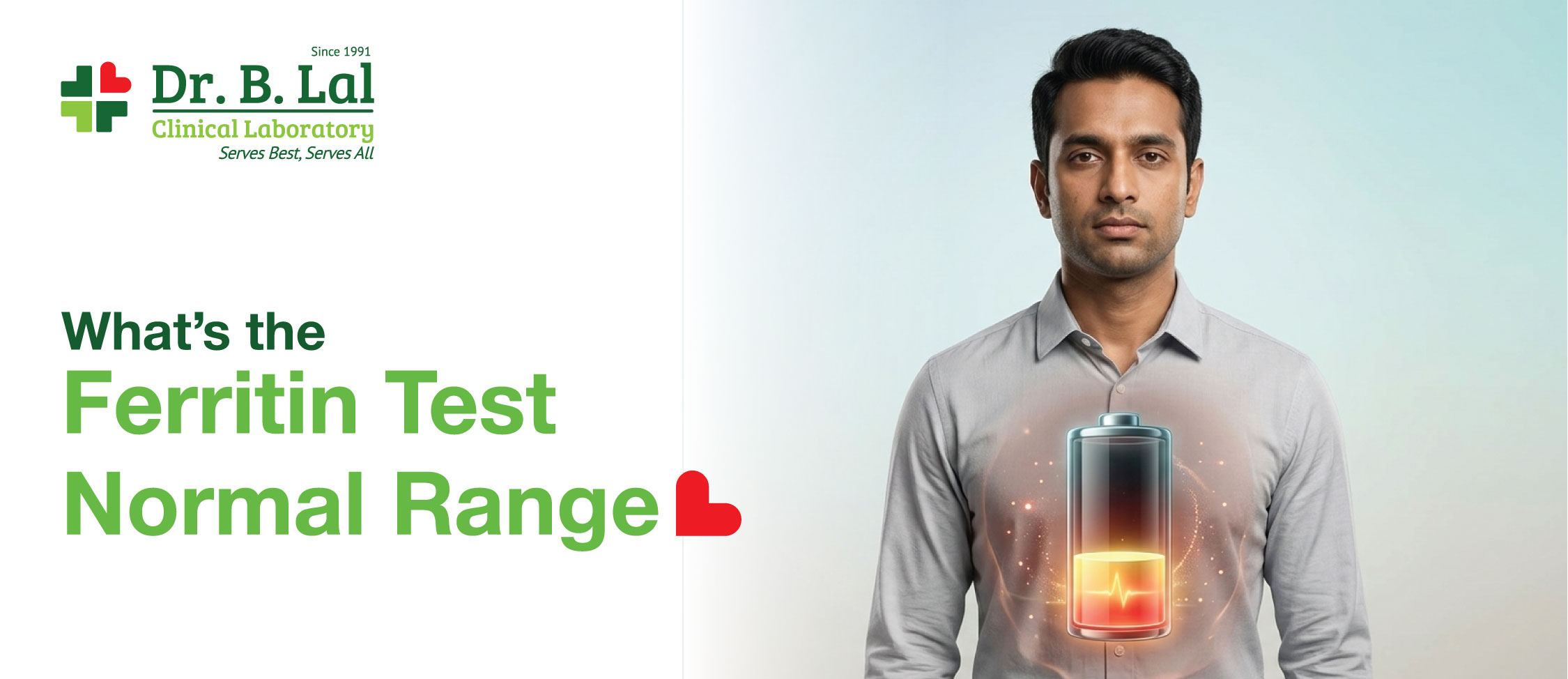
If you often feel tired, weak, dizzy, or notice hair fall, your doctor may suggest a Ferritin test. It is one of the most important blood tests to check your iron stores in the body.
It is a common misconception to think of ferritin as iron, but there is some difference between the two. Iron is the mineral that your body uses on a daily basis, whereas ferritin is the protein that stores iron for future use. Thus, the test reveals how much iron is stored in your body.
Here, in this blog post, we would be learning about ferritin test range, significance, and other details in very easy language.
What Is a Ferritin Test?
A Ferritin test is a blood test that measures the amount of ferritin protein in your blood.
Since ferritin stores iron, the result gives a clear idea about your body’s total iron reserve.
Doctors usually recommend this test when someone has symptoms like:
- Constant tiredness
- Weakness
- Pale skin
- Hair fall
- Frequent headache
- Shortness of breath
- Heavy periods
- Suspected anemia
- Iron overload condition
It is often advised along with:
- CBC (Complete Blood Count)
- Iron Profile
- TIBC
- Hemoglobin
- Transferrin Saturation
These tests together help in understanding the exact cause of iron imbalance.
Read Also: Serum Ferritin Test: What Your Iron Storage Levels Reveal
Ferritin Test Normal Range
The normal ferritin range can vary from lab to lab, but commonly used adult reference values are:
- Men: 30 to 400 ng/mL
- Women: 15 to 150 ng/mL
Some labs may also report:
- Adult men: 24 to 336 ng/mL
- Adult women: 11 to 307 ng/mL
So, if you are checking your report, always compare it with the reference range printed on the report itself.
Ferritin Normal Range by Age
Ferritin levels may also change with age:
- Children: usually lower than adults
- Women before menopause: lower due to monthly blood loss
- Older adults: levels may become slightly higher
- Pregnant women: may show lower ferritin due to increased iron need
That is why age and gender matter a lot while interpreting results.
What Does Low Ferritin Mean?
A low ferritin level usually means low iron stores.
This is one of the earliest signs of iron deficiency, even before hemoglobin starts falling.
Reasons include:
- Poor iron-rich diet
- Heavy menstrual bleeding
- Pregnancy
- Internal bleeding
- Poor absorption
- Stomach or intestine issues
- Frequent blood donation
Symptoms of Low Ferritin
Low ferritin may cause:
- Extreme fatigue
- Hair loss
- Weakness
- Brain fog
- Fast heartbeat
- Dizziness
- Restless leg
- Brittle nails
In many case, ferritin below 15–30 ng/mL strongly suggests iron deficiency.
If ignored for too long, it can lead to iron deficiency anemia.
What Does High Ferritin Mean?
A high ferritin level does not always mean high iron.
Ferritin can rise due to many other reasons because it is also an inflammation marker.
Common causes of high ferritin:
- Liver disease
- Chronic infection
- Inflammation
- Obesity
- Alcohol use
- Iron overload
- Hemochromatosis
- Frequent blood transfusion
- Metabolic syndrome
Very high levels, especially above 1000 ng/mL, may need urgent medical attention.
Doctors usually check ferritin with CRP, liver tests, and iron saturation to find the exact reason.
Why Is Ferritin Important?
Ferritin is one of the best test for detecting hidden iron deficiency.
Sometimes hemoglobin looks normal, but ferritin is already low.
This means your body’s iron storage is getting empty, and symptoms may soon start.
That is why ferritin is useful for:
- Detecting early anemia
- Monitoring iron treatment
- Checking iron overload
- Evaluating chronic fatigue
- Hair fall investigation
- Pregnancy health checks
Who Should Get a Ferritin Test?
You should consider this test if you have:
- Ongoing tiredness
- Hair thinning
- Heavy menstrual cycle
- Frequent weakness
- Low hemoglobin
- Thyroid-like fatigue symptom
- Long illness
- Suspected liver inflammation
- Family history of iron disorder
It is especially helpful for:
- Women
- Pregnant women
- Vegetarians
- Athletes
- Senior citizens
- People with chronic diseases
How to Prepare for the Ferritin Test?
Usually, fasting is not always required, but some doctors may suggest doing it with an iron profile in fasting condition.
Simple tips:
- Drink enough water
- Avoid iron supplements before the test unless advised
- Inform your doctor about ongoing medicine
- Tell them if you recently had fever or infection
This helps in more accurate interpretation.
Can Ferritin Be Normal but Iron Still Low?
Yes, this is possible.
- Ferritin can sometimes appear normal or even high during:
- Infection
- Inflammation
- Fatty liver
- Autoimmune disease
- Obesity
In such cases, doctors do not rely only on ferritin.
They may suggest:
- Serum Iron
- TIBC
- Transferrin Saturation
- CBC
- CRP
- ESR
This gives a full picture of iron health.
Final Thoughts
The ferritin test normal range generally falls between 30–400 ng/mL in men and 15–150 ng/mL in women, but slight differences are normal between labs.
A low ferritin level often points to iron deficiency, while a high value may suggest inflammation, liver issues, or iron overload.
The most important thing is not to self-diagnose from one number alone. Ferritin should always be read with your symptoms and other blood tests