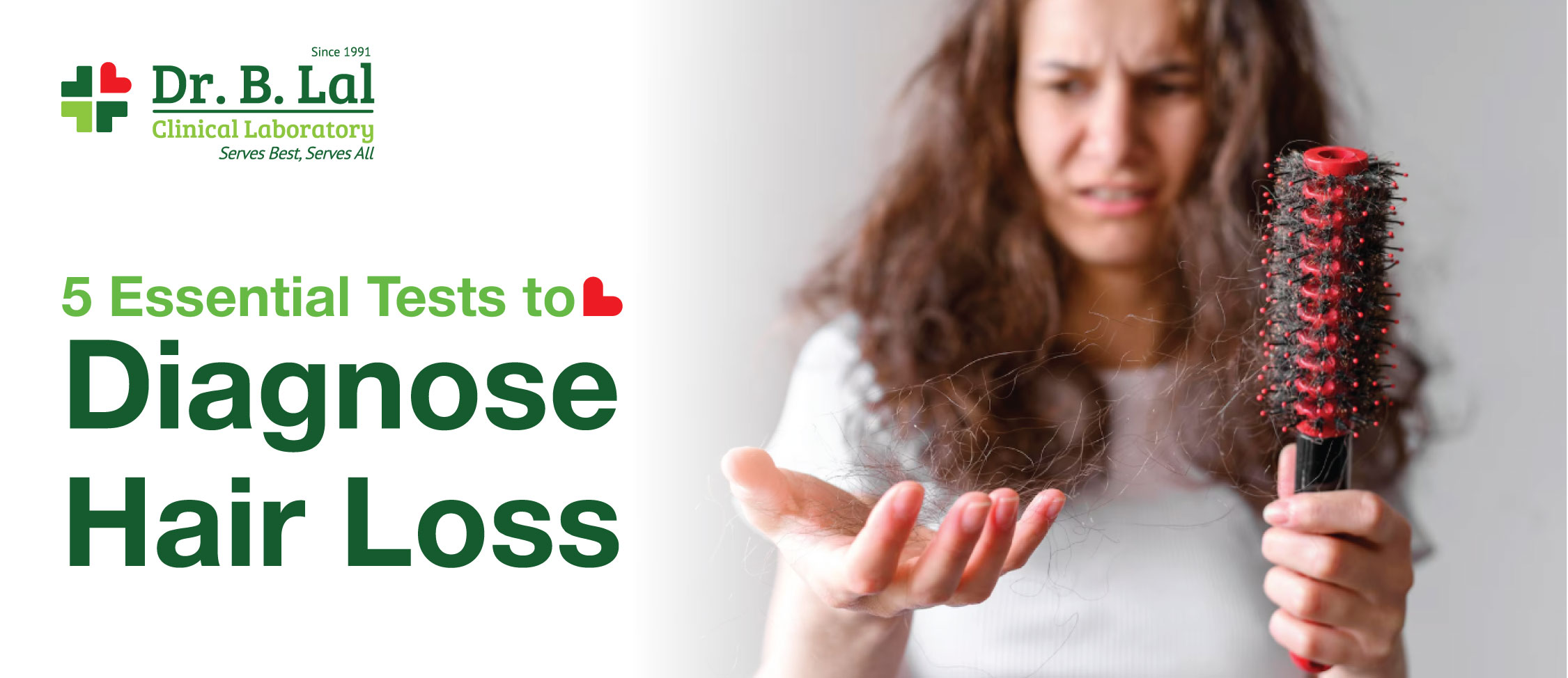
Hair fall has become one of the most common concerns today — across age groups, genders, and lifestyles. From noticing extra strands on your pillow to seeing thinning patches on your scalp, hair loss can be worrying and, honestly, a bit stressful too. While many people immediately jump to oils, shampoos, or supplements, the real question often remains unanswered: what is actually causing the hair fall?
That’s where medical evaluation comes in. Instead of guessing, doctors rely on specific tests to diagnose hair fall and identify the root cause accurately. Hair loss is rarely random; it’s usually your body giving subtle signals that something is off — be it nutrition, hormones, or internal health.
In this blog, we’ll discuss the 5 essential tests to diagnose hair loss, why they matter, what they reveal, and when you should consider getting them done.
Why Are Tests Important to Diagnose Hair Fall?
Hair loss can happen due to many reasons, such as:
- Nutritional deficiencies
- Hormonal imbalance
- Stress and lifestyle factors
- Thyroid disorders
- Chronic illnesses
Without proper testing, treatment becomes trial and error. Using supplements without knowing what your body lacks may not help — and sometimes, it can even delay recovery.
That’s why doctors recommend tests to reduce hair fall before starting any long-term treatment. These tests help pinpoint the cause, making treatment more effective and targeted.
1. Complete Blood Count (CBC)
Why this test matters
A Complete Blood Count (CBC) is often the first test advised for hair fall evaluation. It gives a broad overview of your overall health and helps detect conditions like anemia or infections that can directly affect hair growth.
Low hemoglobin levels mean reduced oxygen supply to hair follicles, which weakens them and leads to excessive shedding.
What it can detect
- Anemia
- Iron deficiency (indirectly)
- Chronic infections
- Inflammatory conditions
When it’s recommended
If you experience:
- Excessive hair shedding
- Fatigue or weakness
- Pale skin
- Shortness of breath
CBC is a basic yet extremely important test to diagnose hair fall.
2. Serum Ferritin Test
Why this test matters
Ferritin reflects the iron stores in your body, not just iron levels in the blood. Even if your hemoglobin is normal, low ferritin can still cause hair loss.
Hair follicles are highly sensitive to low iron reserves. Many people, especially women, suffer from hair fall due to low ferritin levels without realizing it.
What it can detect
- Iron deficiency at an early stage
- Risk of chronic hair thinning
For healthy hair growth, ferritin levels should ideally be above 50–70 ng/mL (depending on clinical advice).
When it’s recommended
- Sudden hair fall
- Hair thinning without visible bald patches
- Heavy menstrual cycles
- Vegetarian or restrictive diets
Among all tests to diagnose hair fall, ferritin is one that often gets overlooked but plays a big role.
3. Thyroid Function Test (T3, T4, TSH)
Why this test matters
Your thyroid gland controls metabolism, including hair growth cycles. Both hypothyroidism (low thyroid) and hyperthyroidism (high thyroid) can cause hair thinning, dryness, and breakage.
Hair loss related to thyroid issues is usually diffuse, meaning hair falls evenly across the scalp rather than in patches.
What it can detect
- Hypothyroidism
- Hyperthyroidism
- Hormonal imbalance affecting hair cycle
When it’s recommended
- Persistent hair fall despite good nutrition
- Weight changes without reason
- Irregular periods
- Cold sensitivity or fatigue
Thyroid testing is one of the most crucial tests to diagnose hair fall, especially if hair loss is ongoing and unexplained.
4. Vitamin D Test
Why this test matters
Vitamin D plays an important role in hair follicle cycling and regeneration. Low levels are commonly associated with hair thinning, weak strands, and slow regrowth.
Due to indoor lifestyles and limited sun exposure, Vitamin D deficiency is extremely common today, even in sunny regions.
What it can detect
- Vitamin D deficiency or insufficiency
- Risk of weak hair roots and shedding
When it’s recommended
- Diffuse hair loss
- Bone or muscle pain
- Low immunity
- Minimal sun exposure
Correcting Vitamin D deficiency often improves hair strength over time, although results may take a few months.
5. Hormonal Tests (Especially for Women)
Why this test matters
Hormonal imbalance is a major cause of hair loss, particularly in women. Conditions like PCOS (Polycystic Ovary Syndrome) can cause hair thinning, especially on the crown and front scalp.
Hormonal tests help evaluate androgens (male hormones), which, when elevated, can shrink hair follicles.
Common hormones tested
- Testosterone
- DHEAS
- LH & FSH
- Prolactin
When it’s recommended
- Irregular periods
- Sudden weight gain
- Facial hair growth
- Acne along with hair loss
These tests to diagnose hair fall are critical when hair thinning follows a pattern or is accompanied by other hormonal symptoms.
Are All These Tests Required for Everyone?
Not necessarily. The exact set of tests depends on:
- Age
- Gender
- Pattern and duration of hair loss
- Medical history
A doctor may start with basic tests like CBC and ferritin, and then suggest further investigations if required. Self-prescribing supplements without tests often leads to poor results, which many people face.
What About Scalp Tests or Biopsy?
In some cases, especially when hair loss is severe or unusual, doctors may recommend:
- Trichoscopy (scalp examination with magnification)
- Scalp biopsy (rare cases only)
These are usually done when blood tests don’t clearly explain the hair fall.
How Often Should Hair Fall Tests Be Done?
If abnormalities are found:
- Tests may be repeated after 3–6 months
- Progress is monitored based on treatment response
Hair growth is slow, so improvements are gradual. Patience is very important here, even though it can feel frustrating.
Can Hair Loss Be Reversed After Diagnosis?
In many cases — yes.
Once the cause is identified through proper tests to diagnose hair fall, treatment becomes focused and effective. Nutritional deficiencies, thyroid disorders, and hormonal imbalances can be managed medically, leading to noticeable improvement in hair quality and density over time.
However, delaying diagnosis often leads to prolonged hair thinning, which becomes harder to reverse later.
Final Thoughts
Hair fall is not just a cosmetic issue — it’s often linked to your internal health. Instead of guessing or trying random remedies, getting the right tests to diagnose hair fall can save time, money, and stress.
Early diagnosis means better results, healthier hair, and peace of mind. If your hair fall has been persistent, sudden, or worsening, consider consulting a doctor and getting these essential tests done.
Because when it comes to hair, knowing the cause makes all the difference.