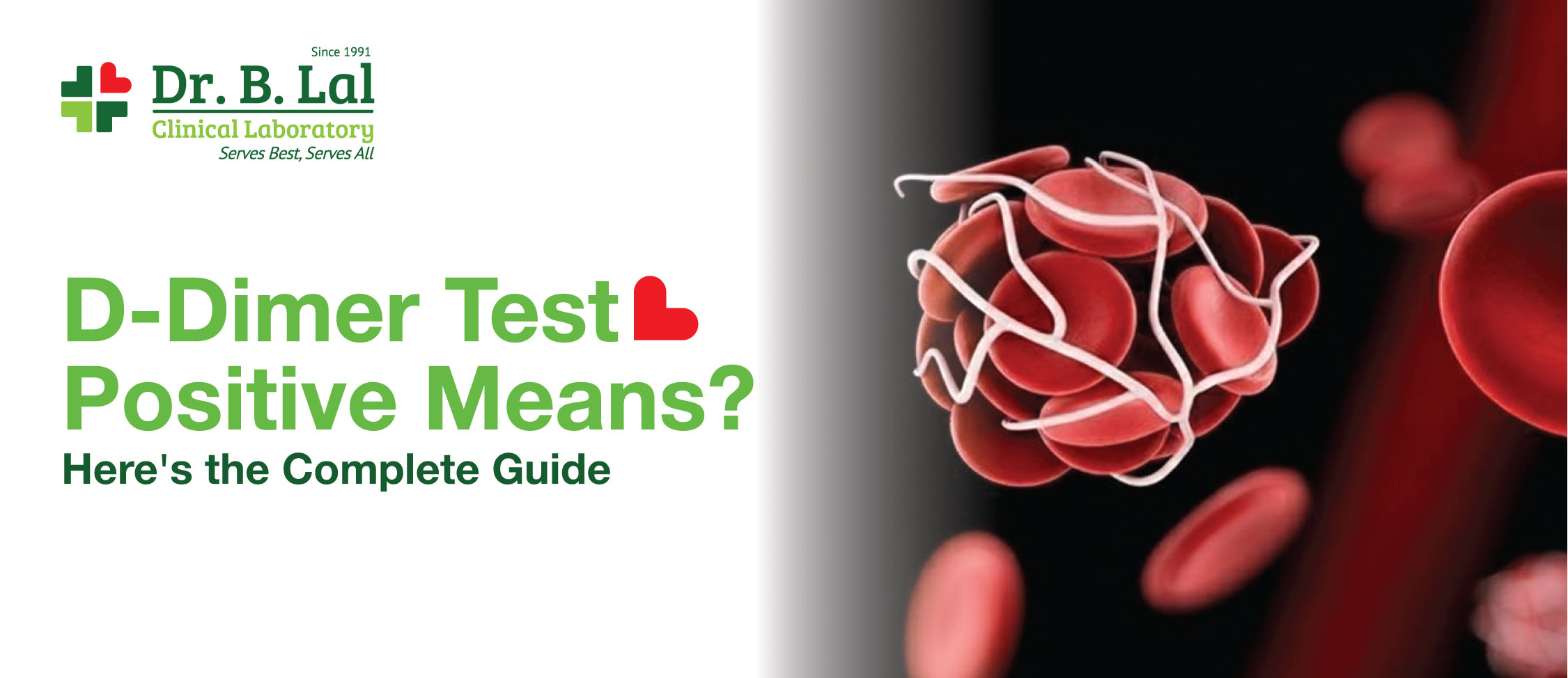
A D-dimer blood test measures level of D-dimer fragments circulating in your bloodstream. These fragments are also called fibrin degradation products (FDPs).
Doctors usually recommend this test when they find abnormal or dangerous blood clots. It is not used as a routine test but rather as a screening tool in urgent or diagnostic situations.
Where and How Is It Done?
- Usually performed in hospitals, emergency rooms, or diagnostic laboratories
- A regular blood sample is drawn from a vein in your arm
- Results may be available within a few hours, especially in emergency cases
This test is especially valuable because it helps doctors rule out life-threatening clotting conditions quickly.
Why Is a D-Dimer Test Done?
Doctors order a D-dimer test when they notice symptoms or conditions that may be linked to a blood clot.
Common medical conditions associated with elevated D-dimer levels include:
1. Deep Vein Thrombosis (DVT)
A clot forms in a deep vein — most commonly in leg. Symptoms include:
- Swelling
- Warmth or redness in the leg
- Persistent leg pain
2. Pulmonary Embolism (PE)
A blood clot travels to lungs, blocking blood flow. Symptoms include:
- Sudden shortness of breath
- Sharp Pain in chest
- Rapid heartbeat
- Coughing (sometimes with blood)
PE is a medical emergency, and D-Dimer test helps identify need for urgent imaging.
3. Stroke
High D-dimer may indicate increased clotting and a higher risk of complications or recurrence.
4. Disseminated Intravascular Coagulation (DIC)
A severe condition where small blood clots form in the body. This can deplete clotting factors, leading to uncontrolled bleeding.
Other scenarios where a D-Dimer test may be requested:
- Severe injury
- Recent surgery
- Severe infection (sepsis)
- Cancer
- Pregnancy complications
D-Dimer Test Normal Range
Although the range may vary between labs, general reference range is:
| Result Type | Range |
| Normal | Less than 0.50 μg/mL (or 500 ng/mL FEU) |
| Borderline/Abnormal | Above 0.50 μg/mL |
A normal D-Dimer result usually means there’s no abnormal clotting, and conditions like DVT or PE are unlikely.
What Does a Positive D-Dimer Test Mean?
A positive result means there are higher-than-normal levels of D-dimer in blood, suggesting that body is forming and breaking down significant blood clots.
However, a positive result does not confirm a specific diagnosis.
It simply indicates that further tests like:
- Doppler ultrasound (for DVT)
- CT angiography (for PE)
- MRI or additional coagulation tests
may be needed to pinpoint cause.
Conditions Linked With Elevated D-Dimer Levels:
| Cause | Notes |
| Blood clots (DVT, PE, stroke) | Most common reason |
| Recent surgery or injury | Due to healing and clot breakdown |
| Infections or inflammation | Including pneumonia or sepsis |
| Pregnancy | Levels naturally increase |
| Cancer | Some cancers increase clotting tendency |
| COVID-19 | Known to increase clot risk |
| Liver disease | Impairs clot regulation |
False Positives Can Occur
Sometimes test is positive even without clotting disorders — especially in:
- Older adults
- Smokers
- Pregnant women
- A person with chronic illness
This is why doctors do not rely solely on this test for diagnosis.
Symptoms That May Lead to a D-Dimer Test
If you experience any of these symptoms, a doctor may recommend test:
- Pain in chest or difficulty breathing
- Pain, swelling, or redness in leg
- Fast heart rate
- Sudden dizziness or fainting
- Unexplained bleeding or bruising
- Severe headache or neurological symptoms
This symptoms help guide urgency and follow-up testing.
How Is the D-Dimer Blood Test Performed?
The test is simple:
- No fasting or special preparation is required
- A blood sample is drawn
- Results are typically available within hours
In emergency settings like suspected pulmonary embolism, labs prioritize the test for rapid decision-making.
Interpreting Positive vs. Negative Results
| Result | Meaning | Next Step |
| Negative | Low chance of abnormal clotting | Usually, no further testing is needed |
| Positive | Possible clotting activity | Imaging or further tests required |
Factors That Can Influence D-Dimer Levels
Certain situations naturally elevate D-dimer without indicating disease:
- Age above 60
- Pregnancy and postpartum period
- Autoimmune disorders
- Obesity
- Heavy exercise
- Chronic inflammatory disease
Risks & Limitations of D-Dimer Test
The test is generally safe, but limitations include:
- False positives (due to pregnancy, infection, age, or inflammation)
- False negatives, although rare, may occur if:
- Testing is done too early
- The clot is very small
- The patient is already on blood thinners
Therefore, D-Dimer test cannot diagnose clotting disorders alone — it is only a screening tool.
Treatment After a Positive D-Dimer Test
- Treatment depends on underlying condition:
- Possible next steps:
- Blood thinners (anticoagulants)
- Clot-busting medications (in emergencies)
- Further imaging tests
- Hospital monitoring, if needed
If result is elevated but no clot is found, doctors may monitor levels and investigate other potential causes.
When Should You See a Doctor?'
Seek medical attention immediately if you experience:
- Sudden breathlessness
- Sharp chest pain
- Swelling or pain in one leg
- Persistent or unexplained bleeding
- Sudden numbness, confusion, or difficulty speaking
These may indicate serious clotting or bleeding conditions.
Conclusion
A positive D-dimer test result does not automatically mean you have a blood clot, but it indicates that your body may be experiencing abnormal clot activity. The test helps doctors decide whether evaluation or imaging is necessary.
Understanding your results — along with symptoms and medical history — is essential for accurate diagnosis and treatment.
If you’ve received a positive result, don’t panic. Instead, follow up with your healthcare provider to determine next appropriate steps.