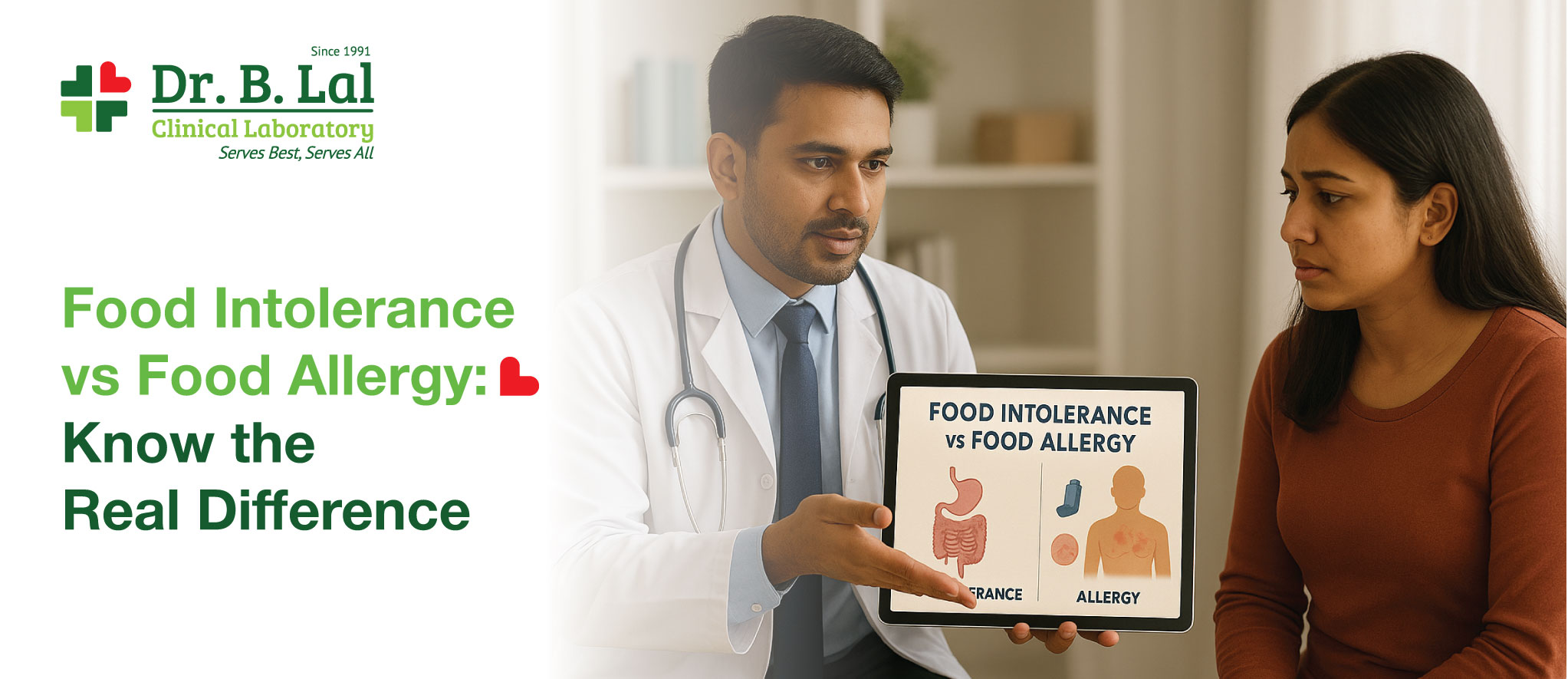
Have you ever eaten something and felt bloated, itchy, or uneasy afterward — and immediately thought, “I must be allergic to this”? You’re not alone. Many people confuse food intolerance with food allergy because both cause uncomfortable reactions after eating certain foods. However, the difference between a food intolerance and a food allergy is crucial — one can be unpleasant, while the other can be life-threatening.
In this blog, we’ll decode how food allergies and food intolerances differ, explore their causes, symptoms, and management tips, and help you identify what your body is really trying to tell you.
What Is a Food Allergy?
A food allergy is your immune system’s overreaction to a specific food protein that it mistakenly identifies as harmful. Even a tiny amount of that allergen can trigger a powerful response.
When someone with a food allergy eats the trigger food, their immune system releases chemicals like histamine, leading to symptoms that can affect the skin, respiratory system, or even the entire body.
Common Symptoms of Food Allergy:
-
Itching or swelling of the lips, tongue, or throat
-
Hives or red rashes on the skin
-
Shortness of breath or wheezing
-
Nausea or vomiting
-
Dizziness or fainting
-
Severe reactions like anaphylaxis — a medical emergency
Common Food Allergens:
-
Milk
-
Eggs
-
Peanuts
-
Tree nuts (like almonds, cashews, walnuts)
-
Fish and shellfish
-
Soy
-
Wheat
These reactions usually occur within minutes to two hours after eating the food.
What Is a Food Intolerance?
Unlike an allergy, a food intolerance does not involve the immune system. Instead, it occurs when your digestive system has trouble breaking down certain foods. This can happen due to enzyme deficiencies, chemical sensitivities, or reactions to food additives.
Common Symptoms of Food Intolerance:
-
Bloating or gas
-
Abdominal pain or cramps
-
Diarrhea or constipation
-
Nausea
-
Headaches or fatigue
These symptoms are usually dose-dependent, meaning they appear only after consuming a significant amount of the trigger food.
Common Causes of Food Intolerance:
-
Lactose Intolerance: Caused by a lack of the lactase enzyme needed to digest milk sugar.
-
Gluten Intolerance: Sensitivity to gluten found in wheat, rye, and barley.
-
Caffeine Sensitivity: Overreaction to caffeine leading to jitteriness or heart palpitations.
-
Food Additive Intolerance: Reactions to sulfites, MSG, or artificial colors.
Food Intolerance vs Food Allergy: Key Differences
Understanding the difference between a food intolerance and a food allergy is vital for proper diagnosis and management. Here’s how food allergies and food intolerances differ in several key ways:
| Feature | Food Allergy | Food Intolerance |
| Body System Involved | Immune system | Digestive system |
| Reaction Type | Immune overreaction to food protein | Inability to digest or process certain foods |
| Onset Time | Within minutes to 2 hours | Several hours to days |
| Severity | Can be life-threatening (anaphylaxis) | Usually mild to moderate |
| Common Causes | Milk, nuts, shellfish, eggs | Lactose, gluten, caffeine, additives |
| Diagnosis | Skin prick test, blood test (IgE antibodies) | Elimination diet, hydrogen breath test |
| Treatment | Strict avoidance, emergency epinephrine | Limiting intake or using enzyme supplements |
This table clearly illustrates how food allergies and food intolerances differ, from their causes to their treatment. While an allergy triggers your immune system, an intolerance stresses your digestive system.
How to Tell Which One You Have
If certain foods often leave you feeling uncomfortable, here are three simple ways to figure out whether it’s an intolerance or an allergy:
1. Keep a Food Diary
Note what you eat and how your body reacts. Tracking patterns can help spot foods that consistently cause discomfort.
2. Try an Elimination Method
Remove suspected foods for a few weeks, then reintroduce them slowly. If symptoms return, that food is likely the trigger.
3. Get a Lab Test Done
Many diagnostic labs now offer food intolerance and allergy tests that accurately assess how your body reacts to various food components. These tests can identify specific triggers such as lactose, gluten, or nuts — helping you understand whether your issue is a food intolerance or a food allergy.
A comprehensive lab test provides scientific clarity, saves time, and guides you toward the right dietary plan.
Managing Food Intolerance and Food Allergy
For Food Allergies:
-
Avoid the allergen completely. Always read ingredient labels.
-
Inform restaurants about your allergy when dining out.
-
Carry an epinephrine auto-injector (EpiPen) for emergencies.
-
Consult an allergist regularly for updates on your condition.
For Food Intolerances:
-
Reduce or eliminate trigger foods instead of avoiding them entirely.
-
Try enzyme supplements (like lactase for lactose intolerance).
-
Explore alternatives — lactose-free milk, gluten-free grains, or decaf beverages.
-
Focus on gut health by consuming probiotics and fiber-rich foods.
Understanding how food allergies and food intolerances differ helps tailor your management plan and ensures you stay symptom-free without unnecessary food restrictions.
Why Misdiagnosis Is Common
Many people self-diagnose based on internet advice, which can lead to unnecessary food restrictions or missed allergies. For example, someone who thinks they have a “milk allergy” may actually be lactose intolerant.
The difference between a food intolerance and a food allergy lies in how your body reacts — so professional testing is key.
Self-diagnosing without clarity can cause you to miss vital nutrients or, worse, overlook a potentially life-threatening allergy.
When to See a Doctor
See a healthcare provider if you experience:
-
Difficulty breathing or swallowing after eating
-
Severe rash or swelling
-
Frequent digestive issues linked to certain foods
-
Ongoing fatigue, bloating, or discomfort
Medical guidance is essential to confirm how food allergies and food intolerances differ in your specific case and create a safe diet plan.
FAQs
1. What is the main difference between a food intolerance and a food allergy?
A food allergy triggers an immune system reaction, while a food intolerance involves the digestive system’s inability to process certain foods.
2. How do food allergies and food intolerances differ in severity?
Food allergies can cause severe and even life-threatening reactions, while food intolerances usually cause mild digestive discomfort.
3. Can food intolerances turn into allergies?
No, food intolerances do not develop into allergies. They are entirely different mechanisms.
4. How can I confirm if I have a food allergy or intolerance?
Visit an allergist or gastroenterologist for proper testing such as a skin prick test, IgE blood test, or elimination diet.
5. Is lactose intolerance a food allergy?
No, lactose intolerance is a food intolerance, not an allergy. It’s caused by a lack of the lactase enzyme needed to digest milk sugar.
Conclusion
While both food allergies and intolerances can make eating challenging, knowing the difference between a food intolerance and a food allergy empowers you to make safe and informed choices.
Allergies require strict avoidance and medical attention, while intolerances can often be managed through dietary adjustments.
So the next time your body reacts to something you eat, pause and ask yourself — is it an allergy or an intolerance? Understanding how food allergies and food intolerances differ could be the key to better digestion, improved energy, and a healthier life.