Uric acid problems are becoming very common these days, especially among adults with sedentary lifestyle, poor food habits, or stress. Many people hear that their uric acid levels are high only after a blood test, because symptoms are often ignored or misunderstood.
This is why knowing high uric acid symptoms early is very important. When detected on time, it can be managed easily. But if ignored for long, high uric acid can lead to painful conditions like gout, joint damage, and even kidney problems.
In this blog, we will explain what uric acid is, why it increases, common symptoms you should not ignore, and when you should get tested.
What Is Uric Acid?
Uric acid is a waste product formed when the body breaks down substances called purines. Purines are naturally present in our body and also found in many foods like red meat, seafood, and alcohol.
Normally, uric acid dissolves in blood, passes through kidneys, and leaves the body through urine. But when:
- The body produces too much uric acid, or
- The kidneys are unable to remove it properly
uric acid starts building up in the blood. This condition is called hyperuricemia.
Why High Uric Acid Is a Problem
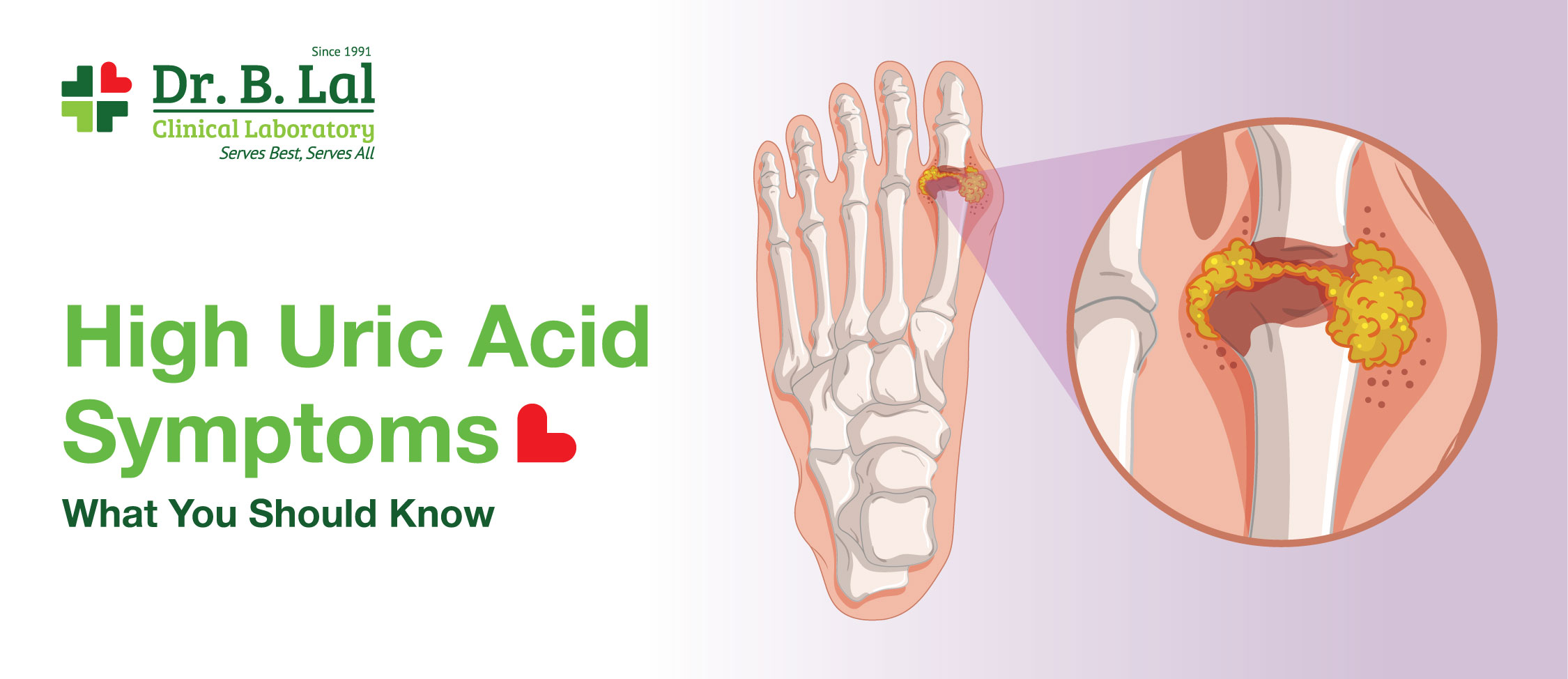
When uric acid levels remain high for long time, it can form sharp crystals. These crystals usually settle in joints, kidneys, and surrounding tissues. That’s when symptoms begin to appear.
Many people think high uric acid only causes joint pain, but the effects can be wider and more serious if left untreated.
Understanding high uric acid symptoms helps in early diagnosis and prevents complications.
Common High Uric Acid Symptoms
1. Joint Pain (Most Common Symptom)
Joint pain is the most noticeable and common symptom of high uric acid.
- Pain often starts suddenly
- Usually affects one joint at a time
- Pain can be intense and throbbing
- Most commonly affects big toe, ankle, knee, or fingers
The pain may become worse at night or early morning. Even light touch like bedsheet can feel painful sometimes.
2. Swelling and Redness Around Joints
Along with pain, joints may become:
- Swollen
- Red
- Warm to touch
- Stiff, especially in mornings
This happens because uric acid crystals cause inflammation in the joint area. Swelling can last for few days to weeks if not treated.
3. Stiffness and Difficulty in Movement
People with high uric acid often feel stiffness in joints, especially after sitting or resting for long time.
- Difficulty bending fingers
- Trouble walking properly
- Reduced flexibility in joints
Over time, repeated uric acid attacks can damage joint tissues permanently.
4. Pain in Big Toe (Classic Gout Symptom)
One of the classic high uric acid symptoms is pain in the big toe, medically known as podagra.
- Sudden sharp pain
- Toe becomes red and swollen
- Pain may wake you up at night
This symptom should never be ignored, even if pain reduces after few days.
5. Frequent Urination or Pain While Urinating
High uric acid does not affect only joints. It can also impact kidneys.
Some people experience:
- Frequent urge to urinate
- Burning sensation while urinating
- Reduced urine output
- Foamy urine sometimes
This may indicate kidney involvement due to uric acid crystals.
6. Kidney Stones
Persistently high uric acid can lead to formation of kidney stones.
Symptoms of kidney stones include:
- Severe pain in lower back or side
- Pain radiating to lower abdomen
- Blood in urine
- Nausea or vomiting
Kidney stones caused by uric acid are very painful and require medical attention.
7. Fatigue and General Weakness
Many people with high uric acid complain of:
- Feeling tired without reason
- Low energy levels
- Body heaviness
- Reduced stamina
Though fatigue is a non-specific symptom, it often appears along with other uric acid related issues.
8. Nodules or Lumps Near Joints (Tophi)
In long-standing cases, uric acid crystals can form visible lumps under skin, called tophi.
- Usually seen near fingers, toes, elbows, or ears
- Hard, painless lumps
- Indicates chronic high uric acid
This stage usually develops after years of uncontrolled uric acid levels.
Early Signs of High Uric Acid (Often Ignored)
Many early high uric acid symptoms are subtle and people ignore them thinking it is normal body pain.
Early warning signs include:
- Mild joint discomfort
- Occasional swelling
- Morning stiffness
- Pain after eating heavy or non-veg food
- Joint pain after alcohol consumption
Recognizing these signs early can prevent painful gout attacks later.
What Causes High Uric Acid Levels?
Several factors can increase uric acid in body:
Lifestyle Factors
- Excess consumption of red meat
- High intake of seafood
- Alcohol, especially beer
- Sugary drinks and fructose-rich foods
- Lack of physical activity
Medical Conditions
- Obesity
- Diabetes
- High blood pressure
- Kidney disease
- Thyroid disorders
Other Causes
- Dehydration
- Certain medicines (diuretics)
- Family history of gout
Who Is at Higher Risk?
You are at higher risk of developing high uric acid symptoms if you:
- Are overweight
- Consume alcohol regularly
- Eat high-protein diet frequently
- Have diabetes or kidney issues
- Have family history of gout
- Are above 40 years of age
However, young adults are also increasingly affected due to lifestyle changes.
When Should You Get Tested?
You should get a uric acid blood test if:
- You have repeated joint pain
- You experience sudden swelling in joints
- You have family history of gout
- You have kidney stone history
- You consume alcohol frequently
Early testing helps in simple lifestyle correction and avoids long-term complications.
Can High Uric Acid Be Controlled?
Yes, high uric acid can be controlled very effectively with:
- Dietary changes
- Adequate hydration
- Weight management
- Regular exercise
- Medicines if required (only under doctor guidance)
Many people manage uric acid levels without long-term medication if diagnosed early.
Common Myths About High Uric Acid
- Only old people get high uric acid
- Only non-veg eaters suffer from it
- Pain will go away on its own
- Medicines are needed lifelong
These myths delay treatment and worsen condition.
Final Thoughts on High Uric Acid Symptoms
Understanding high uric acid symptoms is the first step towards prevention and control. The condition often starts silently, but once symptoms appear, they should not be ignored.
Joint pain, swelling, stiffness, and kidney-related symptoms are warning signals from your body. Early diagnosis, simple diet changes, and proper guidance can save you from long-term joint damage and kidney problems.
If you suspect high uric acid, don’t wait for pain to increase. A simple blood test and timely action can make a big difference.