
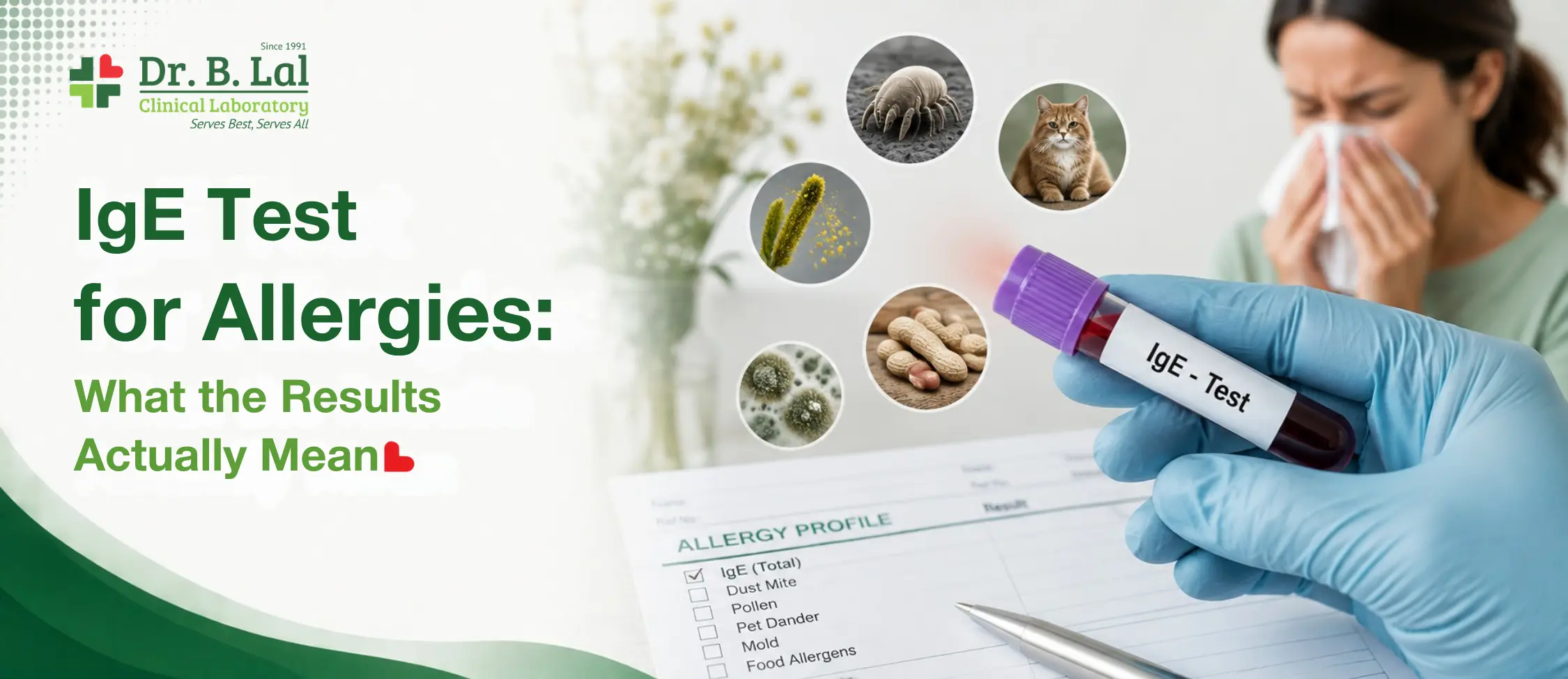
Sneezing every time you're around a particular pet, breaking out in hives after certain foods, or dealing with unexplained skin flare-ups, at some point, the conversation with your doctor usually turns to an IgE test. It's one of the most common ways allergies get investigated, and also one of the more commonly misread results, because a "positive" doesn't always mean what people assume it means.
What the IgE Test Is Actually Measuring
IgE, or immunoglobulin E, is an antibody your immune system produces as part of its allergic response. When your body encounters something it perceives as a threat, pollen, a particular food, dust mites, in someone prone to allergies, the immune system produces IgE antibodies specifically targeted at that substance. These antibodies then trigger the release of histamine and other chemicals responsible for allergy symptoms: sneezing, itching, hives, swelling, and in more severe cases, breathing difficulty.
The IgE test checks for the presence and amount of these antibodies in your blood, and it comes in two distinct forms that get used quite differently.
The Difference Between Total IgE Test and Specific IgE Test
This distinction trips up a lot of people, and it's worth being clear about upfront.
Total IgE testing is used to find out how much IgE antibody is present in your blood in terms of absolute quantity but does not tell about what causes this reaction. You should consider it as a general number that alerts you about the possibility of the allergic/atopic process, but it cannot be used independently to determine the cause of such a process.
The positive total IgE test may indicate the presence of allergies, but it may also indicate something else.
A specific IgE test, on the other hand, checks for antibodies against one particular allergen at a time, peanuts, dust mites, a specific pollen, a certain medication. This is the version that actually tells you what your immune system has reacted to, and it's what most people mean when they talk about "getting tested for allergies."
In practice, doctors often start with a total IgE test as a broad screen, then move to specific IgE testing for the individual allergens suggested by your symptoms and history.
Book your allergy test now - IgE Test
Reading the Numbers on an IgE Test Report
For a total IgE test, reference ranges vary somewhat by lab and age, children naturally run higher than adults, and levels tend to decrease over time, but a commonly cited healthy adult range sits under 100 IU/mL, with results interpreted alongside symptoms and history rather than as a fixed cutoff.
For a specific IgE test, results are often reported in numerical classes rather than a single pass/fail, generally, the higher the specific IgE level for a given allergen, the greater the likelihood of a clinically meaningful reaction on exposure. This is particularly relevant for food and venom allergies, where a higher specific IgE level to a given trigger can help guide decisions around avoidance and whether to carry an epinephrine auto-injector.
Why a Positive IgE Test Doesn't Always Mean You're Allergic
This is genuinely the most important thing to understand about IgE testing, and it's worth sitting with rather than rushing past: a positive specific IgE result means sensitisation, your immune system has produced antibodies against that substance, but sensitisation isn't automatically the same thing as a clinically relevant allergy. Plenty of people test positive for sensitisation to something they can be exposed to without ever developing symptoms.
The sensitivity of specific IgE assay varies considerably from 60%-95% and specificity from 30%-95% and is determined to a great extent by the allergen in question and age of the patient. The predictive value is very high (more than 90%) for common allergens such as cow’s milk, eggs, fish, peanut, grass and tree pollen, but lower for some drugs, latex, moulds and venom.
There's also a specific technical wrinkle worth knowing: in people with a very high total IgE level (often above 1000 KUa/L), specific IgE tests can produce weakly positive results across multiple allergens simply due to non-specific antibody binding, rather than genuine, individual sensitisation to each one. This is seen often enough in people with atopic dermatitis that doctors interpreting their results factor it in specifically.
Why an IgE Test Result Always Needs Your Symptoms Alongside It
Because of everything above, doctors don't read an IgE test result in isolation, and neither should you. A positive specific IgE test, paired with a clear history of symptoms after exposure to that particular allergen, carries real diagnostic weight. The same positive result, found incidentally with no matching symptoms, is far less meaningful and often doesn't warrant avoidance or treatment on its own.
The reverse matters too: a negative specific IgE test doesn't fully rule out an allergy either. Skin prick testing sometimes catches sensitisation that blood-based IgE testing misses, which is part of why doctors occasionally recommend both, particularly when symptoms strongly suggest an allergy despite an unclear or negative IgE result.
What Can Push IgE Levels Up, Beyond Allergies
A number of things besides classic allergies can raise IgE levels, which is worth knowing before assuming any elevated result automatically means an allergy is present:
- Parasitic infections, which can cause a marked rise in total IgE
- Certain immune-related and inflammatory conditions
- Smoking
- Recent infections, in some cases
- Genuinely high pollen exposure during allergy season, which can temporarily elevate levels
What to Do With Your IgE Test Results
If your IgE test comes back positive for a specific allergen, the most useful next step is discussing it against your actual symptom history with your doctor, not automatically eliminating the substance from your diet or environment based on the number alone. If total IgE is elevated but a clear trigger hasn't been identified, further specific testing, and sometimes additional bloodwork to rule out other causes, is usually the sensible path forward rather than guessing.
Conclusion
The IgE test is definitely a valuable one to perform when studying allergies, but there is more to the test than just yes or no. The presence of positive results means sensitization, which does not always translate into an allergy, and both the numbers of total IgE and specific IgE have to be interpreted in light of your personal symptoms and exposure. When you feel that the results seem unclear or inconsistent with the way you really feel, it makes sense to bring that inconsistency up during your consultation.