That heavy, foggy, almost sleepy feeling that shows up 45 minutes after a carb-heavy lunch isn't just a coincidence of a big meal, it's often a genuine blood sugar spike playing out in real time. And here's the part that surprises people: this isn't only a diabetes issue. Research published in the Journal of the American College of Cardiology has found that these after-meal glucose spikes are actually a stronger predictor of cardiovascular events than fasting glucose levels, which means this matters even for people whose fasting sugar reads completely normal.
What a Blood Sugar Spike After Food Actually Is
When you eat, your body breaks carbohydrates down into glucose, which enters the bloodstream and causes a temporary rise, this is the blood sugar spike, medically called a postprandial glucose response. In someone without diabetes, this is a normal, expected process: the pancreas releases insulin almost immediately, letting cells absorb that glucose for energy, and blood sugar typically peaks 30 to 60 minutes after eating before gradually returning to baseline within 2 to 3 hours.
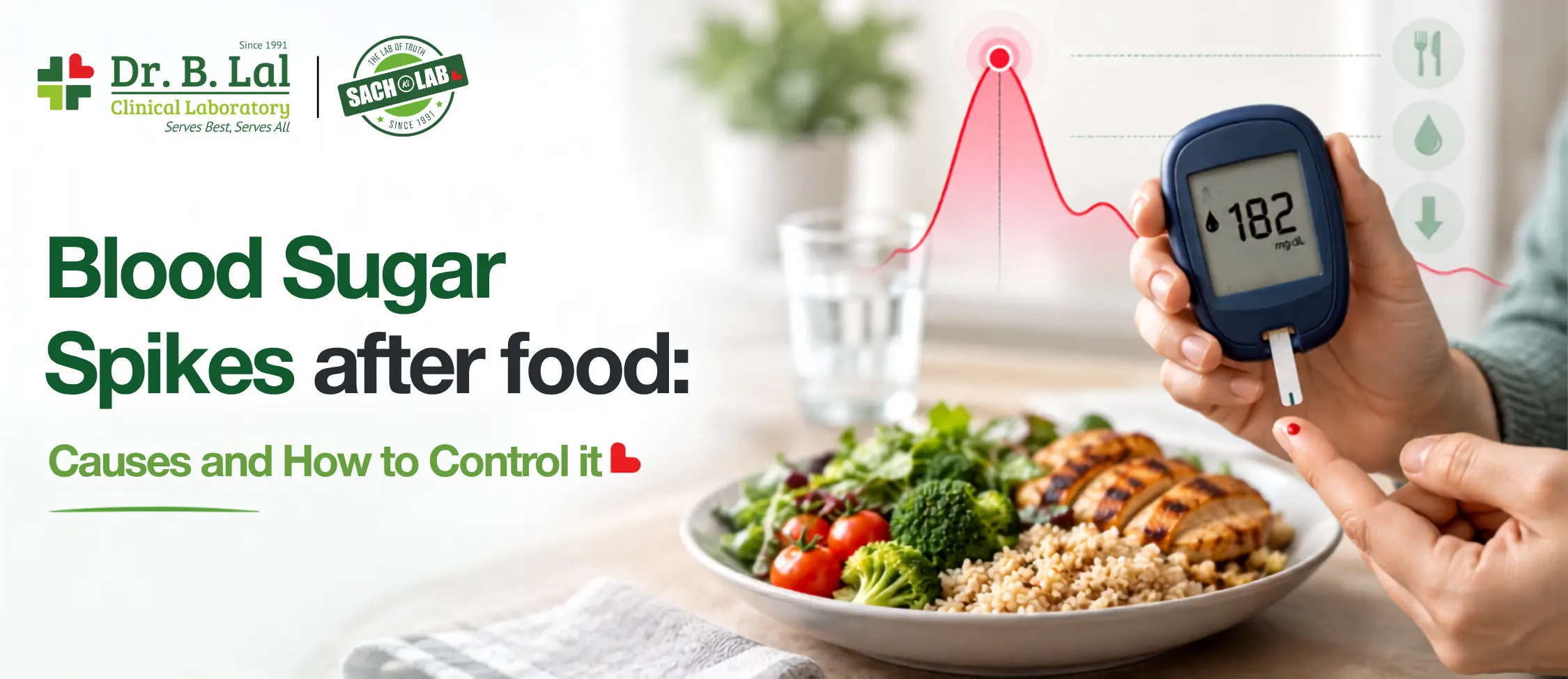
Healthy, non-diabetic individuals should have their glucose levels below 140 mg/dL, reverting to below 100 mg/dL during the same timeframe. However, diabetic individuals should have their blood glucose levels below 180 mg/dL. In any case, the reverting back to the initial point may take anything between 3 to 5 hours or more, if there is insulin resistance. In any event that the readings are above these figures, it would be better to bring them to the attention of the doctor.
What Actually Causes a Blood Sugar Spike After Food
Refined carbohydrates eaten alone are the single biggest driver. White bread, white rice, sugary cereals, and baked goods made with refined flour convert to glucose rapidly, and eating them without any protein, fat, or fiber alongside amplifies the spike considerably. Interestingly, two slices of white bread can raise blood sugar more than two tablespoons of pure table sugar, purely because of how quickly starch converts to glucose, a detail that surprises a lot of people who assume "no added sugar" automatically means a gentler impact.
Glycemic index plays a direct role here too. Foods with a high glycemic index, most starchy staples like bread, potatoes, and white rice, digest quickly and spike blood sugar fast, while lower-GI foods like most legumes, pasta, and peas raise it more gradually, even when the total carbohydrate content is similar.
Meal composition, not just meal size, genuinely changes the outcome. A meal that's purely carbohydrate causes a sharper spike than the same amount of carbohydrate eaten alongside protein, fat, or fibre, since these slow down how quickly the stomach empties and how fast glucose actually enters the bloodstream.
Skipping breakfast has a documented knock-on effect, people with diabetes who skip breakfast have been shown to experience higher blood sugar spikes after both lunch and dinner that same day, suggesting the body's insulin response gets thrown off for the rest of the day, not just during the skipped meal.
Insulin resistance changes the whole picture over time. When cells stop responding properly to insulin's signal, the body compensates by producing more of it, and glucose stays elevated for longer after each meal, this is also why repeated, unmanaged blood sugar spikes can gradually push someone from normal glucose tolerance toward prediabetes, sometimes showing up in postprandial spikes well before fasting glucose itself looks abnormal.
Know how to diagnose diabetes - Blood Sugar Tests
How to Control a Blood Sugar Spike After Food Through Meal Order
This is one of the more surprisingly powerful, low-effort interventions backed by real research. A 2015 study published in Diabetes Care found that eating vegetables and protein before carbohydrates, rather than all together or carbs first, reduced post-meal glucose by 29% and insulin levels by 17%. The mechanism is fairly well understood: protein stimulates GLP-1, a hormone that slows gastric emptying, which in turn slows how quickly carbohydrate-derived glucose actually reaches the bloodstream. In practical terms, this means eating your salad, sabzi, and dal before reaching for the rice or roti, rather than mixing everything together from the first bite.
How to Control a Blood Sugar Spike After Food Through What's on the Plate
Using low-glycemic carbohydrates, protein, good fats, and vegetables with lots of fiber in a meal regularly prevents the rise better than just a carbohydrate-rich meal taken alone. A helpful trick is to replace carbohydrate-only breakfast (cereal, toast only) with some kind of protein and fat sources like eggs or avocados. This will make the body produce less glucose after the meal as both protein and fat decrease the absorption of carbohydrates. There was a study which found that a breakfast rich in 35% protein caused lower glucose after eating the same-calorie breakfast but with more carbohydrates.
How to Control a Blood Sugar Spike After Food Through Movement
This is genuinely one of the simplest, best-evidenced interventions available, and it costs nothing. A short walk after eating, even just 10 to 15 minutes at a gentle pace, has been shown in research to reduce post-meal blood sugar spikes by roughly 30 to 50%. The mechanism is direct: muscle contractions during movement actively pull glucose out of the bloodstream and into muscle tissue for use, independent of insulin. This is one of the few interventions on this list that works almost immediately, with no dietary change required at all.
How to Monitor a Blood Sugar Spike After Food
The most accessible way to actually see this happening is a standard glucometer — testing immediately before eating to get a baseline, then again at 1 hour and 2 hours after the first bite, gives a fairly clear picture of how a specific meal is affecting you. For a more detailed, ongoing view, continuous glucose monitors can show exactly how different meals and foods affect your glucose curve in real time, which is increasingly used even by people without diabetes who want to understand their own metabolic responses better.
Why This Matters Beyond Just Feeling Sluggish
Each glucose rise produces free radicals in a reaction known as glycation and forms advanced glycation end products which damage blood vessels. The repetitive rises also make the body release more insulin and over many years, the insulin-producing beta cells become tired, hastening the transition from a normal glucose tolerance state to prediabetes then diabetes. This does not happen from just a single meal, but over many years of repetitive meals, this is precisely what the experts are referring to when they say that postprandial spikes are an independent risk factor for cardiovascular diseases.
Conclusion
A blood sugar rise due to food intake is completely natural for our body, but the levels to which the blood glucose rises and how quickly it drops is very much in your hands, something that many people fail to comprehend. The intake of proteins and vegetables before carbohydrates, preparation of balanced meals as opposed to carbohydrate-rich meals and walking around after a meal are a few things that have been proven scientifically to reduce the levels of blood glucose by one-third and more.