A lot of women put off a Pap smear for years. Some are nervous, some are embarrassed, some simply feel fine and see no reason to go. And that last reason is exactly why the test matters. Cervical cancer usually grows slowly, and in its early stages it often gives no signs at all.
The encouraging part: it's one of the few cancers we can actually catch before it becomes cancer. Let's go through how.
What Is a Pap Smear Test, and How Does It Help Prevent Cervical Cancer?
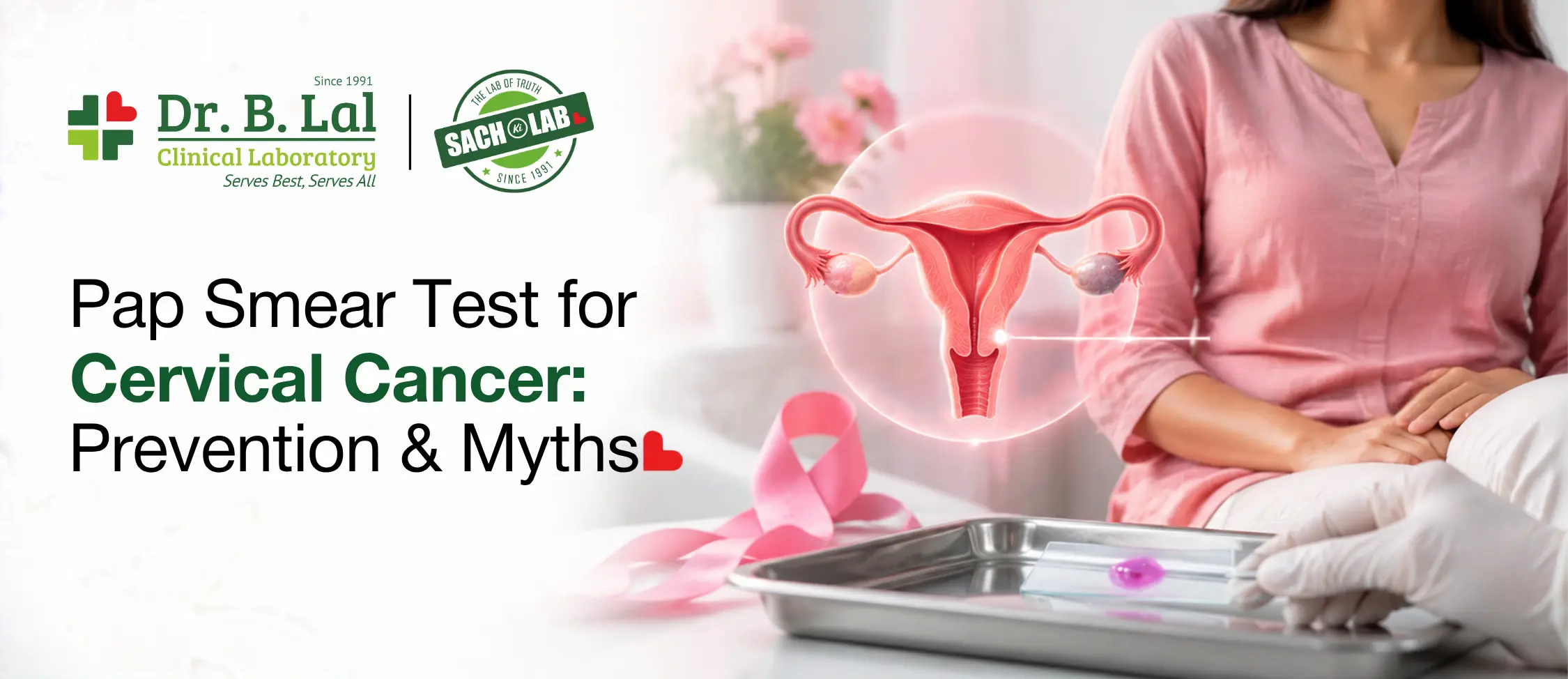
The Pap smear (or Pap test) is a medical test for examining the cells of the cervix, the narrow opening of the womb that connects to the vagina. The health professional will collect a sample of the cells, and an examination under a microscope will show any changes that can lead to cancer in the future.
The most frequent cause of cervical cancer is the persistent infection with the high-risk strains of the human papillomavirus (HPV). The virus is extremely common, and usually, the infection goes away on its own. In rare cases, however, the virus remains in the body and causes gradual changes in the cervical cells during several years. The Pap smear will help find the changes early and stop the cancer before it appears.
Pap Smear Test vs HPV Test: What's the Difference?
HPV tests test for specific types of HPV which are known to increase your chance of developing cervical cancer. There are many strains of HPV. Not all will lead to cancer.
HPV tests and Pap tests can be carried out at the same time using the same process (gently scraping your cervix). When sending the samples to the laboratory, the healthcare provider indicates what the pathologist in the laboratory should test for (whether for cancer cells or HPV or both). The interval between the two is slightly different depending on whether a co-test or a Pap test is done.
Who Should Get a Pap Smear Test, and When?
Guidelines differ slightly between countries and doctors, so treat this as a general picture and confirm with your gynaecologist.
- Screening generally starts in the early-to-mid twenties for women who are or have been sexually active.
- Many women are advised a Pap smear every three years, or a combined Pap and HPV test every five years from the thirties.
- Screening usually continues until around 65, if past results have been normal.
- Women with a weak immune system, a history of abnormal results, or other risk factors may need more frequent checks.
India's national health programme also offers cervical screening, often through a visual method called VIA, for women between about 30 and 65 at government health centres. Ask your nearest centre what's available.
What to expect when getting a Pap test
During a Pap smear, you will need to lie down on the examination table with your legs raised up in the stirrups. A speculum will be inserted into your vagina. It is usually made of metal or plastic, and it looks like a duck bill, which will keep the vagina wide open to provide access to the cervix.
After that, the medical specialist will use a spatula or a brush to collect the sample of cells and mucus from the exocervix. After that, a small brush or a swab will be inserted into the cervix to obtain a sample of the endocervix cells.
Understanding Pap Smear Test Results
Results usually come back in a few days, and the wording can sound scarier than it is.
Normal (negative): No abnormal cells. You go back to routine screening.
Unclear (ASC-US): The cells look slightly unusual. Often caused by infection or inflammation. Your doctor may repeat the test or add an HPV test.
Abnormal (LSIL, HSIL and others): The cells show changes that could become cancer if left alone. This does not mean you have cancer. It usually means more checks, like a colposcopy (a closer look at the cervix) and possibly a small biopsy.
An abnormal result is a reason to follow up, not to panic. The point of the test is to find changes at a stage when treatment is simple and very effective.
Pap Smear Test Myths, Cleared Up
"I feel fine, so I don't need it." Early cervical changes usually cause no symptoms. Feeling fine is exactly when screening works best.
"An abnormal result means cancer." No. Most abnormal results are precancerous changes or infections that can be monitored or treated.
"It's painful and risky." It's uncomfortable at worst, and it doesn't harm your fertility or the cervix.
"I've gone through menopause, so I'm done." If you're under about 65 and your doctor hasn't said otherwise, screening still matters.
"I got the HPV vaccine, so I don't need a Pap test." The vaccine protects against the most dangerous HPV types but not all of them. Screening is still needed.
"Cervical cancer runs in families." It's mostly caused by HPV infection, not inherited. A family history of other cancers is a separate matter to discuss with your doctor.
Cervical cancer prevention tips
There are three main preventive measures that you can take to prevent cervical cancer; get the HPV vaccination (preferably at an early age, however, your doctor will recommend the age for later vaccination), screening and prompt treatment of any abnormalities and avoid smoking as it increases the difficulty in clearing HPV. Using condoms lowers the risk of HPV but does not guarantee that you won't get the infection.
When to see a doctor without waiting for a pap smear test
Do not wait until your next Pap smear test if you observe vaginal bleeding between periods, vaginal bleeding after sexual intercourse or after menopause, strange discharges, pelvic pain and pain during sexual intercourse.
The Bottom Line on the Pap Smear Test
A Pap smear takes a few minutes, costs far less than treating cancer, and can stop cervical cancer before it starts. Fear and embarrassment are understandable, but they're the biggest obstacles between women and a nearly preventable disease. If you've never had one, or can't remember your last, make this the month you book it. Bring a friend if it helps. Ask every question you have. Your future self will be glad you did.
Reference 1: https://my.clevelandclinic.org/health/diagnostics/4267-pap-smear
Reference 2: https://www.cancer.org/cancer/types/cervical-cancer/detection-diagnosis-staging/screening-tests/pap-test.html