If you’ve been advised a thyroid test, one of the first questions that probably comes to mind is — Do I need to fast for this?
It’s a very common confusion. Some blood tests require 8–12 hours fasting. Some don’t. And because thyroid tests are done through blood samples, many people assume fasting must be necessary. But is that really true?
Let’s understand clearly whether fasting is required for thyroid tests, and what actually affects your thyroid results.
First, What Is a Thyroid Test?
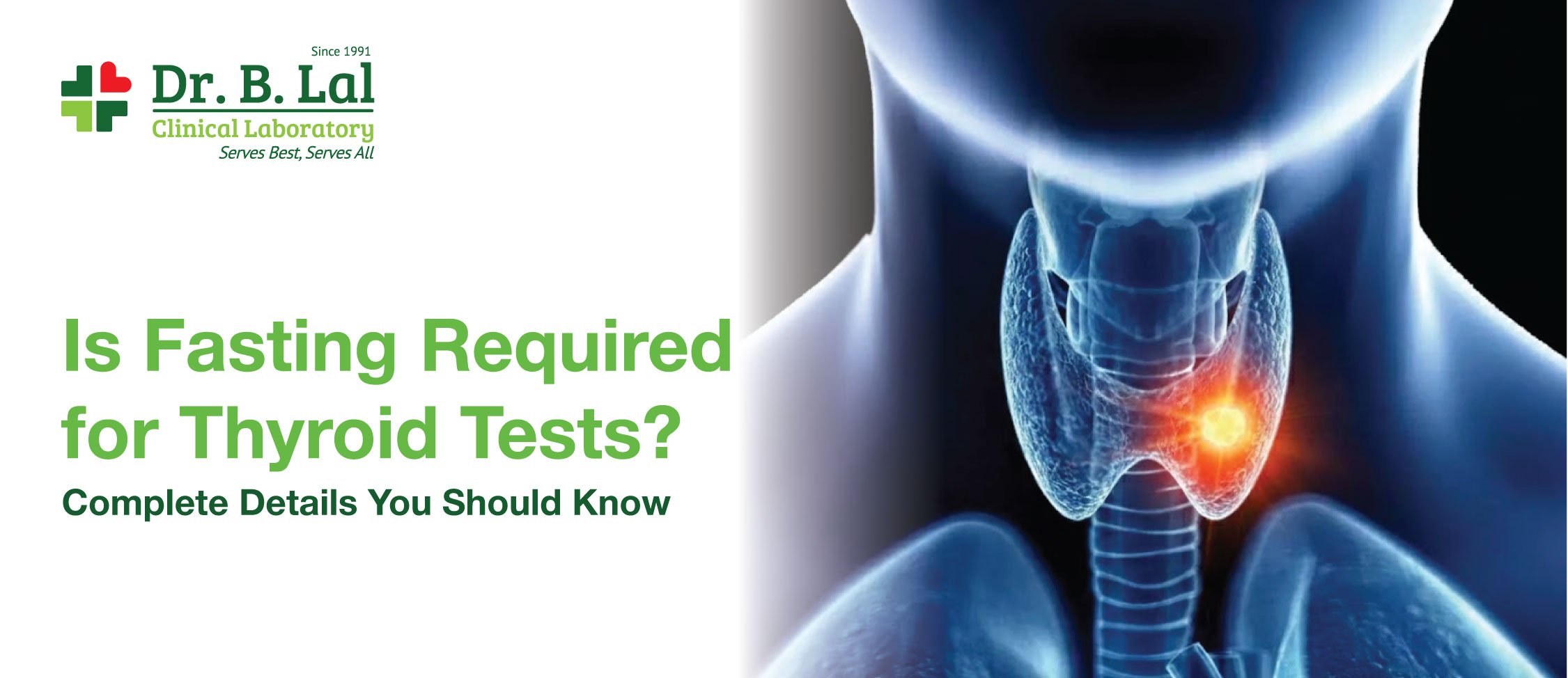
A thyroid test is a blood test used to measure hormones produced by the thyroid gland.
The most commonly ordered thyroid tests include:
- TSH (Thyroid Stimulating Hormone)
- T3 (Triiodothyronine)
- T4 (Thyroxine)
- Free T3
- Free T4
These hormones regulate metabolism, energy levels, weight balance, temperature control, and even mood. When thyroid function becomes imbalanced — either underactive (hypothyroidism) or overactive (hyperthyroidism) — symptoms begin to appear.
Is Fasting Required for Thyroid Tests?
In most cases, fasting is NOT required for thyroid tests. You can eat and drink normally before the test unless your doctor has specifically instructed otherwise.
Thyroid hormone levels are not significantly affected by food intake in the way that blood sugar or lipid levels are. So technically, you can take the test after breakfast.
However… there are a few important details to understand.
When Fasting May Be Recommended
While fasting is generally not mandatory, sometimes doctors advise morning fasting for consistency. Here’s why:
1. TSH Levels Fluctuate During the Day
TSH levels follow a natural circadian rhythm.
- Highest in early morning
- Gradually decrease during the day
- Lowest in late afternoon
Because of this variation, doctors often prefer testing in the morning (usually between 7–10 AM) for accurate comparison. It’s not exactly about fasting — it’s more about timing.
2. If Other Tests Are Ordered Together
Sometimes thyroid tests are combined with:
- Lipid profile
- Blood sugar test
- Liver function test
In such cases, fasting may be required — but not because of the thyroid test itself. It’s required for the other tests. So always check what tests are included in your prescription.
Does Eating Affect Thyroid Test Results?
Generally, food does not significantly alter T3, T4, or TSH levels.
However:
- Very heavy meals before testing may cause minor variations.
- Certain supplements (like biotin) can interfere with results.
- Thyroid medication timing can influence readings.
So the key concern is not fasting — it’s medication and supplement timing.
What About Thyroid Medication Before Testing?
This is where many people get confused. If you are already on thyroid medication (like levothyroxine), doctors usually advise:
- Take the blood test before taking your morning thyroid medicine.
Why? Because taking medication just before the test may temporarily increase hormone levels in the blood, which can slightly affect the report. It’s a small difference, but for monitoring treatment, consistency matters.
So if you’re on medication:
- Do the test in the morning
- Give blood sample first
- Take medicine after
Simple.
Does Fasting Improve Accuracy?
For thyroid tests alone — not really. There’s no strong medical evidence that fasting significantly improves thyroid hormone accuracy.
What matters more is:
- Same lab for follow-ups
- Same time of day
- Same medication routine
Consistency gives better comparison over time.
Special Situations Where Extra Care Is Needed
There are a few situations where preparation becomes slightly more important.
1. Pregnancy
Thyroid hormone levels change during pregnancy. Doctors may want testing done in the morning and without medication beforehand for accurate baseline levels.
2. Biotin Supplementation
Biotin (Vitamin B7), often taken for hair and skin health, can interfere with thyroid test results. It may falsely alter TSH and T4 readings. Doctors usually recommend stopping biotin supplements at least 48 hours before testing. This is more important than fasting.
3. Monitoring Thyroid Treatment
If you’re adjusting medication dose, timing consistency is important. Testing at random times, sometimes fasting and sometimes not, can create minor variations that confuse interpretation. So try to keep the testing pattern similar every time.
Common Myths About Fasting and Thyroid Tests
Let’s clear up a few misunderstandings.
Myth 1: “All blood tests require fasting”
Not true. Many tests do not require fasting — thyroid tests are one of them.
Myth 2: “If I ate breakfast, my thyroid result will be wrong”
Highly unlikely.
Food does not significantly distort thyroid hormone measurements.
Myth 3: “Fasting gives more accurate thyroid results”
Not necessarily. Timing and medication consistency matter more than fasting.
Best Time to Do a Thyroid Test
For practical purposes, the ideal time is:
- Morning (7–10 AM)
- Before taking thyroid medication
- Avoid biotin supplements for 48 hours prior
- Fasting only if other tests require it
Keeping these factors consistent helps your doctor compare reports properly.
Should You Avoid Tea or Coffee Before Testing?
Black tea or coffee in small amounts does not drastically change thyroid levels. But if you are fasting for other tests, you should avoid them. If it’s only a thyroid test, a light breakfast is usually fine. Still, when in doubt, follow your doctor’s instructions.
Final Answer: Is Fasting Required for Thyroid Tests?
In simple terms — No, fasting is not required for thyroid tests in most cases.
But:
- Morning testing is preferred.
- Avoid taking thyroid medication before the sample.
- Stop biotin supplements temporarily.
- Fast only if other tests demand it.
Many people skip testing because they think fasting is inconvenient. That delay is unnecessary. Thyroid health plays a major role in energy, weight balance, mood, menstrual health, and metabolism. Regular monitoring, especially if symptoms are present, is important.
Final Thoughts
If you’re planning a thyroid test and wondering about preparation, don’t overcomplicate it. You don’t usually need to fast. Just try to maintain consistency in timing and medication routine. And if you’re ever unsure, asking your healthcare provider is always better than guessing.
Because when it comes to hormones, small details can matter — but fasting, most of the time, isn’t one of them.