
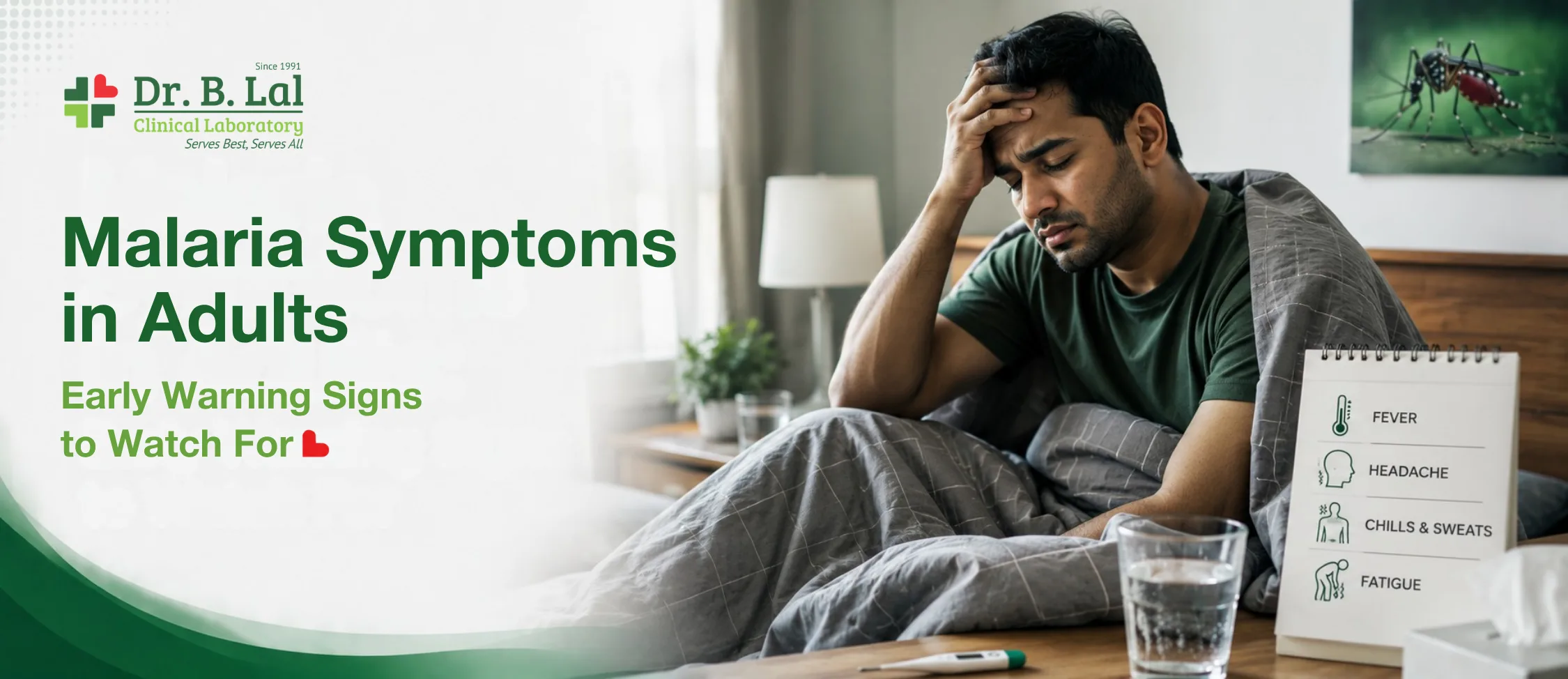
Malaria has a habit of announcing itself in the most unhelpful way possible - with symptoms that look almost exactly like a bad flu, or a stomach bug, or just general "something's off" fatigue. That resemblance is precisely why so many early cases get brushed aside or self-medicated for a few days before anyone thinks to get tested. If you live in or have recently travelled through a malaria-prone area, knowing the actual pattern to watch for can make a real difference in how quickly it gets caught.
How Malaria Actually Gets Into the Body
Malaria fever is caused by Plasmodium parasites, transmitted through the bite of an infected female Anopheles mosquito. Once the parasite enters the bloodstream, it travels to the liver, multiplies quietly for a while, and only later re-enters the bloodstream to start infecting red blood cells - which is when symptoms actually begin. During this early liver phase, a person generally feels completely fine, with no outward sign that anything's wrong.
The gap between the mosquito bite and the first symptoms - called the incubation period - is typically 7 to 30 days, according to the CDC, though this varies depending on which Plasmodium species is involved. Some infections show up within a week; others, particularly Plasmodium vivax, can stay dormant in the liver and cause symptoms months or even up to a year later. This is exactly why malaria should stay on the radar even well after a trip to an endemic region - a fever "out of nowhere" long after travel isn't necessarily unrelated to it.
The Classic Three-Stage Pattern
One of the more distinctive things about malaria, and something that can genuinely help distinguish it from an ordinary viral fever, is the way symptoms unfold in a specific three-stage cycle, sometimes called a malaria paroxysm:
The cold stage (15–60 minutes): This starts suddenly - intense shivering, chills, and often a feeling of being freezing cold even as body temperature is actually climbing. Some people describe bed-shaking chills severe enough that it's hard to keep still.
The hot stage (roughly 2–6 hours): The chills give way to a high fever, sometimes reaching as high as 41°C (about 106°F), along with a pounding headache, flushed skin, and a rapid pulse. This is usually the most miserable part of the cycle.
The sweating stage (2–4 hours): The fever breaks suddenly, triggering heavy, drenching sweat as the body temperature rapidly drops back toward normal. People often feel noticeably better afterward, sometimes falling asleep from sheer exhaustion.
Here's the part worth knowing specifically: that temporary relief at the end of the sweating stage is often mistaken for genuine recovery, which delays people from seeking testing - a mistake that can matter a lot if the underlying infection is left untreated. If this fever pattern seems to repeat every couple of days, that's a meaningful clue, not a coincidence.
It's also worth knowing that this classic three-stage cycle isn't always seen clearly, especially early on or in people with partial immunity from prior exposure - so its absence doesn't rule malaria out either.
If you experience any symptom related to malaria than talk to a doctor and book your blood test - Malaria Blood Test
Other Symptoms to Watch For
Alongside the fever cycle, several other symptoms commonly show up:
- Severe headache
- Muscle and joint aches
- Nausea, vomiting, and sometimes diarrhoea
- Loss of appetite
- General fatigue and weakness
- Mild jaundice (yellowing of the skin or eyes) in some cases
Two or more of these appearing together, especially alongside the fever pattern, is generally considered enough reason to get tested promptly rather than waiting to see if things improve on their own.
Why Malaria Gets Mistaken for Other Illnesses
Especially in the first few days, malaria symptoms overlap heavily with the flu, typhoid, and even early dengue - no runny nose, no distinctly identifying rash, just fever, aches, and fatigue. This overlap is exactly why self-diagnosing or waiting it out at home carries real risk in a malaria-prone area. A rapid diagnostic test or a blood smear is the only reliable way to actually confirm or rule out malaria, and testing is quick, accessible, and worth doing rather than guessing based on symptoms alone.
When Malaria Becomes an Emergency
Most malaria cases, when treated promptly, resolve fully with appropriate medication. But left untreated, or in certain higher-risk infections - particularly Plasmodium falciparum - malaria can progress to severe disease fairly quickly. According to the CDC, untreated infection can lead to serious complications including anaemia, jaundice, kidney failure, seizures, mental confusion, coma, and death.
Warning signs that call for immediate emergency medical attention include:
- Difficulty staying awake or sudden confusion
- Repeated seizures
- Extreme weakness, being unable to sit, stand, or walk without help
- Persistent vomiting, unable to keep fluids or medication down
- Rapid or laboured breathing
- Very dark urine, or signs of jaundice worsening quickly
These signs point toward what's known as severe or cerebral malaria, and they require hospital-level care without delay - this isn't a situation for a wait-and-watch approach at home.
Who's at Higher Risk of Complications
While anyone can develop severe malaria, certain groups face a notably higher risk of complications if infected: pregnant women, young children, older adults, people without prior exposure or immunity to malaria (such as travellers visiting an endemic area for the first time), and anyone with a weakened immune system. If you fall into one of these groups and develop a fever after potential exposure, it's worth treating it with extra urgency rather than waiting to see how it develops.
What to Do If You Suspect Malaria
If you've had a fever, especially a cyclical one with chills and sweating, and you live in or have recently travelled to a malaria-endemic area, the right move is a prompt blood test - not home remedies, and not waiting for the fever to "clear on its own." Malaria is a curable disease when diagnosed and treated correctly and quickly, but that outcome depends heavily on catching it early rather than late.
Conclusion
Malaria's early symptoms are frustratingly easy to dismiss as an ordinary viral fever, which is exactly why it deserves more suspicion than most flu-like illnesses, particularly in or after travel to an endemic area. The cyclical chills-fever-sweat pattern is a genuinely useful clue, but its absence doesn't rule malaria out, and only a proper blood test can confirm it either way. When in doubt, especially with a fever that keeps returning, get tested rather than waiting - malaria responds well to timely treatment, but that window matters.