
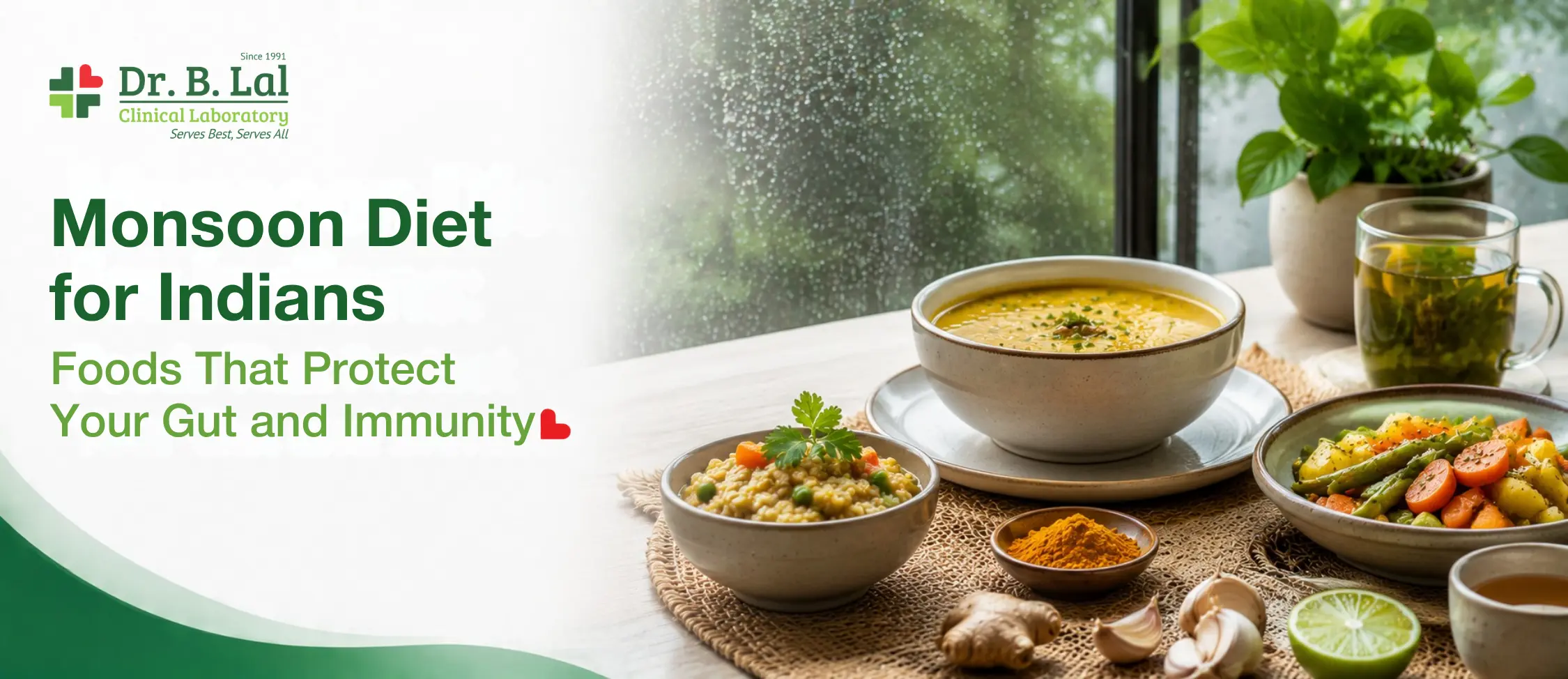
There's something about the first monsoon rain that makes everyone want pakoras and chai on the balcony. Fair enough - it's earned, after months of heat. But this is also the season your body quietly struggles the most, and most people don't realise it until they're the third person in the office down with a stomach bug or a cold that won't quit. A well-thought-out monsoon diet isn't about giving up the pakoras entirely. It's about knowing which foods work with your body during these months, and which ones are just asking for trouble.
Why Your Body Needs a Different Monsoon Diet in the First Place
Here's the part that surprises people: monsoon doesn't just change the weather outside, it changes what's happening inside you too. Humidity and temperature swings tend to slow digestion down - in Ayurveda this is described as a weakening of Agni, the digestive fire, though you don't need to buy into the framework to notice the effect. Heavy or oily food that your body handled fine in April can sit like a brick in August.
At the same time, water and food contamination goes up sharply. Damp conditions are exactly what bacteria and waterborne pathogens like to grow in, which is why gastroenteritis, typhoid, and hepatitis A cases all tend to spike during these months. Your immune system is essentially fighting on two fronts at once - slower digestion and higher pathogen exposure - which is exactly why a thoughtful monsoon diet matters more now than in most other seasons.
What a Good Monsoon Diet Should Actually Include
Warm, freshly cooked meals should form the backbone of any monsoon diet. Skip the leftovers sitting out, and lean into khichdi - rice and moong dal cooked together - which is about as gentle on the gut as Indian food gets, while still being genuinely filling. Warm soups work the same way.
Digestive spices deserve a real place in your monsoon diet, not just as flavouring. Turmeric, ginger, black pepper, and cumin all support digestion and carry genuine antimicrobial properties - this isn't just kitchen folklore. Turmeric paired with a pinch of black pepper is a classic combination for a reason: the pepper meaningfully improves how much curcumin (turmeric's active compound) your body actually absorbs. A cup of ginger or tulsi tea through the day does real, quiet work here too.
Vitamin C-rich fruits belong on every monsoon plate. Amla, guava, and lemon are all excellent, easily available choices, and jamun - genuinely a monsoon specialty - brings its own added benefit of helping regulate blood sugar. Pears and apples are safer picks than watermelon or muskmelon right now, since high-water-content fruits can slow digestion further and carry more contamination risk if they've been sitting cut and exposed.
Probiotic foods round out a solid monsoon diet. Fresh homemade curd or buttermilk supports the gut bacteria that are, in a very real sense, the frontline of your immune system. Stick to plain curd rather than flavoured, sugary versions.
Vegetables that grow above ground - gourds, pumpkin, carrots - tend to be safer monsoon choices than leafy greens, which pick up dirt, pesticide residue, and sometimes small pests during the rains. If you can't do without spinach or methi, wash it thoroughly in salted, turmeric-infused water and cook it properly rather than eating it raw.
Monsoon season brings a lot of seasonal allergy blood check can confirm - Fever Care Package
What Your Monsoon Diet Should Steer Clear Of
Street food is the big one, and it's worth being blunt about it - the contamination risk during monsoon is genuinely higher than the rest of the year, and this is exactly when a lot of seasonal stomach infections trace back to something eaten outside the home.
Raw salads and pre-cut fruit sold outdoors carry similar risk. It's not that raw food is inherently bad — it's that the water used to wash it, and the surfaces it's been sitting on, are far more likely to be carrying something during humid months.
Deep-fried snacks, ironically the thing everyone craves most when it rains, are genuinely harder to digest when your digestive system is already working slower than usual. This doesn't mean skipping pakoras forever - baked sweet potato fries or air-fried versions scratch the same itch without weighing the gut down as much.
High-water-content fruits and vegetables like watermelon, muskmelon, and cucumber are worth cutting back on specifically because of monsoon's contamination risk, even though they're perfectly fine the rest of the year.
Cold foods and drinks - ice cream, chilled beverages, tend to work against an already-weakened digestive system and are commonly linked to the colds and throat infections that seem to circulate nonstop during these months.
Seafood, particularly in coastal regions, is often best limited during peak monsoon, since this coincides with the breeding season for a lot of fish and shellfish, when quality and safety both become harder to guarantee.
Hydration Still Matters, Even If You Don't Feel Thirsty
One quirk of monsoon is that people drink less water simply because they don't feel as thirsty in cooler, humid weather, but your body still needs it just as much. The bigger issue isn't quantity, though, it's source. Stick to boiled or filtered water, and treat tap water with real caution during these months. Coconut water, warm soups, and homemade fresh juices are all good ways to stay hydrated without relying on anything that might be contaminated.
Small Habits That Round Out a Monsoon Diet
Eating smaller, more frequent meals rather than three large ones tends to sit easier on a slower digestive system. Chewing food properly and eating without rushing genuinely helps too, it sounds like an obvious thing to say, but it's one of the simplest things people skip when the weather has everyone eating on the go between rain showers.
Conclusion
However, a balanced monsoon diet is not one which imposes restrictions on itself for no reason at all; it is one in which you understand that your body has been subjected to a whole new set of stresses during these months and cater to it accordingly. It's all about warm, homemade food, digestive spices, foods that have high Vitamin C content, and probiotics, while avoiding street food, salads, and fried items does the rest of the work. It doesn't mean that you sacrifice all your indulgences in the name of maintaining a monsoon diet, but it's just being a little more cautious about how you indulge in them.