
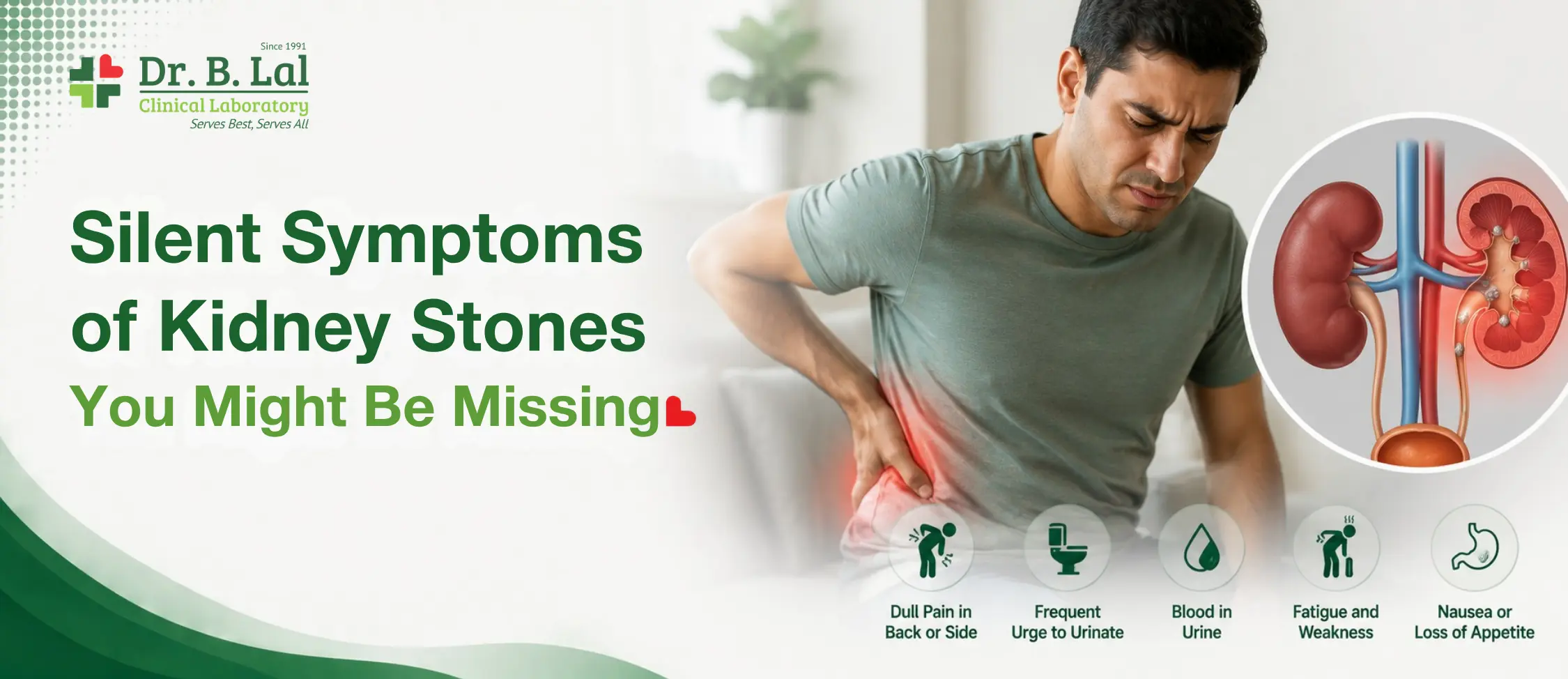
Kidney stones have a reputation, and it's well earned, the kind of pain that sends people straight to the emergency room, often described as worse than childbirth or a broken bone. But that reputation is also a little misleading, because it sets up an expectation that if you're not doubled over in agony, you're probably fine. A lot of kidney stones don't work that way. They form quietly, sit for a while, and only produce vague, easy-to-dismiss signals, right up until they don't.
Why Some Kidney Stones Stay Silent Longer Than Others
Whether a kidney stone causes obvious pain or barely announces itself comes down to a few specific factors. Pain typically kicks in when a stone shifts from the kidney into the ureter, the narrow tube connecting kidney to bladder, creating pressure and spasms as it moves. But a stone that stays put in the kidney, or one that's small enough to move slowly, may never create that sudden pressure spike. Instead, the body adapts gradually, and the result is dull, inconsistent discomfort rather than the classic sharp attack most people associate with kidney stones.
This is exactly why a meaningful number of kidney stones are only discovered incidentally, found on a scan or ultrasound ordered for something else entirely, with the person having no idea a stone was there at all. Research on ureteral stones has confirmed this pattern isn't rare: asymptomatic stones are commonly picked up during routine imaging, sitting quietly in the kidney without ever producing the textbook symptoms people expect.
Check your kidney health now - Kidney Function Test
The Silent Back Discomfort That Gets Blamed on Everything Else
One of the early signs that gets ignored in most cases is a persistent dull pain in the back or side of your body, mostly on the lower part of the rib cage, where your kidneys are located. It is very easy to brush off such a symptom for muscle strain due to workouts or improper sleep. However, unlike muscle strain, this pain does not go away with rest or changing positions, which is a clear indication of having a kidney stone problem in your body.
Subtle Urinary Changes Worth Paying Attention To
Long before a stone causes a full-blown attack, it can quietly disrupt normal urine flow, and these urinary symptoms are some of the easiest silent signs to miss because they mimic other, more common issues:
- A frequent urge to urinate, even when very little actually comes out
- A mild burning sensation while urinating, sometimes mistaken for a urinary tract infection
- A sense of pressure or incomplete emptying after using the bathroom
Urinating in smaller amounts than usual, despite feeling an urgent need to go
Here's a genuinely useful clue when these symptoms show up: if it feels like a UTI but a urine culture comes back negative for bacteria, that mismatch is worth mentioning to your doctor specifically, since it's a pattern that often points toward a stone rather than an infection.
Blood in the Urine That's Easy to Overlook
Hematuria, blood in the urine, is one of the more telling silent signs, and it doesn't always look dramatic. Sometimes urine turns visibly pink, red, or a cola-brown colour as a stone scrapes against the lining of the urinary tract. But other times, the amount of blood is small enough that it's only detectable under a microscope during a routine urine test, with no visible colour change at all. This is part of why a simple urinalysis, done for an unrelated reason, sometimes ends up being what actually catches a kidney stone early.
How Silent Kidney Stones Show Up Differently in Children
It should be noted that the symptoms of kidney stones in children and adolescents require special attention in a separate section of this paper as they may differ from the symptoms that adults have. While adults usually have flank pain, in case of children the most common symptom will be abdominal pain which may be considered as a result of either a stomach infection or the wrong choice of food. One more factor that should be taken into account in the case of children is recurrent urinary tract infections which happen for no specific reason. In addition to that, changes in urinating habits in children may also be viewed as a symptom of kidney stones. For example, bed wetting in children who did not suffer from it before.
Why Ignoring Silent Kidney Stones Carries Real Risk
It's tempting to assume that a stone causing no dramatic pain isn't worth worrying about, but that assumption doesn't hold up well against the evidence. A stone that sits quietly, partially obstructing urine flow without triggering obvious symptoms, can still lead to genuine complications over time, including recurrent infections and, in more serious cases, permanent kidney damage from prolonged obstruction. Medical research on this specific issue has been fairly direct about it: even asymptomatic stones generally warrant active management rather than being left alone simply because they aren't causing pain, particularly once they're identified.
When to Get Checked, Even Without Severe Pain
Getting yourself checked is not at all a bad idea if you have been experiencing a persistent back pain or side pain that is different from the usual strain on the muscles, urinary symptoms such as those related to a urinary tract infection that do not respond to the usual methods of treatment or keep recurring even though the culture result is negative, or the presence of any blood in your urine. None of these symptoms require being severe in order for you to get them checked.
Conclusion
Kidney stones don't always follow the dramatic script most people expect. A fair number develop and sit quietly, revealing themselves only through a persistent backache, subtle changes in urination, or blood in the urine that's easy to dismiss as something else entirely. Catching these quieter signs early, rather than waiting for the kind of pain that sends people to the emergency room, genuinely matters, since even a "silent" stone left unaddressed can lead to complications down the line.