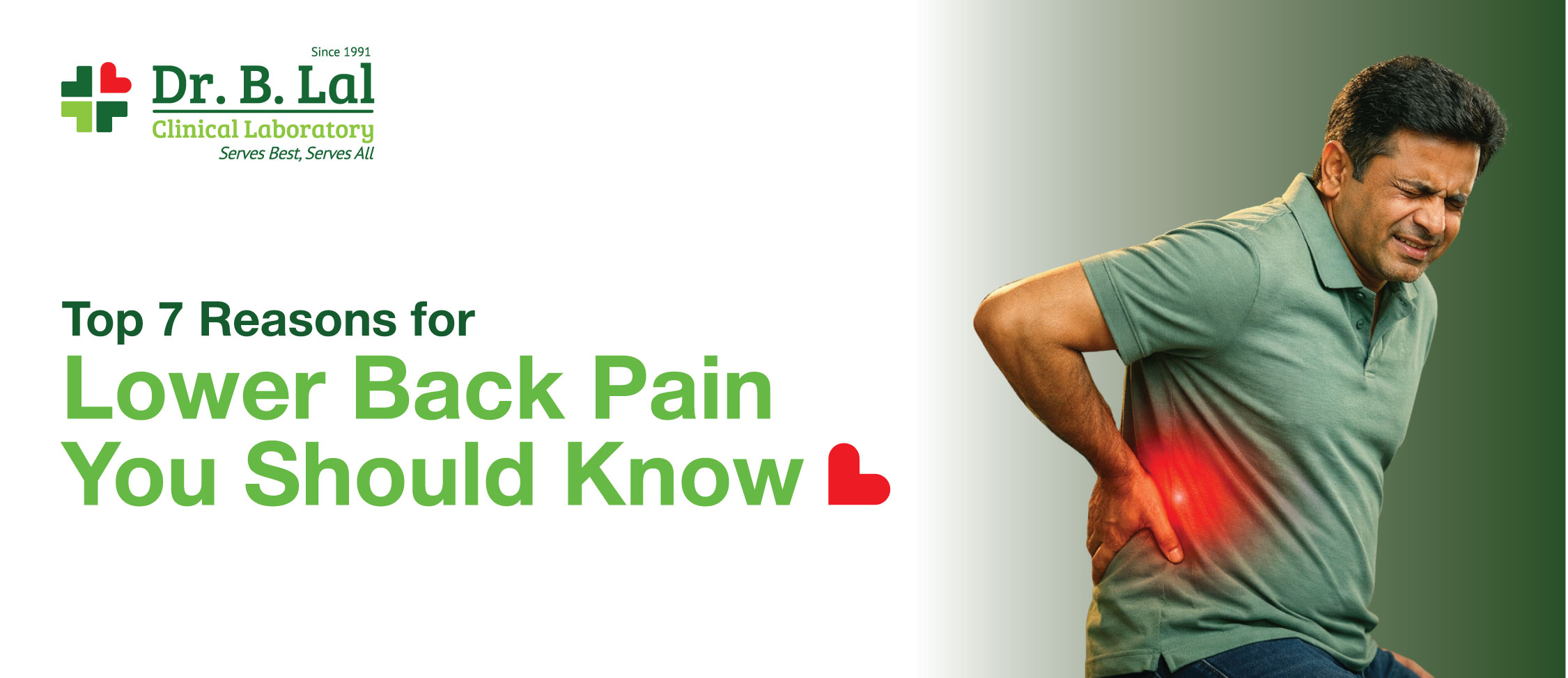
In India lower back pain is a very common problem that many people experience, often it affects their daily activities and overall well-being. Lower back pain can be mild ache to severe, making even simple tasks difficult. Recognizing the main reasons behind your lower back pain is crucial for your health. This knowledge allows you to take better care of your back, take on preventive measures, and know exactly when to seek professional medical advice. It's important to remember that this information is for awareness, and you should always consult a professional doctor for accurate diagnosis and proper guidance.
Here are 7 common reasons for lower back pain you should know:
1. Muscle or Ligament Strain
- What it is: One of the most common causes of lower back pain. It happens when the muscles or ligaments (strong tissues that connect bones) in your back are overstretched, or twisted.
- Why it happens: Due to heavy lifting objects incorrectly, sudden awkward movements, poor posture, or difficult physical activity without warm-up.
- Symptoms: You might feel a dull ache or sharp pain, stiffness in the back, and difficulty moving. The pain usually gets worse with certain movements.
- Preventive Care: Always lift heavy items with your knees, not your back. Maintain good posture while sitting and standing. Do regular, gentle exercises to strengthen your core muscles.
- Diagnostic Importance: While often minor it resolves with rest, if the pain is severe, lasts long, or doesn't improve, a doctor can examine you to ensure there's no serious injury or underlying issue.
2. Slipped Disc
- What it is: Our spine has soft, jelly-like cushions called discs between the spinal bones (vertebrae). A "slipped disc" or "herniated disc" means that one of these discs bulges out or crack, pressing on nearby nerves.
- Why it happens: Often due to age-related wear and tear, but can also occur from sudden strain, heavy lifting, or an injury.
- Symptoms: Pain that often radiates from the lower back down one leg (often called Sciatica), numbness, tingling, or weakness in the affected leg or foot. The pain can be sharp and shooting.
- Preventive Care: Maintain a healthy body weight to reduce pressure on your spine. Learn proper lifting techniques. Do regular, low-impact exercises to keep your back strong and flexible.
- Diagnostic Importance: It's very important to see a doctor if you suspect a slipped disc. Early diagnosis through physical examination and imaging tests (like MRI) can help manage the condition and prevent further nerve damage.
3. Sciatica
- What it is: Sciatica is not a disease itself, but a symptom. It describes pain that travels along the sciatic nerve, which runs from your lower back, through your hips and buttocks, and down each leg.
- Why it happens: Most commonly, sciatica is caused by a slipped disc or spinal stenosis (narrowing of the spinal canal) pressing on the sciatic nerve.
- Symptoms: A burning, shooting, or sharp pain that goes down one leg, sometimes accompanied by numbness, tingling, or weakness in the leg or foot.
- Preventive Care: Regular physical activity, avoiding prolonged sitting, and maintaining good posture can help prevent sciatica. Strengthening your core muscles is also beneficial.
- Diagnostic Importance: Since sciatica is a symptom, a doctor needs to find the root cause. Proper diagnosis is crucial to address the underlying problem and prevent chronic pain or nerve damage.
4. Arthritis / Spondylosis
- What it is: Arthritis is inflammation of the joints. In the lower back, it's often osteoarthritis (also known as spondylosis), which is a "wear and tear" type of arthritis. The cartilage (cushioning tissue) in the spinal joints wears down over time.
- Why it happens: It's common with aging. Factors like genetics, previous injuries, and also obesity can contribute.
- Symptoms: Stiffness in the back, especially in the morning or after periods of inactivity. Pain that can worsen with activity. Reduced flexibility in the back.
- Preventive Care: Staying active with gentle exercises (like walking or swimming), maintaining a healthy weight, and ensuring good posture can help manage and slow down arthritis.
- Diagnostic Importance: If you experience persistent back stiffness and pain, especially at older age, consult a doctor. X-rays and physical examination can help diagnose arthritis, allowing for proper management to improve quality of life.
5. Spinal Stenosis
- What it is: This condition means that the spaces within your spine (the spinal canal) narrow. This narrowing can put pressure on your spinal cord and the nerves that travel through your spine.
- Why it happens: It's often due to age-related changes, such as bone spurs, thickened ligaments, or a bulging disc.
- Symptoms: Numbness, tingling, weakness, or cramping in the legs. Pain that often gets worse when standing or walking, and improves when leaning forward or sitting down.
- Preventive Care: Regular exercise, maintaining good posture, and doing core-strengthening exercises can help keep your spine healthy.
- Diagnostic Importance: If you have symptoms like leg pain or weakness that improve when you lean forward, see a doctor. Imaging tests like MRI can confirm spinal stenosis. Early diagnosis helps manage symptoms and can prevent further severity.
6. Osteoporosis
- What it is: Osteoporosis is a condition where your bones become weak and brittle, making them more likely to fracture. In the spine, this can lead to "compression fractures" where the spinal bones collapse, causing significant back pain.
- Why it happens: It's common in older adults, especially women after menopause, due to a decrease in bone density. Lack of calcium, Vitamin D, and physical activity can also contribute.
- Symptoms: Often, there are no symptoms until a fracture occurs. Then, you might experience sudden, sharp back pain, loss of height over time, or a stooped posture.
- Preventive Care: Consume a diet rich in calcium and Vitamin D. Engage in exercises like walking or jogging to strengthen bones. Avoid smoking and alcohol.
- Diagnostic Importance: If you are at risk for osteoporosis (e.g., older age, post-menopausal), discuss bone density testing (DEXA scan) with your doctor. Early detection and preventive measures are key to reducing fracture risk.
7. Kidney Issues
- What it is: Sometimes, lower back pain is not related to the spine at all. Problems with your kidneys, such as kidney stones or a kidney infection, can cause pain that is felt in the lower back, usually on one side. This is called referred pain.
- Why it happens: Kidney stones form from mineral deposits and can block urine flow. Infections are usually caused by bacteria.
- Symptoms: Sharp, severe pain in the side and back, below the ribs (often radiating towards the abdomen or groin). Other symptoms might include fever, chills, painful urination, frequent urination (for infection), nausea, or vomiting.
- Preventive Care: Drink plenty of water throughout the day to help prevent kidney stones. Practice good hygiene to reduce the risk of urinary tract and kidney infections.
- Diagnostic Importance: If you experience extreme lower back pain, especially with fever, chills, or changes in urination, seek medical attention immediately. A doctor can perform urine tests, blood tests, and ultrasound to diagnose kidney problems, which are crucial to treat promptly to prevent serious complications.
Importance of Diagnostic Testing for Lower Back Pain
Issues with lower back pain can be intricate, and sometimes there may be no clear indication regarding what is causing such pain. Accurate testing can be critical at such points. Although a physical examination carried out by a physician and examining patients' medical history can form the basics, effective testing can deliver objective information regarding what exactly is happening. This can separate cases involving general strains from conditions such as a disc herniation and others such as kidney conditions.
Diagnostic tests can include:
- Imaging Scans: X-rays, MRI (Magnetic Resonance Imaging), and CT (Computed Tomography) scans are powerful tools. X-rays can reveal bone structure issues like fractures or arthritis. MRI offers detailed views of soft tissues, including discs, nerves, and ligaments, making it invaluable for diagnosing disc problems or nerve compression. CT scans provide cross-sectional images, useful for bone abnormalities and spinal issues.
- Blood Tests: These can help identify inflammatory conditions like certain types of arthritis (e.g., measuring ESR, CRP, HLA-B27) or infections that might be contributing to pain.
- Urine Tests: Essential for ruling out kidney infections or kidney stones, especially when back pain is accompanied by urinary symptoms.
- Bone Density Scans (DEXA): Recommended for those at risk of osteoporosis to assess bone strength and fracture risk.
In offering images and markers, diagnosis tests the doctor towards a correct diagnosis, which is the beginning of a successful approach to a Diagnosis Test. Guesswork will result in prolonged pain or deterioration of a certain situation.
When to Consult a Doctor or Get Tested
Though occasional backaches may be cured by sleep and homely treatment, there are symptoms for which you require instant attention from a doctor. You must understand when your Back Ache indicates a serious problem:
- Persistent or Worsening Pain: If your back pain doesn't improve after a few days of rest, or if it regularly gets worse.
- Pain Extend Down Your Leg: Especially if it goes below the knee, or is accompanied by numbness, tingling, or weakness in your leg or foot (potential signs of sciatica or nerve compression).
- Sudden, Severe Back Pain: Especially after an injury, fall, or accident.
- Bowel or Bladder Problems: New onset of difficulty controlling your bowels or bladder, or numbness around the groin area, could indicate a serious nerve problem requiring emergency care.
- Fever, Chills, or Unexplained Weight Loss: These symptoms alongside back pain could point towards an infection, inflammation, or other serious medical conditions.
- History of Cancer or Osteoporosis: If you have a history of cancer or known osteoporosis, new or worsening back pain should always be evaluated promptly.
- Pain Worse at Night or When Lying Down: This can sometimes be a red flag for certain underlying conditions.
Don’t delay seeking doctor advice when you have problems like the ones above. A doctor visit and some tests will enable doctors to find a solution for you.