
 +91 9166125555


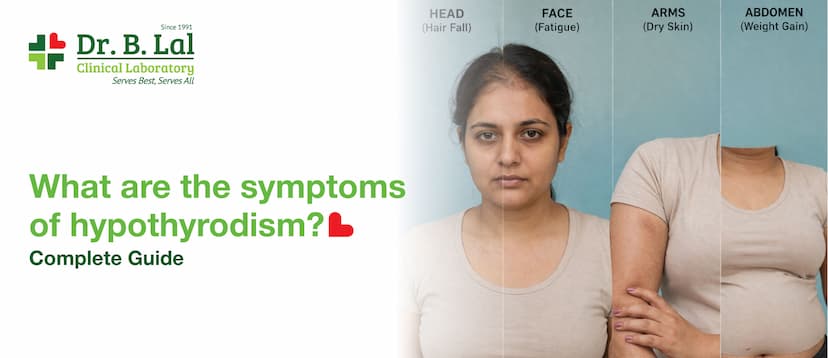
Underactive Thyroid (hypothyroidism) is caused by the failure of the thyroid gland to produce adequate amounts of hormones. These hormones play critical roles in regulating your bodily activities including your energy level, metabolic rates, body temperatures, and your heart rate among others. This condition causes your body to slow down in several ways.
The challenge with hypothyroidism is that it occurs gradually over time and can take up to years to notice. Patients tend to overlook these symptoms due to their seeming normalcy, such as feeling sleepy and gaining weight. It is for this reason that knowledge on symptoms is critical.
In this complete guide, we will explain the common, early, severe, and less-known symptoms of hypothyroidism in very simple words.
Thyroid glands are a butterfly-shaped organ that lies at the neck region. Two main hormones secreted by the thyroid gland are T3 and T4 hormones. These hormones regulate the speed at which the body operates.
If there is an underactivity in the thyroid, the body’s metabolic rate reduces. This is because the thyroid regulates the rate at which food is broken down for energy in the body.
Here are the most common symptoms people notice:
1) Constant Tiredness
Feeling tired throughout the day is another very common symptom.
Despite getting adequate sleep, a person with hypothyroidism may feel tired due to insufficient thyroid hormone production that keeps their metabolic processes going.
2) Weight Gain
Are you feeling cold when others around you don’t?
Individuals suffering from hypothyroidism frequently get easily cold due to low body heat production.
3) Sensitivity to Coldness
Do you often feel cold when everyone else feels normal?
People with hypothyroidism often become more sensitive to cold because the body produces less heat.
4) Dry Skin
Dry, rough, or flaky skin is very common.
Low thyroid hormone slows skin cell renewal, making the skin look dull and dry.
5) Hair Fall and Thinning Hair
Hair may become thin, dry, weak, and fall more than usual.
Some people also notice thinning of eyebrows, especially the outer side.
6) Constipation
Slow digestion is a common symptom.
Because the metabolism slows, the movement of the intestines also slows down, leading to constipation.
Hypothyroidism is more common in women, and it can affect hormones strongly.
Heavy or Irregular Periods
Women may notice:
Difficulty Getting Pregnant
Low thyroid hormone can affect ovulation, which may make it harder to conceive.
Mood Changes
Many women experience:
Hypothyroidism can also change how the body looks.
Puffy Face
The face may look swollen or puffy, especially around the eyes.
Swelling in Hands and Feet
Some people feel mild swelling in fingers, legs, or feet.
Hoarse Voice
A deeper or hoarse voice can happen because tissues in the throat may swell slightly.
Low thyroid levels can affect muscles and joints too.
Common signs include:
Some people feel like their body is “heavy” all the time.
The thyroid also affects brain function.
Poor Memory
People may forget small things more often.
Trouble Focusing
It may become harder to concentrate on work or daily task.
Slow Thinking
Many people describe this as brain fog.
Depression
Low thyroid hormone can strongly affect mood and may lead to depression symptom.
In some cases, hypothyroidism affects the heart.
Possible symptoms:
A slow pulse can be a sign that the body is working at a slower speed.
In the beginning, symptoms are often mild and easy to ignore.
Early signs may include:
These signs are often confused with stress, poor sleep, aging, or poor diet.
If hypothyroidism is not treated for a long time, symptoms may become more serious.
These include:
In rare severe cases, it may lead to a dangerous condition called myxedema, which needs emergency treatment.
You should consider a thyroid test if you have:
A simple TSH blood test, along with T3 and T4, help confirm hypothyroidism.
The symptoms of hypothyroidism may seem small at first, but they can affect your energy, mood, weight, skin, hair, digestion, and periods.
The most common symptoms include:
The good thing is that hypothyroidism is easy to diagnose with a blood test and can usually be managed well with the right treatment.
If you notice these symptoms for a long time, it is best to get your thyroid profile test done early.





 Add Tests & Packages