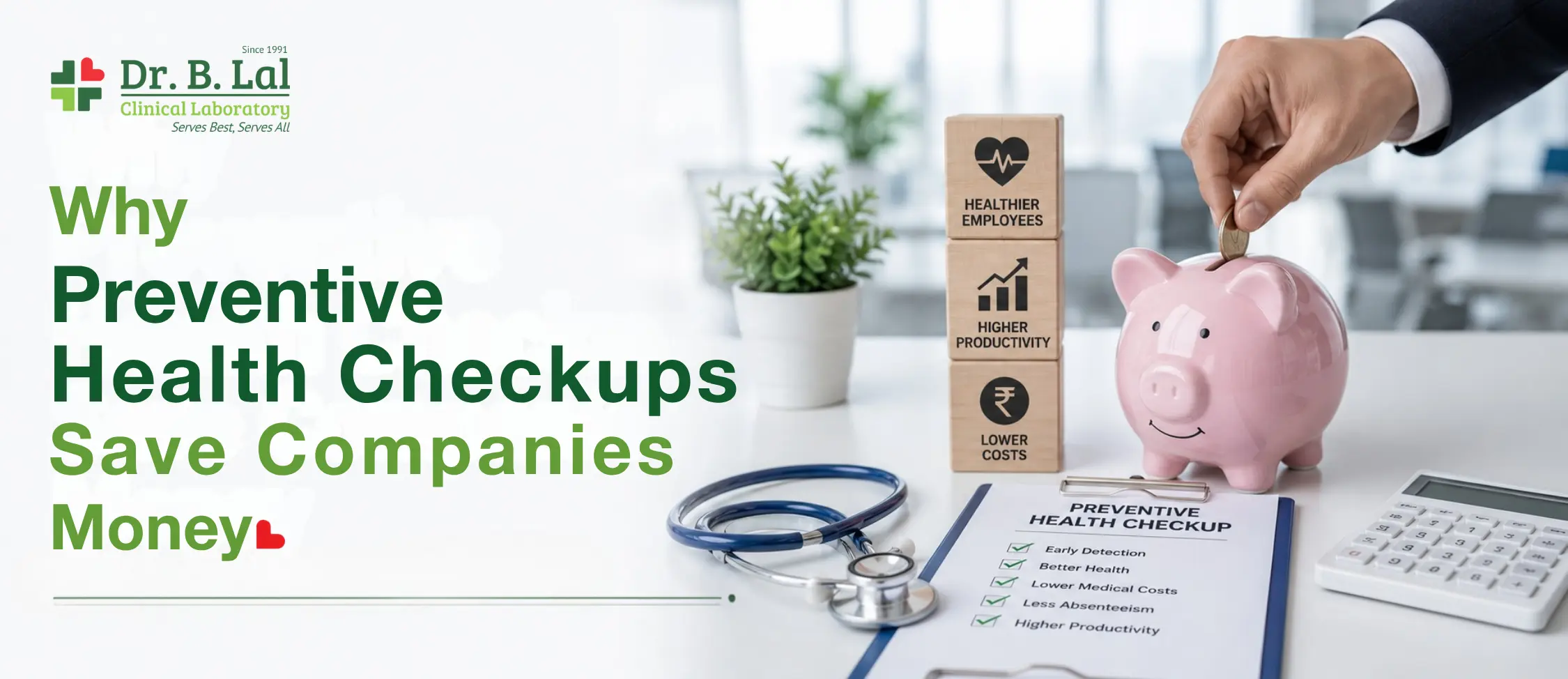
Most finance teams look at rising healthcare costs the way they look at a rising electricity bill, an unavoidable line item that just keeps creeping up every year. What often gets missed is that a meaningful chunk of that spend is avoidable, and the fix isn't complicated. Preventive health checkups save companies money in a fairly direct, well-documented way: by catching problems while they're still cheap and manageable, instead of paying for them once they've become expensive and urgent.
Preventive Health Checkups Save Companies Money by Targeting Where the Spending Actually Is
Here's a number worth sitting with: according to the CDC, chronic diseases and mental health conditions together drive roughly 90% of the $4.9 trillion spent annually on U.S. healthcare. That's not spread evenly across many small issues, it's concentrated in a specific, largely predictable set of conditions: heart disease, diabetes, hypertension, and a handful of cancers. Preventive health checkups save companies money precisely because they target this exact category, catching these conditions at the stage where a lifestyle change or an inexpensive medication does the job, rather than after they've progressed to something requiring surgery, long-term treatment, or hospitalisation.
High blood pressure alone is a useful example of scale, it's one of the largest single drivers of healthcare costs, running into the hundreds of billions annually in the U.S., and it's also one of the easiest conditions to catch early through a basic checkup, often with no symptoms at all until it's caused real damage.
Preventive Health Checkups Save Companies Money Because Early Detection Is Genuinely Cheaper
The financial logic here isn't abstract, it's a fairly simple comparison. A preventable hospital admission for uncontrolled diabetes, or a cancer diagnosed at a late stage, can run into the hundreds of thousands of Rupees in treatment costs. The same conditions, caught early through a routine screening, are typically managed with a fraction of that cost, medication adjustments, dietary changes, or a minor procedure rather than an extended hospital stay. This is exactly why preventive health checkups save companies money in a way that's easy to demonstrate with real numbers rather than vague wellness rhetoric: the investment in screening is consistently a small percentage of what the same condition costs once it's escalated into a full claim.
Preventive Health Checkups Save Companies Money by Reducing Absenteeism and Presenteeism Together
Cost savings from preventive checkups aren't limited to the medical claims line. Employees managing an undiagnosed or poorly controlled chronic condition tend to take more sick days, and just as significantly, they tend to underperform while still at their desks, a cost that's harder to see on a spreadsheet but genuinely larger in aggregate. Catching hypertension, prediabetes, or thyroid dysfunction early, before it causes fatigue, brain fog, or repeated absences, protects productivity in a way that's just as real as the direct medical savings, even if it doesn't show up as cleanly in a claims report.
Preventive Health Checkups Save Companies Money on Retention, Too
This part gets underweighted in most cost-benefit conversations, but it matters. Employees who feel their employer genuinely invests in their health tend to stay longer, and turnover is expensive by any measure, replacing a departing employee typically costs somewhere between half and twice their annual salary once recruitment, onboarding, and lost productivity are factored in. A well-run preventive checkup program is one of the more visible, tangible ways employees experience that investment directly, rather than reading about it in a benefits handbook they never open.
Preventive Health Checkups Save Companies Money Only When People Actually Use Them
Here's the honest caveat worth including: the ROI above depends entirely on utilisation, and that's where a lot of companies quietly lose the benefit. Interestingly, employers tend to underestimate how many of their employees actually have a chronic condition, one survey found that employers estimated 32% of their workforce had a chronic condition, while 59% of employees actually reported having at least one. That gap matters, because it suggests a real, undetected need sitting in most workforces that a checkup program is specifically designed to surface, but only if people show up for it.
Simply offering the benefit isn't enough. Companies that see the strongest returns tend to actively build a culture around using it, reminders through channels employees actually check, leadership visibly participating, and removing friction from booking and completing the checkup, rather than burying it in a benefits portal nobody opens after onboarding.
What a Cost-Effective Preventive Checkup Should Actually Include
Not every screening needs to be exhaustive to be effective. The tests with the clearest cost-saving track record tend to focus on a defined set of high-impact areas: a basic blood pressure and cardiovascular check, blood sugar and lipid profile testing, kidney and liver function, thyroid screening, and BMI assessment, supplemented with age- and risk-appropriate cancer screenings for a workforce that includes older employees. This is a fairly modest, well-established panel, not an exotic or expensive one, and it's precisely aimed at the conditions responsible for the bulk of downstream costs.
Conclusion
Preventive health checkups save companies money not as an abstract wellness principle, but through a fairly direct mechanism: catching common, high-cost conditions, heart disease, diabetes, hypertension, while they're still cheap and manageable, rather than paying for them after they've escalated into hospitalisations, long absences, or lost top talent. The return is well-documented and specific, not just goodwill dressed up as strategy. The one condition that determines whether any of this actually pays off is simple but easy to overlook: the program has to be genuinely used, not just offered.