Feeling feverish and your doctor just told you to get a Widal test done? It’s normal to feel curious or even a bit scared about what it actually means. The Widal test is a common blood test that helps detect antibodies against Salmonella typhi, the bacteria that causes typhoid fever.
But here’s the real thing — a positive Widal test result doesn’t always mean you have typhoid. Many people take it as a final confirmation, which is not correct. In this blog, we’ll explain what a positive Widal result really means, why it can sometimes be misleading, and how doctors look at it before confirming typhoid fever.
What is the Widal Test?
The Widal test is a diagnostic test that checks if your body has produced antibodies against Salmonella typhi and Salmonella paratyphi.
It has been used for more than a hundred years and is still quite popular in India and other developing countries where typhoid fever is common. The test helps doctors guess whether your fever and symptoms might be due to typhoid.
How Does the Widal Test Work?
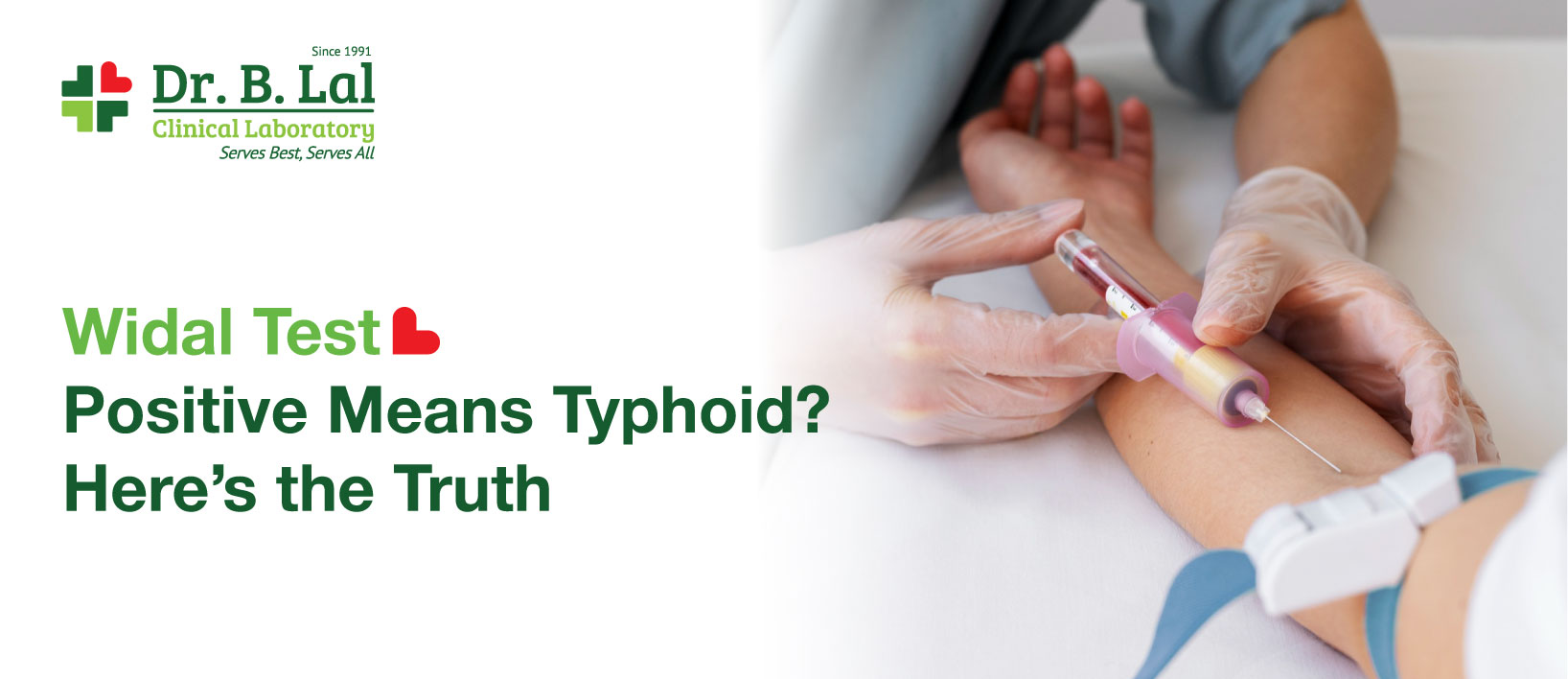
In the Widal test, a small blood sample is taken and mixed with certain Salmonella antigens called O (somatic) and H (flagellar) antigens.
If your immune system has produced antibodies against these antigens, the sample shows small clumps — called agglutination. The higher the titer (antibody level), the more likely it is that you have a recent or active infection.
But remember, the test doesn’t directly detect the bacteria. It only checks your body’s response. That’s why a Widal positive result alone isn’t enough for diagnosis.
What Does a Positive Widal Test Result Mean?
A positive Widal result simply means that your blood contains antibodies for Salmonella typhi or paratyphi. But this is not final proof that you currently have typhoid.
Antibodies may be present because of:
- A past infection
- A recent typhoid vaccine
- Cross-reaction with another infection
- Living in areas where typhoid is common
That’s why doctors always interpret Widal results along with symptoms and medical history.
Also Read: What to Eat During Typhoid Recovery to Regain Strength Faster
Does a Positive Widal Test Always Mean Typhoid?
No, not at all. A Widal positive report doesn’t always mean typhoid.
False positives are quite common, especially in people living in areas where typhoid cases occur frequently. Even after recovery, antibodies can stay in the body for months.
So even if your Widal test comes positive, your doctor will still advise other tests before starting treatment.
Confirmatory Tests for Typhoid Fever
To be sure, doctors prefer more specific tests like:
1. Blood Culture Test
The most reliable test — helps detect live bacteria in the blood, especially in early infection.
2. Stool or Urine Culture
Useful in later stages.
3. Typhidot or Tubex Test
Modern, faster tests that detect antibodies more accurately.
These tests help confirm whether the Widal result is accurate or just a false alarm.
Common Symptoms of Typhoid Fever
Typhoid symptoms often start slowly and look similar to other infections. Common symptoms include:
- Constant high fever
- Headache and body ache
- Loss of appetite
- Tiredness or weakness
- Stomach pain
- Constipation or diarrhea
- Mild rash on chest or abdomen
If you have these symptoms along with a positive Widal test, consult your doctor immediately.
What To Do If Your Widal Test is Positive
A positive Widal test can be confusing, but don’t panic. Avoid self-medication. Here’s what to do:
- Talk to your doctor — they’ll explain what the report means.
- Go for confirmatory tests like blood culture or Typhidot.
- Drink enough fluids to avoid dehydration.
- Take rest and eat light, easy-to-digest food.
- Follow your antibiotic course properly if prescribed.
- Avoid outside or street food until you fully recover.
How to Prevent Typhoid Fever
Preventing typhoid is easier than treating it. Follow these habits:
- Drink clean, filtered, or boiled water
- Eat freshly cooked meals
- Wash hands before eating
- Avoid raw salads from roadside vendors
- Take typhoid vaccination if advised by your doctor
Good hygiene is the best protection against typhoid.
Conclusion
A Widal test positive simply means your body has developed antibodies against typhoid bacteria — but it doesn’t always mean you’re infected right now. It’s just one part of the diagnosis.
If your Widal result is positive, let your doctor interpret it along with symptoms and other tests. With timely treatment and proper care, you can recover fully and avoid future infections too.