If you've ever planned a trip to certain countries in Africa or South America, you've probably run into a requirement that doesn't come up for most other travel vaccines, a yellow card, proof that you've been vaccinated against yellow fever, sometimes checked right at the airport before you're even allowed to board. It's one of the few diseases where vaccination isn't just a personal health decision, it's a legal entry requirement in over 40 countries. Understanding what yellow fever actually is makes that requirement make a lot more sense.
What Causes Yellow Fever
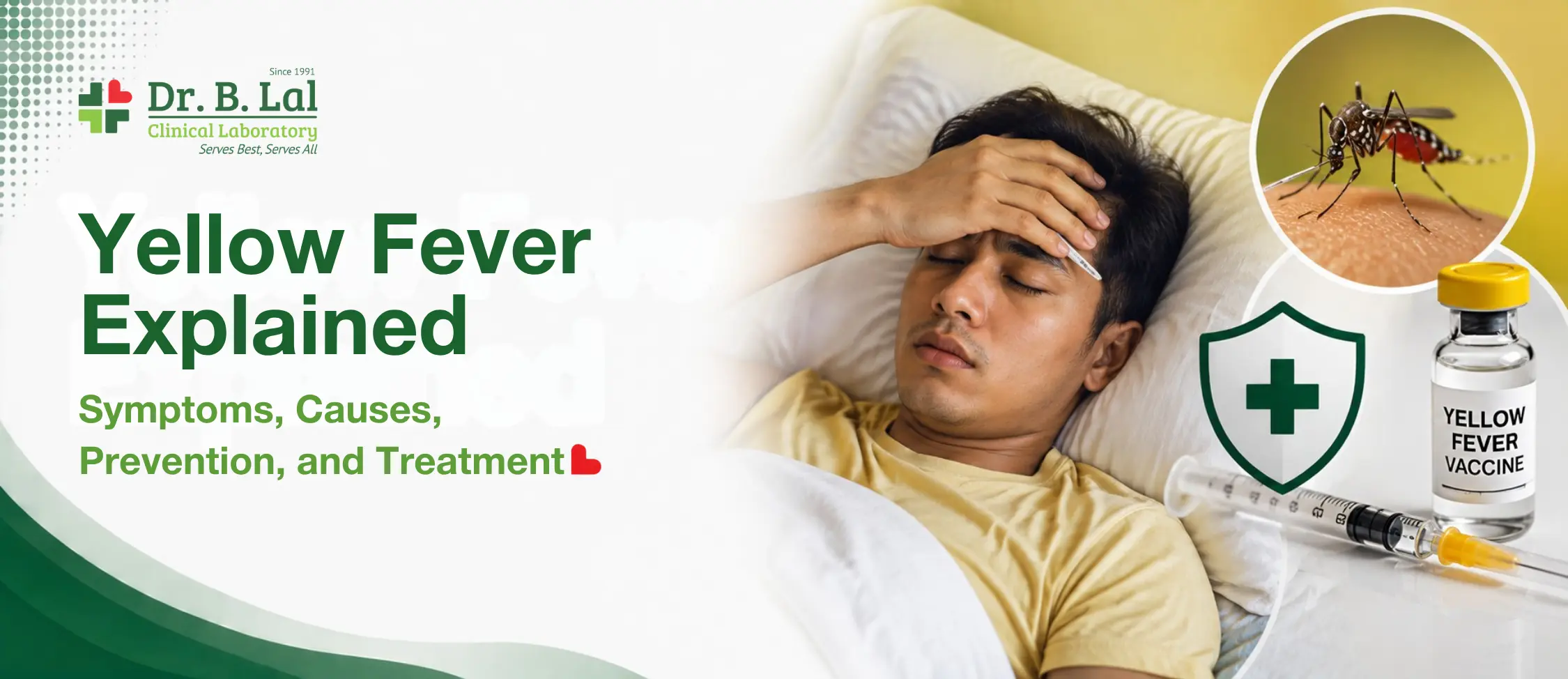
Yellow fever is caused by a virus from the flavivirus family, transmitted through the bite of infected mosquitoes, mainly Aedes aegypti, the same species responsible for spreading dengue fever and Zika. What makes yellow fever transmission a bit unusual is that monkeys serve as a natural reservoir for the virus in forested areas. Mosquitoes pick up the virus from infected monkeys, then pass it to humans working or living near forest edges, this is called the sylvatic, or jungle, cycle. From there, if an infected person carries the virus into a densely populated area with plenty of mosquitoes and low vaccination coverage, urban outbreaks can follow, spreading directly from person to mosquito to person.
This virus is restricted to certain areas in sub-Saharan Africa and some areas in Central and South America such as Brazil, Bolivia, Colombia, Ecuador and Peru. Yellow fever is not known to occur anywhere in Asia and it is for this very reason that it does not pose any kind of local threat to people in India.
The Two Phases of Yellow Fever Symptoms
According to the WHO, after a bite from an infected mosquito, the virus incubates in the body for 3 to 6 days before symptoms begin. Many infections, notably, produce no symptoms at all.
The acute phase is where most symptomatic cases start and, for the majority of people, end. Common symptoms include fever, chills, severe headache, back pain, general muscle aches, nausea, vomiting, fatigue, and loss of appetite. For most people, these symptoms resolve on their own within three to four days, and that's the end of it, no lasting effects, no further complications.
The toxic phase is where yellow fever earns its more serious reputation. Roughly 15% of people who develop symptoms go on to enter this second, more severe phase, typically after a brief period, around 24 hours, of feeling like they're recovering. In the toxic phase, high fever returns, and the virus begins affecting major organs, particularly the liver and kidneys. This is where the disease gets its name: liver involvement causes jaundice, the yellowing of skin and eyes that gives yellow fever its distinctive look. Other signs include dark urine, abdominal pain with vomiting, and in more severe cases, bleeding from the mouth, nose, eyes, or stomach.
The toxic phase is genuinely dangerous, case fatality rates range from 20% to 50% among those who reach this stage, with death typically occurring within 7 to 14 days if it happens. People who survive generally recover fully over several weeks to months, usually without lasting organ damage, and gain lifelong immunity against future yellow fever infection.
Why Yellow Fever Is Hard to Diagnose Early
One of the difficulties with yellow fever is that its initial symptoms bear an uncanny resemblance to other diseases. For instance, malaria fever, dengue, leptospirosis, and hepatitis all have similar symptoms during their initial stages. That is why laboratory confirmation is so important as opposed to the use of symptoms alone. A test that uses the Polymerase Chain Reaction method is conducted for the diagnosis of the virus from a blood sample, and the process can be completed in the first ten days since the patient gets sick. An antibody blood test may help in diagnosing the infection after the first ten days.
Yellow Fever Has No Specific Treatment
Here we should be very clear: there is not even a single antiviral drug available for the treatment of yellow fever directly. Treatment can only be supportive in case of people with mild symptoms, including bed rest and plenty of fluids, while patients showing symptoms in the toxic stage require intensive hospital treatment, involving treatment of dehydration, renal and hepatic functions, treatment of bleeding problems, and treating any possible secondary bacterial infection using antibiotics.
Given this complete absence of a targeted cure, prevention becomes the entire strategy, which is exactly why the vaccine plays such an outsized role in managing this disease globally.
Yellow Fever Prevention Comes Down Almost Entirely to Vaccination
The yellow fever vaccine is genuinely one of the more effective vaccines available, a single dose provides an estimated 99% protection within 30 days for most people, and current guidance considers that single dose sufficient for lifelong immunity, with no routine booster needed for most travelers.
The vaccine is usually advised for individuals aged above 9 months traveling to or living in locations where there is a risk of transmission of yellow fever. Infants below 9 months, pregnant and lactating women if the travel can be deferred, and individuals with certain diseases such as thymus disorders and immune suppression are some of the situations when doctors will recommend medical exemptions from vaccination. However, some countries still prohibit entry of individuals with such medical exceptions into their territories.
Beyond vaccination, standard mosquito-avoidance measures, repellents, protective clothing, and permethrin-treated bed nets, along with eliminating standing water where mosquitoes breed, add a meaningful additional layer of protection, particularly during the weeks before vaccine immunity fully kicks in.
When to Plan Your Yellow Fever Vaccination
Doctors generally recommend getting vaccinated at least 10 days before travel, though 3 to 4 weeks ahead is ideal to allow full immunity to develop and to leave room for a follow-up consultation if needed. Many countries specifically require the vaccination to be documented on an International Certificate of Vaccination, and won't accept proof given less than 10 days before arrival, so this isn't something to leave for the last minute before a trip.
Conclusion
Yellow fever is not a condition that many Indians will come across in their lifetime within India, but it is definitely an ailment that has direct links with travel intentions and science, a virus spread by mosquitoes and which has no known cure, a genuine phase of toxicity in the condition experienced in some cases, and a very potent vaccine that is at the same time a legal condition for entry into many countries. If you plan to visit a region where yellow fever occurs, taking the vaccination before the planned date of travel makes sense.