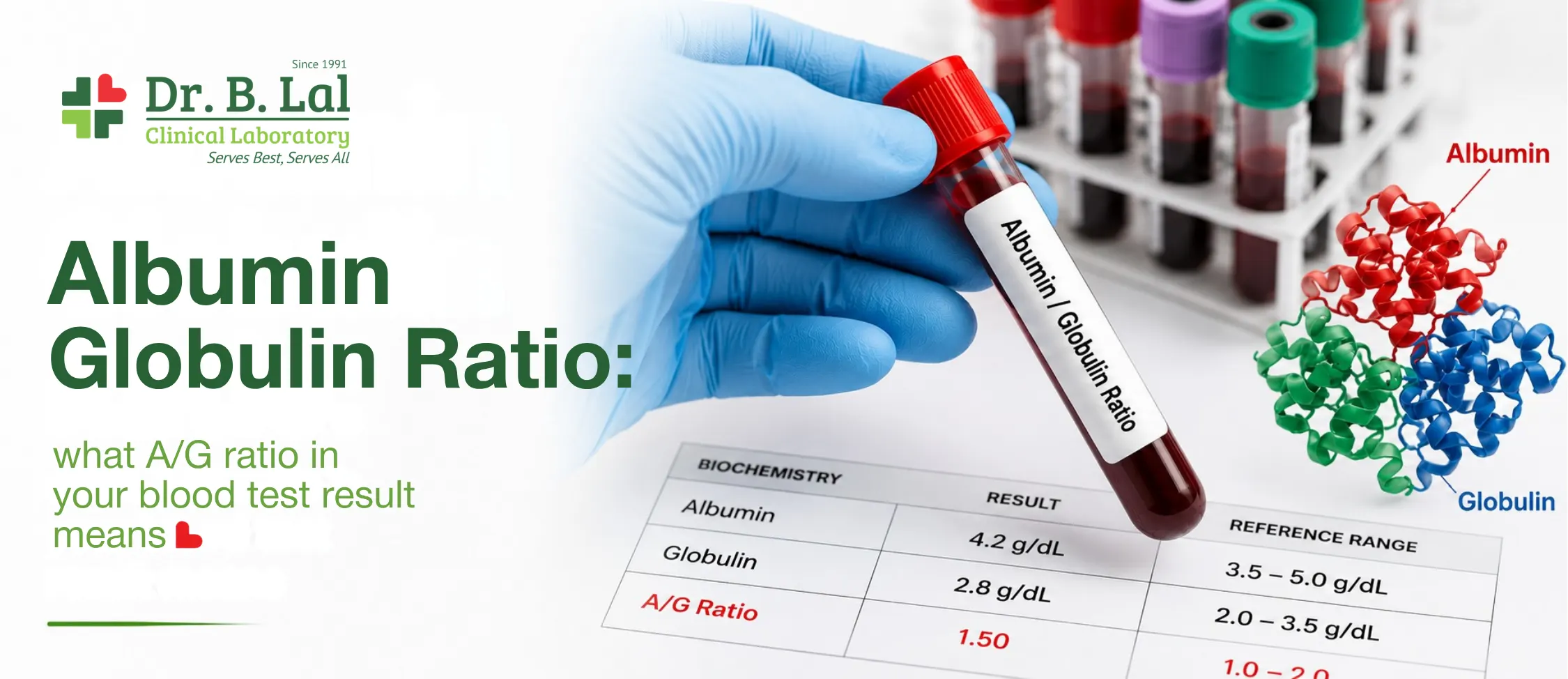
If you've had a liver function test or a comprehensive metabolic panel done, you may have noticed a line labelled "A/G ratio" tucked in among the other values. It's easy to skip past, but it's actually a useful little number — it compares two of the main proteins circulating in your blood and can offer early clues about liver function, kidney health, and immune activity, sometimes before other markers show anything unusual.
What Albumin and Globulin Actually Do
Total protein in your blood is made up mainly of two categories: albumin and globulin.
Albumin is produced by the liver and makes up the largest share of blood protein — roughly 60%. It helps maintain the right fluid balance between blood vessels and tissues (called oncotic pressure), transports hormones, vitamins, and medications through the bloodstream, and reflects how well the liver is functioning, since a struggling liver often produces less of it.
Globulin encompasses a wider range of molecules that include antibodies, enzymes, and several carrier proteins responsible for protection and coagulation. Some globulin comes from the liver, while some globulin is produced by the immune system, hence the reason why an increase in globulin levels may be an indication of infection, inflammation, or immune response, and not liver disease.
The A/G ratio is merely the quotient of albumin and globulin, which is determined using the total protein and albumin level test done on the blood sample.
What's Considered a Normal A/G Ratio
Most labs consider a normal A/G ratio to fall somewhere between 1.1 and 2.5, though exact reference ranges can vary slightly depending on the laboratory and testing method — your report will usually list the specific range used. A ratio in this range means albumin is comfortably higher than globulin, which is the expected, healthy balance, since albumin normally makes up the larger share of total blood protein.
It's worth remembering that the A/G ratio is a calculated number, not a direct measurement of a specific condition. Two people with the exact same ratio can have entirely different reasons behind it — which is why doctors always interpret it alongside the individual albumin, globulin, and total protein values, not as a standalone verdict.
What a Low A/G Ratio Means
A ratio below 1.0 is generally considered low, and it happens for one of three reasons: albumin is too low, globulin is too high, or both at once. This pattern — sometimes called "ratio reversal" when globulin actually exceeds albumin — is associated with several possible underlying issues:
- Liver disease: Since albumin is made in the liver, conditions like cirrhosis or chronic hepatitis often reduce albumin production, pulling the ratio down.
- Kidney disease, particularly nephrotic syndrome: Damaged kidneys can leak albumin into the urine, lowering blood levels of it.
- Chronic inflammation or infection: Long-standing infections or inflammatory conditions push globulin levels up as the immune system stays active.
- Autoimmune conditions: Diseases like lupus or rheumatoid arthritis often raise globulin due to increased antibody production.
- Malnutrition or malabsorption: Poor protein intake or gut conditions that prevent proper absorption can lower albumin.
- Certain blood disorders: such as multiple myeloma, which involves abnormal overproduction of specific globulins.
A low A/G ratio isn't a diagnosis by itself — it's a signal that prompts a doctor to look more closely at liver enzymes, kidney function tests, and sometimes more specific protein studies (like protein electrophoresis) to pin down the cause.
What a High A/G Ratio Means
A ratio above 2.5 is less common and usually points in a different direction — most often reflecting low globulin rather than unusually high albumin. Possible causes include:
- Reduced immune system activity or immune deficiencies, which lower globulin (antibody) production
- Certain genetic conditions affecting globulin synthesis
- Corticosteroid use, which can suppress globulin levels
- Dehydration, which can concentrate albumin and temporarily push the ratio higher, though this is usually a short-term effect rather than a true reflection of protein balance
A high A/G ratio is generally considered less clinically concerning than a low one, but it's still worth discussing with a doctor, especially if it appears alongside other abnormal results.
Why the A/G Ratio Is Useful Alongside Other Tests
On its own, the A/G ratio gives a general signal rather than a specific diagnosis. Its real value comes from being read together with:
- Liver function tests (ALT, AST, bilirubin) to assess whether liver disease is contributing to a low ratio
- Kidney function tests (creatinine, eGFR, urine albumin-creatinine ratio) to check for protein loss through the kidneys
- Total protein and individual albumin/globulin values, since the same ratio can result from very different underlying numbers
- Inflammatory markers, if chronic infection or autoimmune disease is suspected
This is why a single low or high A/G ratio on a routine panel doesn't usually trigger alarm on its own — doctors look at the broader picture, and often repeat the test after a few weeks if the result is borderline, since factors like recent illness or hydration status can temporarily shift the numbers.
When to Follow Up With a Doctor
It's worth getting a low or high A/G ratio result reviewed by a doctor if it's:
- Persistently abnormal across repeated tests, rather than a one-off result
- Accompanied by symptoms like unexplained fatigue, swelling, jaundice, unintended weight loss, or frequent infections
- Found alongside other abnormal liver or kidney values
Conclusion
The albumin globulin ratio is a small but genuinely informative part of a routine blood panel. A result between 1.1 and 2.5 is generally reassuring, while values outside that range — particularly a low or reversed ratio — are worth discussing with a doctor, since they can point toward liver, kidney, or immune-related issues worth investigating further. As with most lab markers, context matters more than the number in isolation.