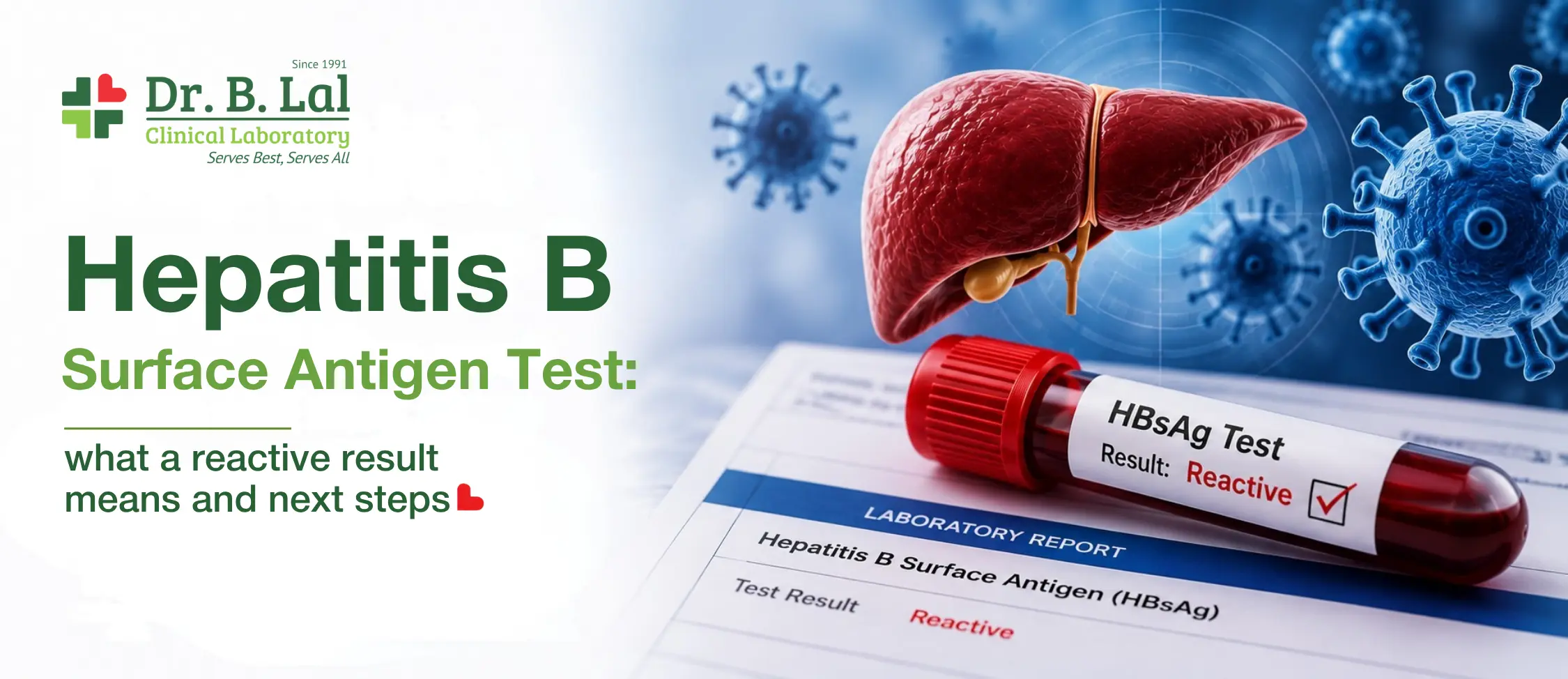
Seeing the word "reactive" next to a hepatitis B surface antigen (HBsAg) result on a lab report can be unsettling, especially if you weren't expecting it - many people get this test done routinely, as part of a pre-employment check, before surgery, during pregnancy, or as part of a general health screening. Before assuming the worst, it helps to understand exactly what this test measures and what a reactive result does and doesn't tell you.
What the HBsAg Test Actually Measures
The abbreviation HBsAg refers to the hepatitis B surface antigen, which is a protein molecule that constitutes the outer layer of the hepatitis B virus. In the case of hepatitis B infection, the concentration of this protein becomes high in the bloodstream, thus making it the most reliable and earliest test used to diagnose the disease. Usually, the presence of this protein can be detected about 6 to 8 weeks after the infection.
The test itself is a relatively easy blood test, which can be performed through a rapid card test and/or ELISA test. The results of the test can either be “non-reactive” or “reactive”, which basically indicate whether the antigen was not detected (not present in the body) or the antigen was detected (present in the body).
Book a Hepatitis B test in Alwar, Rajasthan
What a Reactive Result Actually Means
Here's the important nuance: a reactive HBsAg result indicates that hepatitis B virus is present, but it doesn't by itself tell you whether the infection is acute (new and possibly temporary) or chronic (long-term). It also doesn't tell you how active the virus currently is, or how much liver damage, if any, has occurred. That's why a reactive result isn't a complete diagnosis - it's the starting point for further testing.
It's also worth knowing that an initial reactive result on a screening test (particularly a rapid card test) isn't automatically the final word. False reactive results can occur due to technical or cross-reactivity issues, which is why laboratory guidelines call for confirmatory testing a more specific, neutralising test before a reactive screening result is treated as truly positive.
What Happens After a Confirmed Reactive Result
Once HBsAg positivity is confirmed, doctors typically order a set of additional tests to build a complete picture:
IgM anti-HBc (core antibody): This helps distinguish a new, acute infection from a long-standing chronic one. A positive IgM anti-HBc points toward a recent, acute infection. Its absence, combined with HBsAg still being detectable, points more toward chronic infection.
HBeAg and anti-HBe: These markers indicate how actively the virus is replicating. A positive HBeAg generally suggests higher viral activity and greater infectiousness, while a positive anti-HBe (with HBeAg negative) usually suggests lower replication, though not always - some chronic infections remain active even without HBeAg.
HBV DNA (viral load) by PCR: This measures the actual amount of virus circulating in the blood and is one of the most useful markers for deciding whether treatment is needed and for monitoring the infection over time.
Liver function tests (ALT, AST, bilirubin): These check whether the virus is actively causing liver inflammation or damage.
Repeat HBsAg testing at 6 months: If it's not clear from the first round of tests whether the infection is acute or chronic, doctors often repeat HBsAg after six months. If it's still positive at that point, the infection is classified as chronic; if it clears on its own, it was likely an acute infection that resolved.
Read Also: HBsAg Test During Pregnancy: Why It Matters for Mother and Baby
Acute vs. Chronic Hepatitis B
This distinction matters a great deal for what comes next:
Acute hepatitis B is a new infection, and in most healthy adults, the immune system clears the virus on its own within a few months, without needing specific antiviral treatment. Supportive care - rest, avoiding alcohol, monitoring liver function - is usually all that's needed, though close follow-up is still important.
Chronic hepatitis B means the virus has persisted for more than six months. This doesn't always mean the liver is being actively damaged - some people remain "inactive carriers" with normal liver enzymes and low viral activity for years, while others have ongoing liver inflammation that, left unmanaged, can progress to cirrhosis or liver cancer over time. Chronic infection generally needs regular monitoring by a doctor (often a hepatologist or gastroenterologist), and antiviral medication is prescribed when there's evidence of active viral replication or liver damage.
What This Means for People Around You
A reactive status for HBsAg also brings up the question of transmission. Hepatitis B is transmitted through blood and some other bodily fluids such as through sexual activity, injection, or from the infected mother to her child during delivery. The disease is not transmitted through casual contact, eating or normal social interactions.
If your test result is found to be reactive then usually doctors recommend that the close contacts such as the spouse/sexual partner and the children be tested and if they are not immune then they should also get vaccinated for hepatitis B.
Steps to Take After a Reactive Result
- Don't panic based on a single screening result - get it confirmed with follow-up testing
- Get the full panel done (IgM anti-HBc, HBeAg/anti-HBe, HBV DNA, liver function tests) rather than stopping at HBsAg alone
- See a doctor, ideally one experienced in liver disease, to interpret the full picture together
- Avoid alcohol, which puts additional stress on the liver
- Get close contacts and family members tested and vaccinated if needed
- Keep up with follow-up appointments, even if you feel completely fine, since chronic hepatitis B can be silent for years while still causing gradual liver damage
Conclusion
Reactive test results for HBsAg imply the presence of hepatitis B virus in the patient’s blood; however, this is just the first step in the diagnostic procedure and not the last one. Further confirmatory tests, complete serologic workup, and discussion with your physician will give you more accurate information about the duration of the infection, its activity at the moment, and possible further actions to be taken. Lots of patients infected with hepatitis B live quite normal lives and have normal health with adequate monitoring and treatment.