Anyone who's been through typhoid knows the fever is only half the battle. The real slog often starts after the fever finally breaks , that stretch where you're technically "recovering" but still feel wiped out, uninterested in food, and honestly a bit scared to eat the wrong thing and set yourself back. That fear isn't unfounded, either. Typhoid inflames the intestinal lining pretty significantly, and the wrong food at the wrong time can genuinely slow things down or bring symptoms right back.
Antibiotics do the heavy lifting against the infection itself. But food is what rebuilds the body underneath it, and getting that part right makes a real difference in how fast you're back to feeling like yourself.
Why the Gut Needs Special Handling Right Now
Typhoid is caused by Salmonella typhi, a bacterium that specifically targets the intestinal tract before spreading into the bloodstream. That's the part people forget once the fever's gone , the gut lining has taken a real hit, and it stays inflamed and sensitive for a while even after you start feeling more like yourself. Throwing heavy, fibrous, or spicy food at it too soon just isn't a great idea. It also explains why diarrhoea and appetite loss tend to linger past the point where the fever itself has settled.
So the eating strategy during recovery boils down to three things: go soft and low-fibre so the gut isn't working overtime, keep the calories and protein up because the body's been running a deficit, and stay seriously on top of fluids since fever and diarrhoea both drain you fast.
Don't ignore typhoid symptoms test now: Widal Test
What to Actually Eat
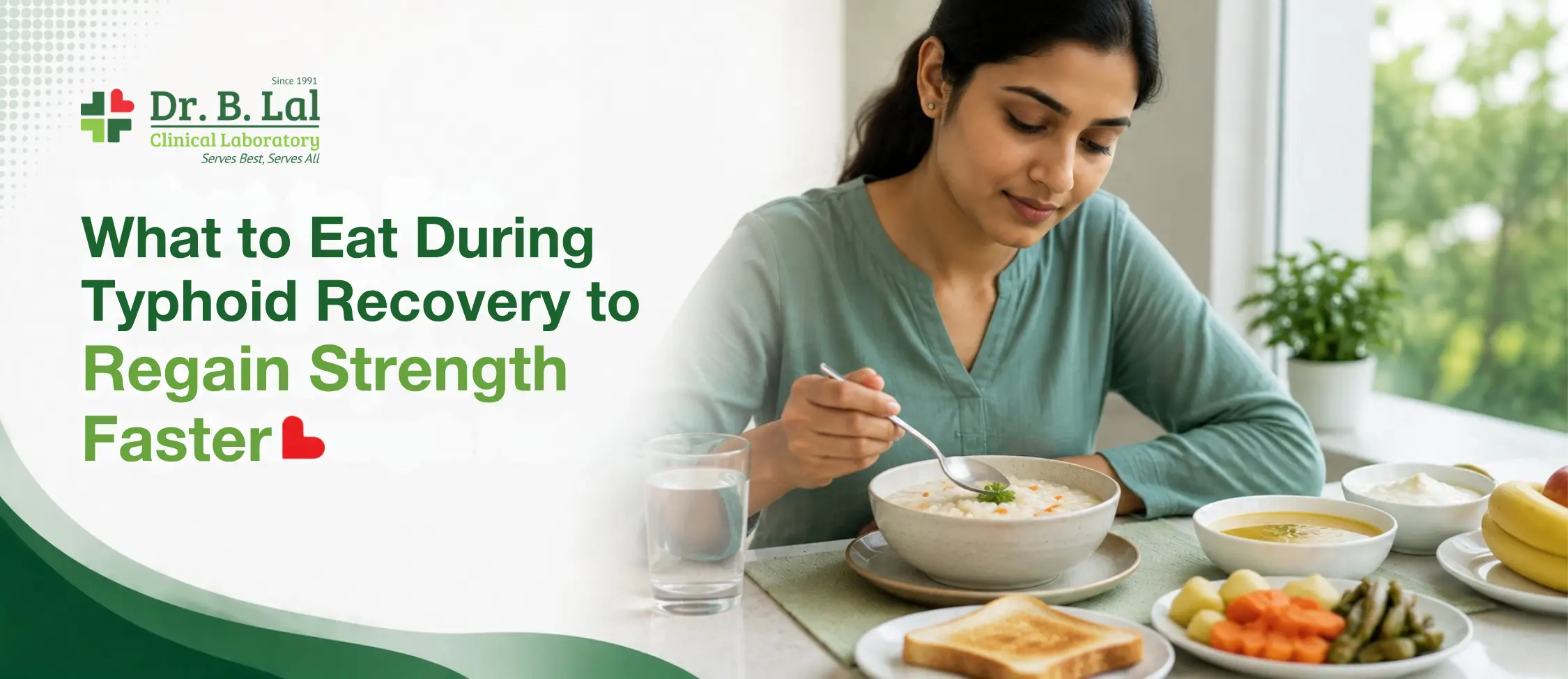
Rice, khichdi, and porridge - are pretty much the backbone of a typhoid diet, and for good reason , they're calorie-dense without demanding much from the gut. Plain white rice, rice porridge (kanji), khichdi, and daliya or suji upma all fit here. Boiled and mashed potatoes are another good one , with decent calories, gentle on digestion, and honestly, most people can actually stomach them even when their appetite is low.
Soft proteins - once appetite starts coming back a little, matter more than people realise. The body's been fighting an infection and needs protein to repair tissue, not just calories to get through the day. Boiled or scrambled eggs, moong dal, paneer, and , a bit later in recovery , well-cooked chicken or fish without the skin, all work well. Chicken soup tends to go down easier than actual chicken pieces early on, which is worth keeping in mind if solid protein still feels like too much.
Curd and buttermilk - are genuinely useful here, not just a cultural habit. They're gentle on the stomach and bring in some probiotic support, which helps especially since a course of antibiotics tends to disrupt gut bacteria along with clearing the infection. Plain milk, on the other hand, is often better avoided for a bit , it can cause bloating in a gut that's still recovering, even in people who normally tolerate it fine.
Soft fruits - ripe banana, papaya, stewed apple, watermelons, peeled grapes , bring in vitamins without asking much of digestion. Bananas specifically are worth calling out, since they're gentle, rich in potassium (which fever and diarrhoea both deplete), and tend to help firm up loose stools. Papaya's digestive enzymes make it another solid choice. Skip citrus fruits for now if they trigger any acidity, not everyone reacts that way, but it's common enough to watch for.
Hydration - honestly deserves its own paragraph, because it's easy to underrate. Water, ORS, coconut water, and diluted fruit juices all help replace what fever and any diarrhoea have been draining out. Ginger or mint tea can help settle the stomach too, though it's worth keeping caffeinated tea and coffee to a minimum since they can work against hydration rather than for it.
Small, frequent meals - five or six smaller meals through the day rather than three big ones , tend to sit better than large meals, especially while appetite is still finding its footing.
What to Steer Clear Of, At Least for Now
Spicy and fried food is the obvious one, but it's worth being specific about why: it genuinely irritates a gut lining that's already inflamed, and can bring symptoms right back. Raw vegetables and salads are worth holding off on too, partly because the fibre is harder to digest right now, and partly because of contamination risk while the gut is more vulnerable than usual. Whole grains with a lot of fibre , brown rice, multigrain bread , are better reintroduced gradually rather than right away. Red meat and heavy, fatty protein sources are tough on a system that's still finding its feet. And street food is worth avoiding entirely for a while, simply because reinfection is a real risk when the gut hasn't fully recovered its usual defences.
How the Diet Shifts as You Get Better
This isn't a diet you're stuck on forever, and it shouldn't be treated as one rigid plan from day one to day thirty. In the first week or two after the fever clears, staying soft and low-fibre still makes sense. From around week three, whole grains in small amounts, a wider variety of cooked vegetables, and lentils like masoor and toor can start easing back in. Past the four-week mark, most people can return to a fairly normal diet, including well-washed raw salads and nuts in moderation.
It's worth setting expectations honestly here: full strength often takes longer to return than people expect , commonly two to three months, even after the infection itself is long gone. That's not a sign anything's wrong. It's just how much typhoid symptoms actually takes out of the body, and food is doing a lot of quiet, unglamorous work during that stretch.
When to Check Back With a Doctor
If high fever returns, diarrhoea persists or worsens, or weakness seems to be getting worse rather than better despite following a sensible diet, that's worth a follow-up rather than waiting it out. Diet supports recovery, but it doesn't replace finishing the prescribed antibiotic course or getting medical input if something seems off.
The Takeaway
Typhoid recovery is really a two-part job , antibiotics clear the infection, and the right food rebuilds what the infection took out of you. Soft, low-fibre, calorie-and-protein-rich meals, steady hydration, and a gradual, patient return to normal eating over several weeks tend to get people back on their feet fastest, with the fewest setbacks along the way. It's not glamorous food, admittedly. But it's the food doing the real work while the rest of the body catches up.