
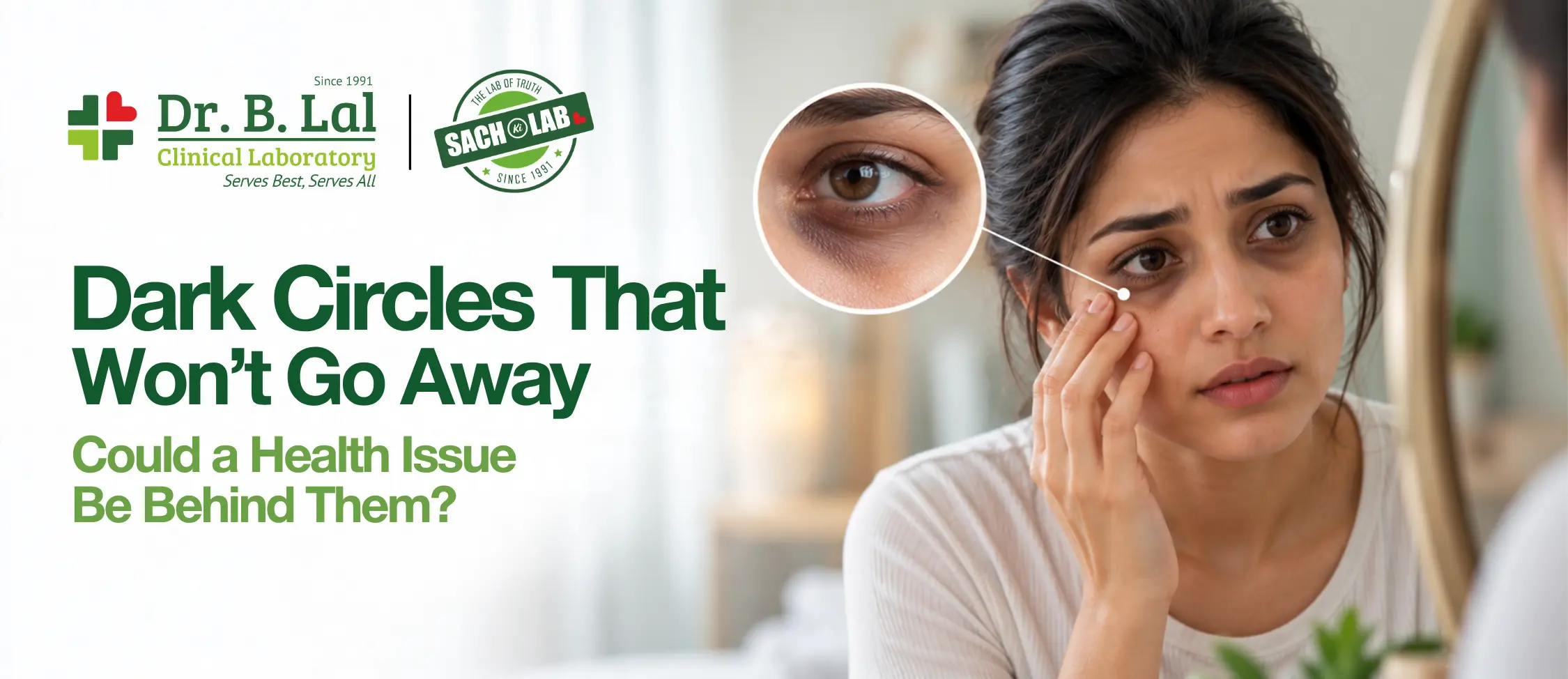
Dark circles get blamed on one thing almost automatically: not enough sleep. And often that's exactly right. But if you're sleeping fine, drinking enough water, and the shadows under your eyes still won't budge, sleep probably isn't the real story anymore. Most dark circles are harmless and cosmetic. A smaller number are the skin quietly reporting something else going on in the body.
Why Dark Circles Show Up at All
The skin under your eyes is the thinnest on your body, often under 0.5 millimetres thick. That thinness is exactly why dark circles happen so easily: blood vessels sit close to the surface, and even mild pooling or swelling underneath shows through as a bluish-grey or brownish shadow. Genetics sets a lot of this baseline — family history is thought to explain up to 60% of chronic dark circles, and they're especially common in people of South Asian or Middle Eastern descent, which is worth knowing if you've had them your whole life regardless of how much sleep you get.
When Dark Circles Are Just Ordinary Wear and Tear
Most of the time, dark circles trace back to something unremarkable: poor sleep, dehydration, sun exposure increasing melanin in the area, thinning skin from ageing, or simply rubbing your eyes too often, which can dilate blood vessels or cause small bruises under the skin. Allergies are one of the most common non-serious causes — chronic nasal congestion causes blood to pool in the small veins under the eyes, sometimes called "allergic shiners," and this pattern shows up in as many as 82% of people with ongoing perennial allergies. None of this needs a doctor. It needs sleep, water, allergy management, and patience.
Dark Circles That Point Toward Anemia
This is one of the more genuinely useful patterns to know, because it has a specific look. Anemia — a shortage of red blood cells, most often from iron deficiency — reduces how much oxygen reaches your skin, and this tends to produce a hollow, bluish shadow rather than a brown or pigmented one. One clinical reference puts a rough marker on it: hemoglobin under 10 g/dL is associated with reduced oxygenation and visibly darker under-eye colour. If the circles come with fatigue, pale skin elsewhere, or breathlessness on mild exertion, a simple CBC and iron panel is a reasonable, low-effort way to check.
Dark Circles Linked to Thyroid Problems
The thyroid connection works differently from most other causes on this list — it's usually about swelling, not pigment. An underactive thyroid can cause fluid retention around the eyes, and that puffiness casts a shadow that reads as darkness even without any actual change in skin colour. This is generally a "rare but real" cause rather than a common one, and it's worth taking seriously specifically if the dark circles show up alongside other thyroid symptoms — unexplained weight changes, fatigue, feeling unusually cold, or eyelid swelling that doesn't fit the ordinary tired-eyes pattern. A TSH, T3, and T4 panel settles the question directly.
Dark Circles From Liver or Kidney Issues
Both organs can deepen or worsen the shadows under your eyes, though through somewhat different mechanisms — general fluid retention and, in the case of liver dysfunction, changes tied to how the body processes bilirubin and other pigments. This is genuinely one of the less common causes on this list, and it typically doesn't show up in isolation. Sudden puffiness appearing alongside new dark circles is the specific combination worth paying attention to, since this pattern has been flagged as a possible sign of kidney trouble or, less commonly, severe hypothyroidism, and deserves a prompt medical check rather than a home remedy.
Dark Circles That Come With Bruising or Discolouration That Won't Fade
If the area under your eyes looks bruised rather than shadowed, and that bruising isn't fading the way an ordinary bruise would over a week or two, it's worth mentioning to a doctor. Very low platelet counts — the cells responsible for normal clotting — can allow small bleeds under the thin eyelid skin that leave a brownish stain rather than resolving cleanly, and this is a different mechanism entirely from the vascular pooling behind most ordinary dark circles.
Dark Circles From Skin Conditions and Medications
Eczema and contact dermatitis around the eyes can genuinely darken the skin over time, mostly through a cycle of irritation, scratching, and the post-inflammatory pigment changes that follow. Certain medications have also been noted to contribute to under-eye darkening as a side effect, which is worth mentioning if new or unexplained circles appeared around the same time as starting something new.
When Dark Circles Need a Doctor's Visit, Not a Concealer
Most dark circles are cosmetic and not a sign of anything happening internally — genetics, thin skin, and tiredness account for the large majority of cases, and Cleveland Clinic is fairly direct that they typically aren't a cause for concern. That said, a few specific situations are worth an actual medical visit rather than an under-eye cream:
- Sudden onset of noticeable swelling around one or both eyes
- Painful redness, warmth, or discharge, which can indicate infection rather than ordinary dark circles
- Dark circles appearing or worsening alongside fatigue, unexplained weight change, or feeling persistently cold
- Bruising-like discolouration that doesn't fade over a couple of weeks
- Vision changes, severe headaches, or any neurological symptoms alongside the eye changes
How Doctors Actually Work Out the Cause
If dark circles are persistent enough to warrant a proper look, the usual starting point is a simple blood panel — a CBC to check for anemia, a thyroid panel (TSH, and T3/T4 if needed), and sometimes kidney and liver function tests, chosen based on whatever other symptoms are present alongside the eyes themselves. Dermatologists also sometimes classify dark circles by type — pigmented, vascular, structural, or a mix — since the right treatment genuinely depends on which one is actually driving the appearance, rather than treating every case the same way.
Conclusion
Dark circles are, in the overwhelming majority of cases, exactly what they look like — genetics, thin skin, tiredness, or allergies, and nothing more sinister than that. But a specific set of patterns is worth paying attention to: a hollow blue tint that suggests anemia, puffiness that suggests thyroid or kidney involvement, or bruising that doesn't fade. If your dark circles have changed character recently, or come with other symptoms that don't fit the usual "just tired" explanation, a simple blood test is a reasonable next step — far more useful than trying a new cream and hoping it was cosmetic all along.