
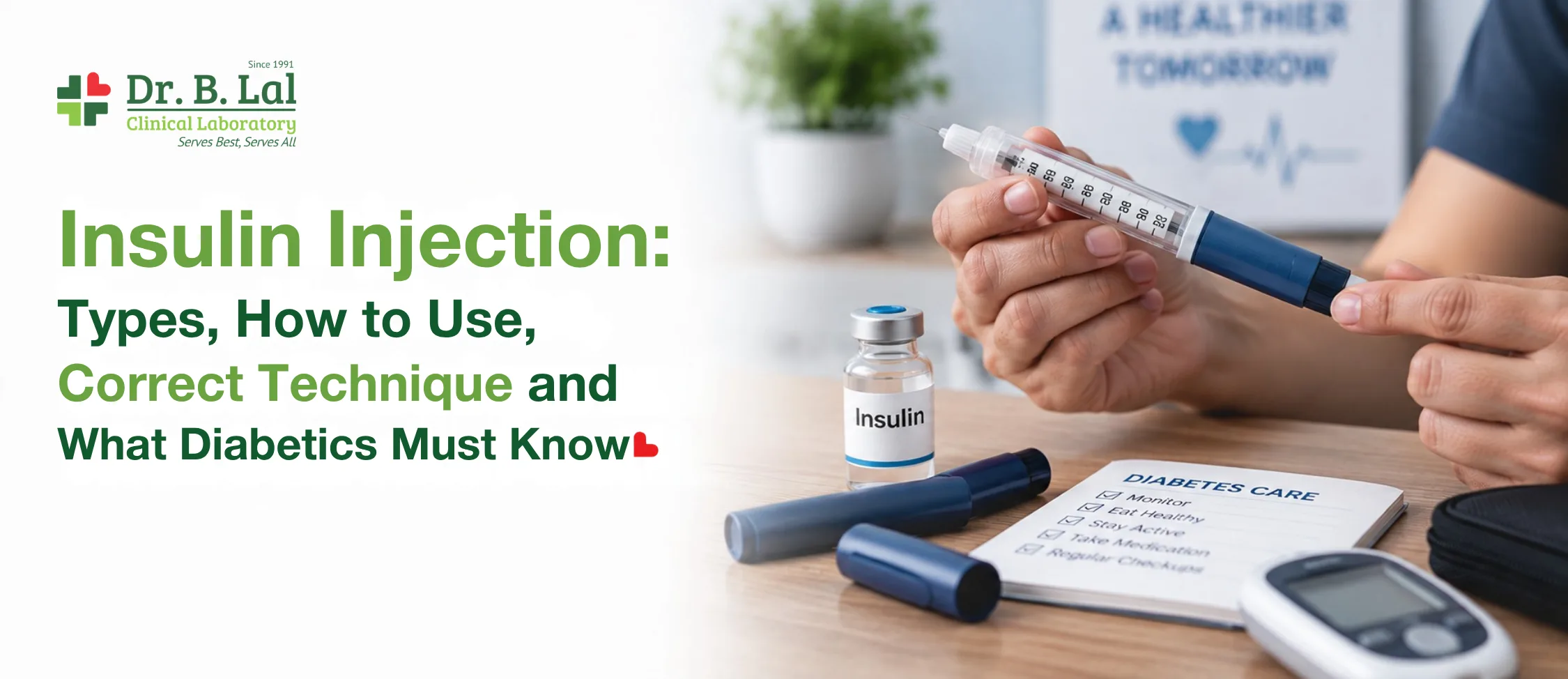
Starting insulin injections for the first time is genuinely intimidating for most people — there's the needle itself, the dosing, and a nagging worry about doing it wrong. What often doesn't get explained clearly enough is that technique isn't a minor detail here. One study found that people trained on proper insulin injection technique, using a new needle each time, rotating sites, and switching to a shorter needle, saw their average blood sugar (HbA1c) drop by a full 1% over six months, purely from better technique, without any change in dose. That's a genuinely significant improvement from something that has nothing to do with the medication itself.
The Main Types of Insulin Injection and How They Work
Insulin injection isn't one uniform product, different types work at different speeds and durations, and most people on insulin actually use a combination of them.
- Rapid-acting insulin (like insulin lispro or aspart) starts working within about 15 minutes and lasts 1 to 5 hours. It's taken right before meals to manage the blood sugar spike from eating, and it's almost always paired with a longer-acting insulin to cover the rest of the day.
- Short-acting (regular) insulin works a bit more slowly than rapid-acting, typically needing to be taken 30 minutes before a meal rather than right before it.
- Intermediate-acting insulin (like NPH) has a cloudy appearance and needs to be gently mixed before each injection — this is one of the few types requiring that extra step, and it's worth knowing since skipping it affects how consistently the insulin is absorbed.
- Long-acting and ultra-long-acting insulin (like glargine or degludec) provide a steady background level over roughly 24 hours, taken once or sometimes twice daily to keep blood sugar stable between meals and overnight, rather than reacting to any single meal.
- Premixed insulin combines a short- or rapid-acting insulin with an intermediate-acting one in a single pen or vial, which some people find more convenient than managing two separate insulin injections, though it offers less flexibility in adjusting doses independently.
Getting Ready for an Insulin Injection
Before actually injecting, a few preparation steps genuinely matter. Wash your hands first. If you're using intermediate-acting or premixed insulin, gently roll the vial or pen between your palms 10 to 20 times to mix it, never shake it, since shaking can affect how the insulin works. Clear insulins like rapid-acting and most long-acting types generally don't need this step at all.
Attaching a fresh needle for every single insulin injection, reusing needles isn't just about comfort, it genuinely increases infection risk and can dull the needle enough to make injections more painful and less precise. With a pen, point the needle upward, dial one or two units, and press the plunger until a drop appears at the tip, this "priming" step clears out any air and confirms the pen is actually delivering insulin levels properly. Then dial your actual prescribed dose.
Choosing the Right Spot for an Insulin Injection
Insulin injection sites matter more than most people initially realise. The usual areas are the abdomen (keeping a couple of inches away from the navel), the outer thighs, the upper arms, and the buttocks. Absorption speed actually varies by location, insulin is generally absorbed fastest from the abdomen, which is why it's often the preferred site for meal-time rapid-acting insulin.
For rapid- and long-acting clear insulin, rotating between different body areas and different spots within each area is generally fine. Cloudy, intermediate-acting insulin behaves differently, it's better to consistently inject it into the same general body area, while still varying the exact spot within that area, since intermediate-acting insulin can absorb inconsistently when switched between very different regions of the body.
Wiping the skin with alcohol before injecting isn't considered strictly necessary for most people at home, though if you do use alcohol, make sure it's fully dried before injecting, inserting the needle while the skin is still wet with alcohol tends to sting considerably more.
The Correct Insulin Injection Technique, Step by Step
According to American Diabetes Association guidance, insulin injections go into the subcutaneous tissue, the fat layer just under the skin, not muscle. Most adults using today's shorter pen needles (4mm to 5mm) can inject straight in at a 90-degree angle without needing to pinch the skin. Thinner individuals, children, or anyone using a longer needle may need to lightly pinch a fold of skin and inject at a 45-degree angle instead, to avoid accidentally going into muscle, which absorbs insulin faster and less predictably than fat tissue does.
Push the plunger fully until the complete dose has been delivered. If you're using a pen, count to ten before withdrawing the needle, removing it too quickly is one of the more common reasons insulin leaks back out, meaning the full dose wasn't actually delivered. With a syringe, the needle can be withdrawn right after the injection is complete. Don't rub or massage the injection site afterward, since this can speed up absorption in a way that's harder to predict and control.
Check your insulin production level - Insulin Fasting Test
Why Rotating Insulin Injection Sites Matters More Than People Realise
Injecting into the same tiny spot repeatedly leads to lipohypertrophy, fatty, thickened lumps under the skin that form from repeated trauma to the same area. Beyond being uncomfortable, insulin absorption from these lumps becomes genuinely erratic, which can cause unpredictable blood sugar swings that are hard to explain from the outside. A study of over 370 people with type 1 diabetes found that 62% had developed lipohypertrophy, and the strongest predictors weren't needle reuse, but injecting repeatedly into too small an area and not rotating sites properly, increasing the odds by more than 20 times compared to those who rotated consistently. A simple, reliable rule that helps: don't inject into the exact same spot more than once or twice a month.
Common Insulin Injection Mistakes Worth Knowing About
A Canadian study surveying 230 patients across 24 sites found that literally every single patient made at least one insulin injection error. The most frequent issues were reusing needles, not rotating sites properly, injecting into areas with existing lipohypertrophy without realising it, and not waiting long enough after pressing the plunger before withdrawing the needle. None of these are complicated to fix once you know to look for them, which is really the whole point of learning proper technique rather than just guessing based on how it was demonstrated once at a pharmacy counter.
Conclusion
Insulin injection technique isn't just about comfort, it genuinely affects how consistently and predictably the medication actually works, sometimes enough to shift blood sugar control meaningfully on its own. Using a fresh needle each time, rotating injection sites properly, choosing the right angle for your body type, and following the specific handling instructions for your insulin type are all small habits that add up to real, measurable differences. If you're new to insulin injections or unsure whether your technique is right, asking your doctor or a diabetes educator to actually watch you do it once is genuinely worth the slightly awkward five minutes.