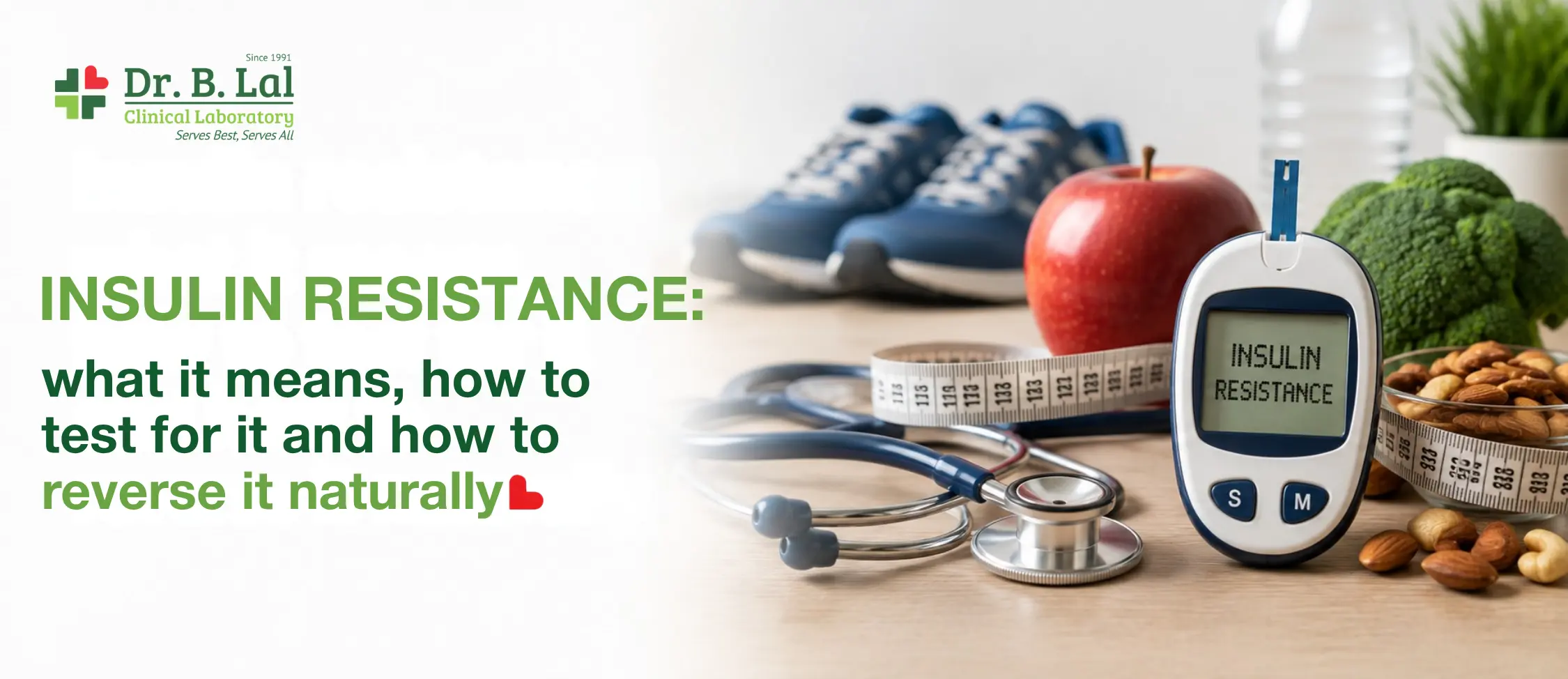
Here's a fact that surprises most people: you can have a completely normal fasting glucose and HbA1c, get told your blood sugar is "fine," and still be dealing with significant insulin resistance underneath it. This isn't a rare edge case, insulin resistance can develop and progress for 10 to 20 years before glucose levels rise enough to look abnormal on a standard test. By the time that happens, real metabolic damage has often already been quietly underway.
What Insulin Resistance Actually Means
Insulin is the hormone your pancreas releases to help move glucose out of your bloodstream and into your cells for energy. Insulin resistance means your cells have stopped responding to insulin properly, they need progressively more of it to do the same job. Your pancreas compensates by producing more and more insulin to force glucose into cells, and for years, this compensation can keep blood sugar looking perfectly normal on paper, masking what's actually happening underneath.
This matters for more than just future diabetes risk. Elevated insulin itself, not just elevated glucose, drives real problems independently: it promotes sodium retention that raises blood pressure, pushes the liver to produce more triglycerides, and contributes to inflammation and blood vessel damage, all of which can happen well before anyone's blood sugar numbers look concerning.
Common Insulin Resistance Symptoms Worth Recognising
Insulin resistance doesn't always announce itself clearly, but a cluster of signs tends to show up together:
- Weight gain concentrated around the abdomen, often resistant to typical diet and exercise efforts
- Fatigue or an energy crash 2 to 4 hours after carbohydrate-heavy meals
Sugar or carb cravings that feel hard to control - Acanthosis nigricans, dark, velvety patches of skin, typically at the neck, armpits, or groin
- Skin tags, particularly around the neck
- Irregular periods or a PCOS diagnosis in women
The skin changes are worth taking seriously rather than treating as cosmetic. A study of newly diagnosed type 2 diabetes patients found a statistically significant correlation between the severity of acanthosis nigricans and HOMA-IR values, in other words, the darker and more pronounced the patches, the more insulin resistance tends to be present underneath. It's a visible external clue to something happening internally.
How Insulin Resistance Testing Actually Works
This is where a lot of people get an incomplete picture, because the tests most commonly ordered, fasting glucose and HbA1c, are actually the last things to become abnormal, not the first. If insulin resistance testing stops there, it can miss the problem entirely for years.
HOMA-IR is the most widely used calculation for insulin resistance testing, combining fasting insulin and fasting glucose into a single score: (fasting insulin µU/mL × fasting glucose mg/dL) ÷ 405. Reference ranges vary by population and lab, but a commonly used framework is: below 1.0 reflecting excellent sensitivity, 1.0 to 1.9 considered normal, 2.0 to 2.9 suggesting mild to moderate resistance, and 3.0 or above generally considered clinically significant. Worth knowing specifically for an Indian context: cutoffs for insulin resistance and metabolic syndrome tend to run lower in Asian populations than in Western reference ranges, often somewhere between 1.4 and 2.5, so a "normal" Western cutoff may already represent meaningful resistance here.
Fasting insulin alone is a simpler, complementary piece of insulin resistance testing, a level above roughly 10 to 12 µIU/mL is often flagged as an early sign of resistance, even when glucose still looks completely normal.
The oral glucose tolerance test with insulin (OGTT) takes this further, measuring both glucose and insulin at intervals after drinking a standardised glucose solution, this shows not just how high glucose rises, but how exaggerated and prolonged the insulin response is, which can reveal resistance that a single fasting measurement might miss.
Doctors increasingly recommend this fuller insulin resistance testing panel — not just glucose and HbA1c — for anyone with central weight gain, acanthosis nigricans, PCOS, fatty liver, elevated triglycerides with low HDL, a family history of type 2 diabetes, or unexplained fatigue after meals, specifically because these signs can appear years before standard glucose testing would catch anything.
Getting an Insulin Resistance Test Right
A few preparation details genuinely affect accuracy: fasting for 8 to 12 hours beforehand (water is fine, but no food, tea, or sweetened drinks), avoiding strenuous exercise for 24 hours prior since intense activity can temporarily improve insulin sensitivity and skew results, and testing in the morning, ideally between 7 and 10 am, since cortisol naturally peaks later and can elevate both glucose and insulin readings. It's also worth telling your doctor about any medications you're on, metformin, steroids, oral contraceptives, and antipsychotics can all influence the results.
How to Reverse Insulin Resistance Naturally
The genuinely reassuring part of this whole picture is that insulin resistance, especially caught early, responds well to lifestyle changes, arguably better than almost any other metabolic condition.
Diet makes the single biggest difference. Cutting back on refined carbohydrates and added sugar reduces the constant demand on insulin production, while building meals around fibre — non-starchy vegetables, legumes, nuts, seeds, slows glucose absorption. Pairing protein and healthy fats with meals, rather than eating carbohydrates in isolation, further blunts the glucose and insulin spike that follows eating.
Physical activity works through a very direct mechanism, both aerobic exercise and resistance training increase glucose uptake in muscle tissue, which is the primary site where insulin does its work, reducing the overall demand placed on the pancreas. This effect shows up meaningfully fast; regular movement measurably improves insulin sensitivity within weeks, not months.
Sleep and stress management matter more than most people expect. Chronic sleep deprivation and elevated cortisol from ongoing stress have both been shown to reduce insulin sensitivity measurably within days, which is part of why lifestyle-based reversal plans that focus only on diet and exercise, while ignoring sleep, often see slower results than expected.
Weight loss, where relevant, particularly loss of visceral fat around the abdomen, has a strong, well-documented relationship with improving insulin resistance, research following patients after significant fat loss has found measurable improvement in insulin resistance markers alongside reductions in visceral fat specifically, more so than overall weight loss alone.
Conclusion
Insulin resistance is one of the more common, and more often overlooked, metabolic problems due to the very nature that it is possible to have this problem for several years without noticing it through regular glucose tests. Early detection through identifying symptoms such as central obesity, fatigue after meals, skin changes (acanthosis nigricans), and specifically requesting a fasting insulin test or HOMA-IR test as opposed to glucose and HbA1c tests is how one can identify it. Insulin resistance is unique among other chronic illnesses in that it actually does respond to healthy lifestyle choices.