Ask most people to name their vital organs, and the pancreas rarely makes the list. It doesn't get the attention the heart or lungs do, mostly because it does its work quietly, without anyone noticing, right up until something goes wrong with it, at which point its importance becomes very obvious, very fast. Understanding pancreas function properly is worth the ten minutes it takes, because this one organ is doing double duty in ways that affect digestion, blood sugar, and overall metabolic health all at once.
Where the Pancreas Sits, and Why That Matters for Pancreas Function
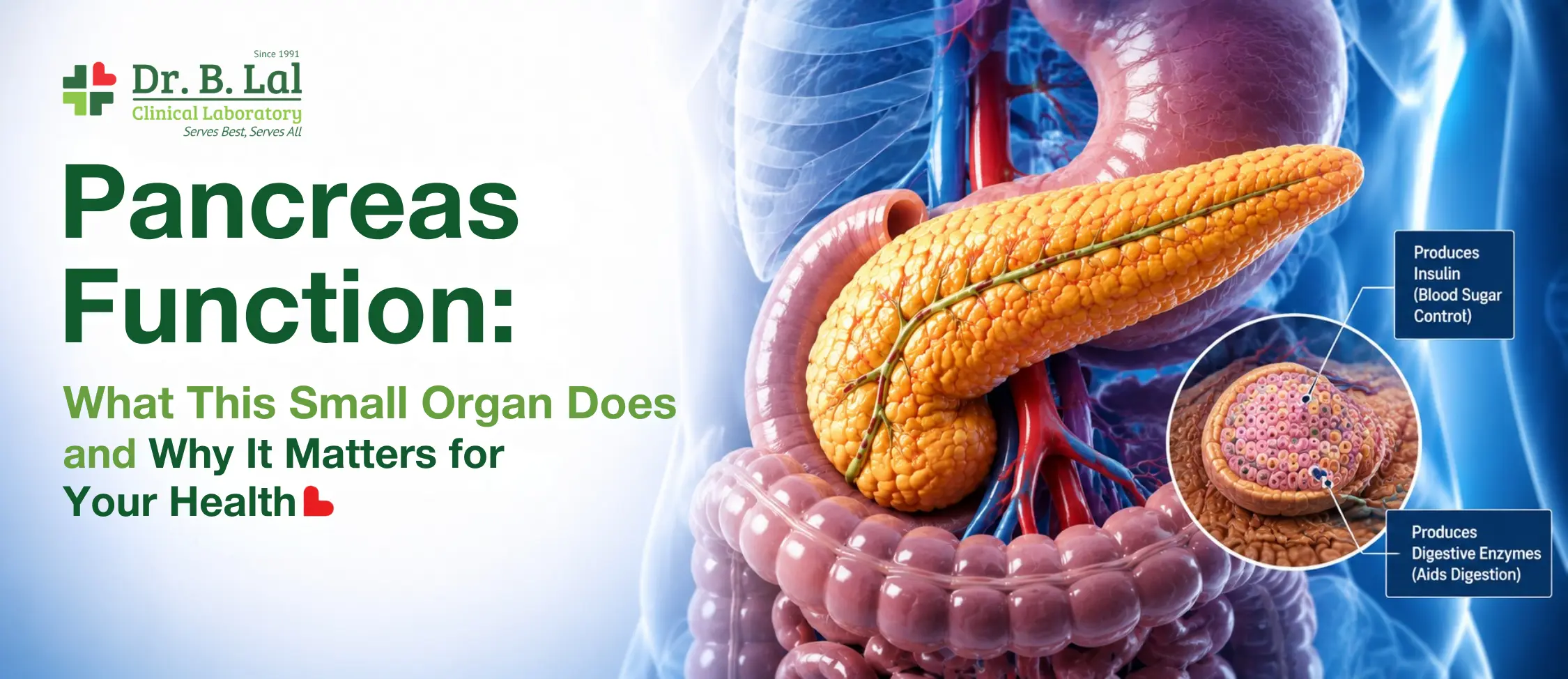
The pancreas is a long, pear-shaped gland tucked behind the stomach, stretching horizontally across the upper abdomen, its wider "head" nestled against the curve of the duodenum (the first part of the small intestine), with the body and tail extending left toward the spleen. It's a fairly modest organ physically, weighing only around 80 grams, roughly the size of a hand. Its location right behind the stomach isn't incidental, it positions the pancreas perfectly to release digestive secretions directly into the small intestine exactly when food arrives there, which is central to how pancreas function actually works in practice.
The Two Jobs Behind Pancreas Function
Here's what makes the pancreas genuinely unusual as an organ: it's not just one type of gland, it's two, working inside the same structure. Pancreas function splits into an exocrine role and an endocrine role, and while they operate through completely different cells and mechanisms, both are essential in their own right.
Exocrine pancreas function is the larger of the two jobs by far, about 99% of the pancreas's tissue is devoted to it. This part of the organ produces digestive enzymes and releases them through a network of ducts into the duodenum, where they get to work breaking down food. Without this piece of pancreas function, your body simply couldn't extract usable nutrients from what you eat, no matter how well everything else in digestion is working.
Endocrine pancreas function is the smaller share, just 1 to 2% of the organ's tissue, but it's responsible for something arguably even more consequential day to day: regulating blood sugar. This piece of pancreas function happens in small clusters of cells called the islets of Langerhans, scattered throughout the gland like little regulatory outposts, producing hormones that get released directly into the bloodstream rather than into the digestive tract.
Read Also: 4 Stages of Acute Pancreatitis
Exocrine Pancreas Function, in More Detail
The exocrine side of pancreas function centres on acinar cells, which manufacture a set of powerful digestive enzymes: amylase to break down carbohydrates, lipase to break down fats, and proteases like trypsin and chymotrypsin to break down proteins. These enzymes travel through the pancreatic duct system and empty into the duodenum, usually alongside bile from the liver and gallbladder, right as partially digested food arrives from the stomach.
There's a clever safety mechanism built into this part of pancreas function worth knowing about: these enzymes are actually produced and stored in inactive forms while still inside the pancreas, only becoming fully active once they reach the small intestine. This exists specifically to stop the pancreas from digesting itself, because these enzymes are just as capable of breaking down pancreatic tissue as they are of breaking down food. When this safety system fails, for whatever reason, the result is pancreatitis, a painful and potentially serious inflammation of the pancreas caused by enzymes activating too early.
Endocrine Pancreas Function, in More Detail
The endocrine side of pancreas function runs through several specialised cell types within the islets of Langerhans, each producing a different hormone:
- Beta cells produce insulin, which lowers blood glucose by helping cells absorb and use sugar from the bloodstream, and by signalling the liver to store excess glucose as glycogen
- Alpha cells produce glucagon, which does the opposite, raising blood glucose when levels drop too low, largely by triggering the liver to release stored glucose back into circulation
- Delta cells produce somatostatin, which acts as a regulator, helping keep both insulin and glucagon release in check
- PP cells produce pancreatic polypeptide, thought to play a role in appetite regulation and in fine-tuning the pancreas's own secretions
Insulin and glucagon work as a constant push-pull system, keeping blood sugar within a fairly narrow, healthy range no matter what you've just eaten or how long it's been since your last meal. This is really the crux of why pancreas function matters so directly for everyday health, when this balance breaks down, whether from reduced insulin production or the body's cells no longer responding to insulin properly, the result is diabetes.
What Happens When Pancreas Function Breaks Down
Because pancreas function covers two genuinely distinct roles, problems with it tend to show up in two different ways. Issues with exocrine pancreas function, from chronic pancreatitis, cystic fibrosis, or pancreatic duct blockages, typically show up as poor digestion, unexplained weight loss, oily or foul-smelling stools, and nutrient deficiencies, since the body isn't properly breaking down and absorbing fats and other nutrients.
Issues with endocrine pancreas function show up very differently, as blood sugar problems, ranging from type 1 diabetes (where the immune system destroys insulin-producing beta cells) to type 2 diabetes (where the body's cells stop responding properly to insulin, or the pancreas gradually can't keep up with demand).
Some conditions affect both sides of pancreas function at once. Chronic pancreatitis and pancreatic cancer, for instance, can progressively damage both the enzyme-producing and hormone-producing tissue, leading to a combination of digestive problems and blood sugar issues developing together.
Keeping Pancreas Function Healthy
A handful of everyday habits support healthy pancreas function over time: limiting alcohol intake, since it's one of the leading causes of pancreatitis; maintaining a healthy weight, since obesity is closely linked to insulin resistance and type 2 diabetes; eating a balanced diet without excessive refined sugar and processed fat; not smoking, since it's an independent risk factor for pancreatic disease including cancer; and staying reasonably active, since regular exercise measurably improves how well the body responds to insulin.
Conclusion
Pancreas function may not be the most popular topic when compared to cardiovascular fitness and lung volume, but it's a vital organ that performs two functions in the body which are very essential; converting food into energy and maintaining the proper level of blood glucose in the body so that the other organs can work effectively. The pancreas, which is a rather modest gland located at the back of the stomach, is performing a huge role, and knowing what it really does makes its importance quite clear.