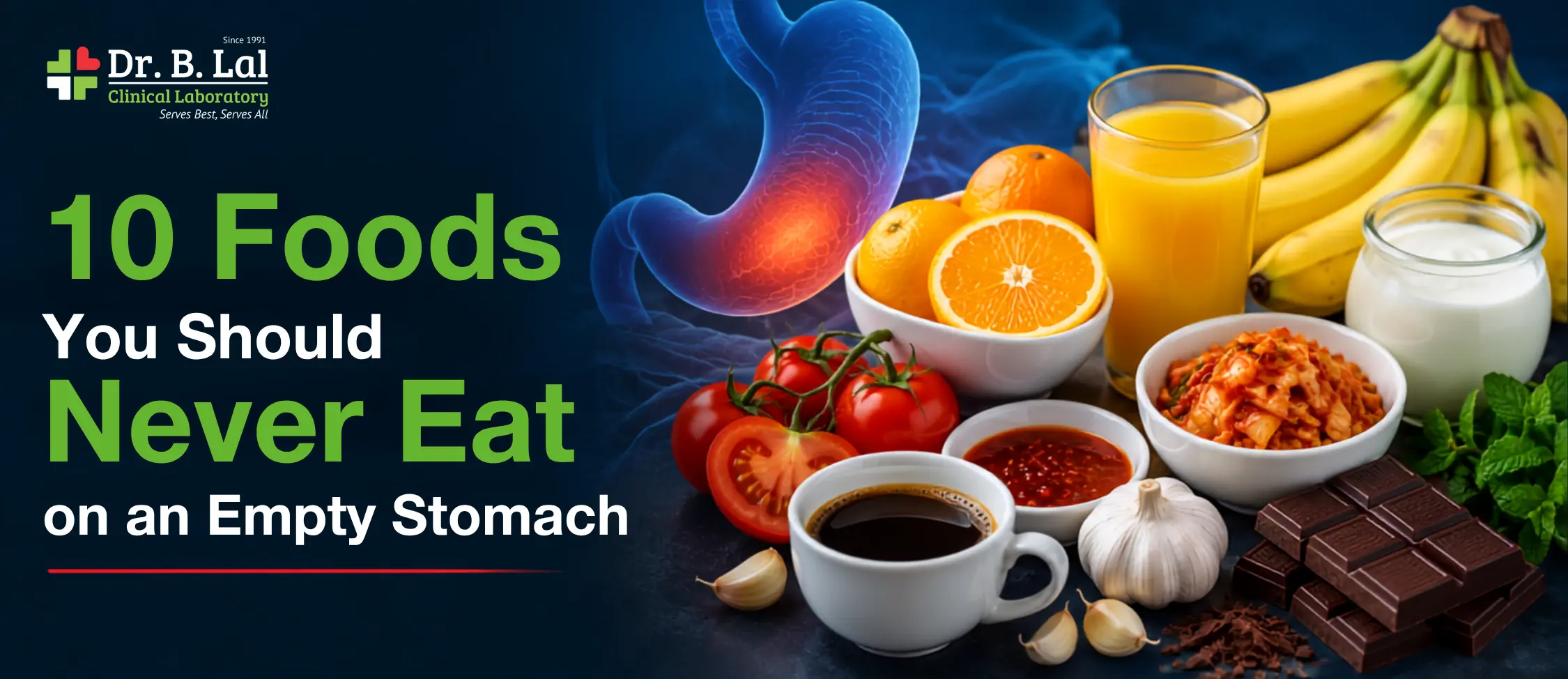
Search "foods to avoid on an empty stomach" and you'll find the same list copied across a hundred different websites, bananas will cause heart problems, coffee will destroy your stomach lining, and so on. Some of this is genuinely useful. A fair chunk of it is repeated so often that nobody's stopped to check whether it's actually true. Worth sorting out which is which before you swear off your morning banana for no real reason.
Why an Empty Stomach Reacts Differently in the First Place
After several hours without food, usually overnight, your stomach has less to buffer or dilute the acid it naturally produces. Digestion is also slower to properly ramp up first thing in the morning, and cortisol, your body's main stress hormone, tends to be at its highest right after waking. Put together, this means a stomach that's more reactive than usual, which is exactly why certain foods that are perfectly fine later in the day can cause more noticeable discomfort first thing on an empty stomach.
Coffee on an Empty Stomach: More Nuanced Than the Warnings Suggest
Coffee is probably the most argued-about item on any empty stomach list, and honestly, the evidence is genuinely mixed rather than settled. Caffeine stimulates gastrin, a hormone that increases stomach acid production, and it also relaxes the lower esophageal sphincter, the valve that normally keeps stomach acid where it belongs. For people prone to acid reflux, gastritis, or a generally sensitive stomach, this combination can trigger heartburn, nausea, or bloating on an empty stomach. For most healthy people without those conditions, though, there's no strong evidence that coffee on an empty stomach causes any lasting harm, it's more a matter of individual tolerance than a universal rule. If you notice discomfort, pairing your coffee with a small snack usually solves it.
Citrus Fruits and Juice on an Empty Stomach
Oranges, grapefruits, lemons, and their juices are naturally acidic, and that acidity can genuinely irritate the stomach lining in people already prone to heartburn, gastritis, or ulcers. This isn't a universal danger, plenty of people eat oranges first thing with no issue at all, but if you already deal with reflux, it's a reasonable thing to shift to after a meal rather than before one.
Spicy Foods on an Empty Stomach
Capsaicin, the compound that makes chillies spicy, can increase stomach acid production and irritate a stomach lining that has nothing else in it to work on. This one's fairly consistent across the evidence, starting the day with a heavily spiced dish is more likely to cause discomfort than the same dish eaten later, particularly for anyone with an already sensitive gut.
Carbonated Drinks on an Empty Stomach
Fizzy drinks introduce carbon dioxide directly into an empty stomach, and that gas has to go somewhere, usually resulting in bloating, burping, and a higher chance of acid reflux as the gas pushes upward. This is one of the more consistently supported items on this list, and it's genuinely worth avoiding first thing, carbonated water included, not just soda.
Raw Vegetables and Salads on an Empty Stomach
Raw vegetables bring plenty of fibre, which is great for digestion generally, but a large raw serving on a completely empty stomach can be harder to break down quickly, sometimes leading to bloating or gas. This doesn't mean skipping vegetables, it just means a cooked or lightly steamed version tends to sit easier first thing, with raw salads working better once digestion is already underway.
Sugary Foods on an Empty Stomach
Pastries, sweetened cereal, and sugary snacks cause a fast insulin spike when eaten on an empty stomach, since there's no fiber or protein around to slow down how quickly that sugar hits your bloodstream. The follow-up is usually a crash, fatigue and renewed hunger not long after, rather than the sustained energy people are actually looking for from breakfast.
Tomatoes on an Empty Stomach
Tomatoes are acidic in a similar way to citrus fruits, and they're a commonly cited trigger for heartburn specifically. On an empty stomach, that acidity has nothing to buffer against, which is why tomato-heavy dishes, and tomato juice specifically, are worth having alongside other food rather than as a first bite of the day if you're prone to reflux.
Raw Onions on an Empty Stomach
Less commonly flagged than the others, but genuinely supported by research on heartburn triggers, raw onions in particular have been linked to reflux symptoms in sensitive individuals, likely due to their effect on the lower esophageal sphincter. Cooked onions tend to be far better tolerated than raw ones.
Alcohol on an Empty Stomach
There is not much to say about this one, but we included it here for the sake of completeness. Drinking alcohol stimulates the production of stomach acid, and irritating the lining of the stomach, especially with an empty stomach, results in quick absorption.
What About Bananas? Here's Where the List Gets Overhyped
Bananas show up on nearly every "foods to avoid on an empty stomach" list online, usually with a specific claim: that eating one first thing spikes magnesium in the blood in a way that's bad for your heart. This claim has been circulating for years, and it genuinely doesn't hold up — there's no solid scientific evidence behind it. What is true is that bananas are relatively high in natural sugar for a fruit, so on a truly empty stomach some people might notice a quicker energy rise and a mild dip afterward, similar to any sugar-containing food eaten alone. That's a fairly minor, individual effect, a long way from a heart health risk, and not a good reason to skip a perfectly healthy fruit.
The Real Pattern Behind This Whole List
Looking at all of this together, the common thread isn't really about specific foods being dangerous, it's about acidity, spice, sugar, and gas-producing effects being more noticeable when there's nothing else in the stomach to soften the impact. People with existing conditions like GERD, gastritis, or IBS are considerably more likely to feel these effects than someone with an unremarkable digestive system, which is exactly why blanket rules don't apply equally to everyone.
Conclusion
While some advice on an empty stomach about which foods to avoid is actually good based on solid scientific evidence, such as sodas, spicy foods, and onions, other bits of advice, like the one saying bananas affect heart health negatively, are myths that became popular due to constant repetitions. The most effective way to make sure your health does not suffer is to pay attention to the way your body reacts.