Most people obsess over fasting before a blood test, no food, no coffee, sometimes not even water. Far fewer think about how they slept the night before, or the few nights before that. It turns out that's a real oversight. Poor sleep doesn't just leave you groggy and reaching for a third cup of chai, it can genuinely shift several of the numbers that show up on your report, sometimes enough to change how a result gets interpreted.
How Poor Sleep Blood Test Results Can Mislead a Diagnosis
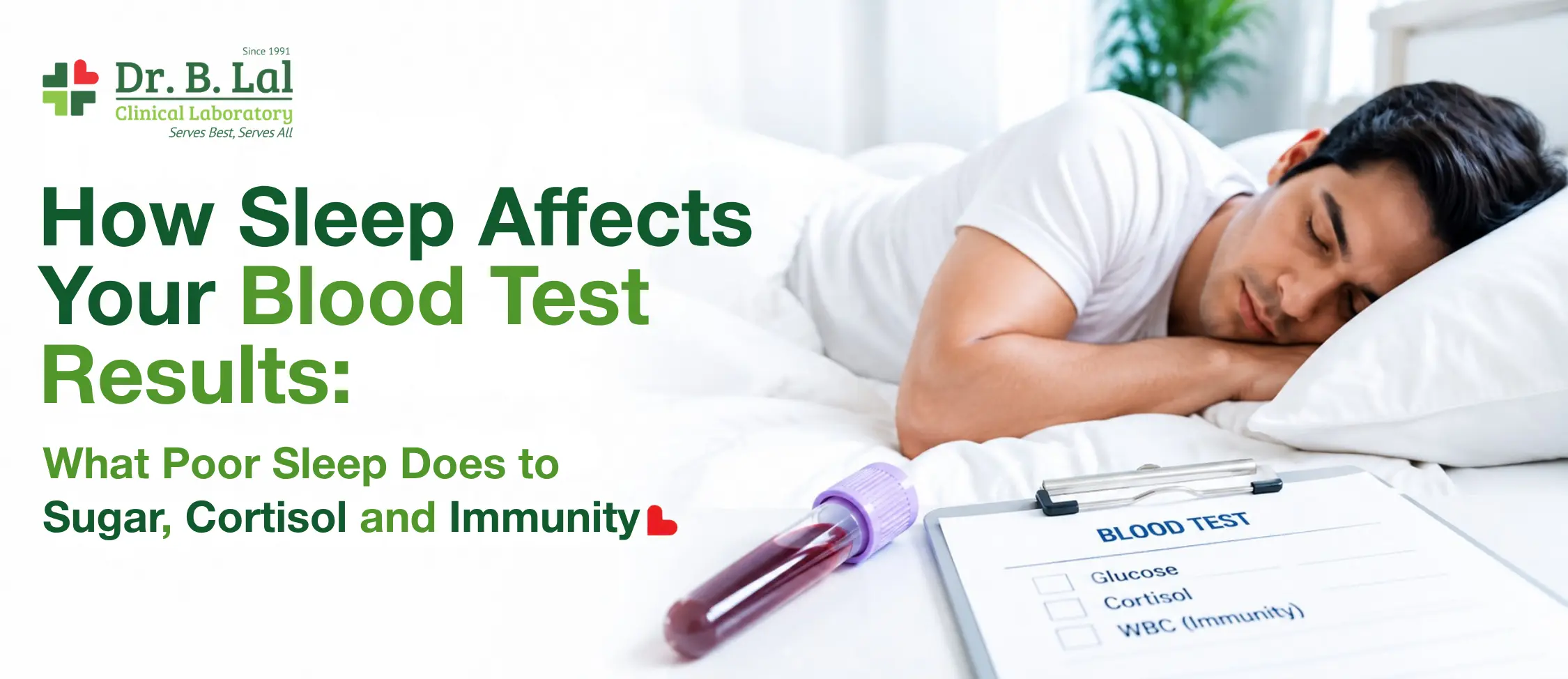
This is worth stating plainly upfront, because it's the whole reason this topic matters: poor sleep can skew blood test results across several different systems at once, hormones, blood sugar, cholesterol, immune markers, and inflammatory indicators - in ways that can look like an underlying health problem when the real cause is simply a bad night's sleep, or several of them. Even a single night of insufficient sleep has been shown to elevate cortisol, glucose, and blood pressure enough to produce misleading results, occasionally prompting further testing or treatment for a problem that isn't actually there. This is exactly why sleep deserves the same attention as fasting when preparing for bloodwork, even though it rarely gets mentioned.
What Poor Sleep Does to Blood Sugar Specifically
The research on sleep and glucose is genuinely well established at this point, and it's more direct than most people expect. A landmark study restricting healthy young men to 4 hours of sleep for six consecutive nights found measurably lower glucose tolerance and higher cortisol compared to when the same men were well rested. Later research confirmed this isn't unique to extreme sleep restriction, even one night of reduced sleep can raise fasting blood glucose and reduce insulin sensitivity in people with completely normal metabolic health.
One controlled trial measured this precisely: after just 24 hours of total sleep deprivation, glucose concentration during a standardised insulin sensitivity test rose significantly compared to a well-rested control group. In everyday terms, this means someone who slept poorly the night before a fasting glucose or HbA1c test could see a genuinely higher reading than their actual baseline metabolic health would suggest, not because anything has changed long-term, but because that single night pushed the numbers up temporarily.
Chronic short sleep compounds this further. Population studies have linked habitually sleeping less than 7 hours a night to a measurably higher risk of impaired fasting glucose, and researchers increasingly point to poor sleep as a genuine contributing factor in the broader rise of insulin resistance and type 2 diabetes over recent decades, not just a side effect of being unwell, but a plausible driver of it.
What Poor Sleep Does to Cortisol Levels
Cortisol is your body's primary stress hormone, and sleep deprivation activates it directly. Multiple studies have found that both acute sleep loss and chronic short sleep raise cortisol levels, and this isn't a subtle effect, the same 6-night sleep restriction study mentioned above found cortisol running measurably higher under sleep debt than under full rest, even in otherwise healthy participants with no separate stressors involved.
This matters directly for anyone getting a cortisol blood test done, which is typically drawn in the morning specifically because cortisol follows a predictable daily rhythm, peaking shortly after waking. Poor sleep disrupts this rhythm, meaning a cortisol test taken after a bad night, or several disrupted nights in a row, may come back elevated for reasons that have nothing to do with an actual adrenal or hormonal condition. Doctors interpreting an unexpectedly high cortisol result will often ask about recent sleep quality specifically for this reason, since insomnia and chronic stress feed into each other in a fairly direct loop, poor sleep raises cortisol, and elevated cortisol makes falling and staying asleep harder in turn.
What Poor Sleep Does to Immunity and Inflammatory Markers
Sleep deprivation doesn't just affect hormones and glucose, it measurably disrupts immune function too. Research has documented that inadequate sleep increases inflammatory and pro-inflammatory markers, including CRP and IL-6, both of which are commonly used clinically to assess inflammation in the body. It also affects white blood cell counts, which form the backbone of how the immune system is assessed in a standard CBC.
This creates a genuinely tricky diagnostic overlap: someone getting bloodwork done to investigate unexplained inflammation or fatigue, who also happens to be sleep-deprived, may show inflammatory markers that look concerning on paper but are substantially influenced by poor sleep rather than an underlying inflammatory condition. This is one of the less appreciated reasons doctors sometimes recommend repeating an inflammatory panel after a period of improved sleep before pursuing more invasive or expensive follow-up testing.
Beyond the numbers on a report, poor sleep also genuinely weakens the immune system's day-to-day function, sleep-deprived people have been shown in research to mount a weaker antibody response to vaccines and to be more susceptible to catching a common cold after exposure, which reflects real functional immune impairment, not just a shifted lab value.
What This Means Before Your Next Blood Test
Considering all of the information stated above, there are several concrete steps that really make sense: try to have adequate sleep consistently for 2 nights prior to any blood test, which should be around 7-9 hours. If you experienced any disturbance of sleep due to sickness, traveling, or stress, inform your doctor about it during the discussion of your results, especially if you underwent glucose test, cortisol test, or some other test for inflammation markers. And if your result was abnormal and you had disturbed sleep prior to it, then it may be worth asking your doctor whether it makes sense to conduct the test again after having regular sleep.
Conclusion
Sleep isn't simply rest for the brain; it plays an important role in the regulation of blood glucose levels, stress hormone secretion, and immune response, which are all measured in standard blood work. One bad night can have significant implications for glucose levels, stress hormone levels, and inflammation markers, and a series of nights of poor sleep can have even greater consequences. This isn't to say that every abnormality found in blood work is the result of poor sleep habits, but it certainly is to say that one should not be overlooked when preparing for blood tests.