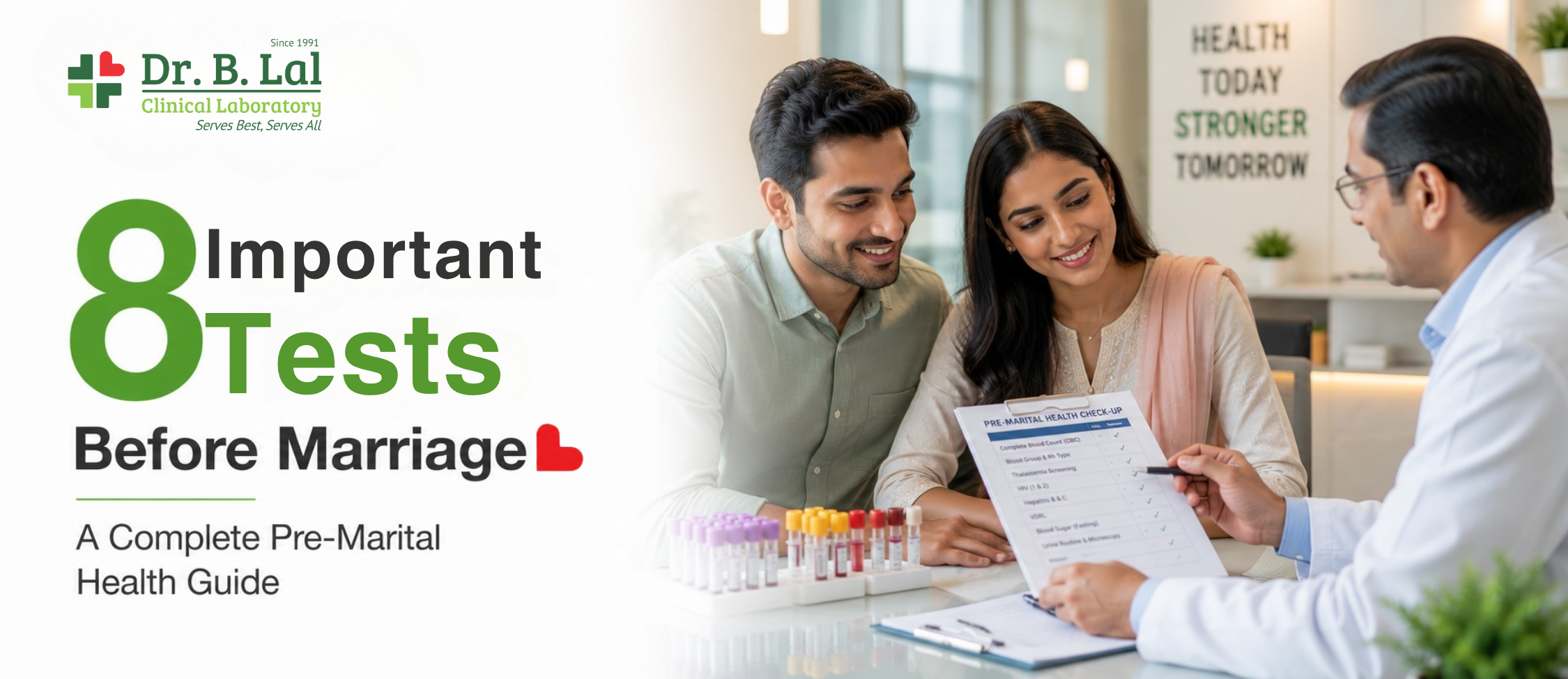
Marriage is one of the most important milestones in life. While couples often spend months planning weddings, choosing venues, and preparing for their future together, one crucial aspect is often overlooked—a pre-marriage health checkup.
Going through medical tests before marriage does not imply finding flaws in one another. It allows both people to have a clear idea of their health condition, and any risks associated with it. This will help the couple to make sound judgments on their future family plans.
In this article, we'll discuss the 8 important tests to be done before marriage and why they matter.
Why Is a Pre-Marriage Health Checkup Important?
A premarital health screening can help:
- Detect hidden health condition
- Assess fertility and reproductive health
- Identify hereditary or genetic disorders
- Prevent the transmission of infectious diseases
- Promote transparency and trust between partner
- Support healthy family planning
Let's explore the essential tests every couple should consider before marriage.
1. Blood Group and Rh Factor Test
Blood groups are relatively basic knowledge, but sometimes it is vital to know when planning a family.
Rh factors play an important part here. When the woman has negative and the man has positive Rh factors, problems might arise during pregnancy.
Why it's important:
Helps manage future pregnancy risks
Useful during medical emergencies and blood transfusions
2. Complete Blood Count
A Complete Blood Count is one of the most common blood tests before marriage. It provides an overview of your general health and checks for conditions such as:
- Anemia
- Infections
- Blood disorders
- Nutritional deficiencies
Why it's important: - Identifies underlying health issues
- Helps maintain overall wellness before starting married life
3. Thalassemia Screening
Thalassemia is an inherited blood disorder that can be passed on to children.
If both partners are carriers of the thalassemia trait, there is a higher chance that their child may develop severe thalassemia major.
Why it's important:
- Helps assess genetic risks
- Supports informed family planning decisions
4. HIV Test
An HIV test before marriage is highly recommended for both partners.
HIV can remain without symptoms for years, making testing the only reliable way to know your status.
Why it's important:
- Prevents transmission to partners
- Enables timely treatment and management
- Promotes a healthy and transparent relationship
5. Hepatitis B and Hepatitis C Tests
Hepatitis B and C are viral infections that affect the liver and may spread through blood or bodily fluids.
Many individuals may carry these infections without noticeable symptoms.
Why it's important:
- Detects liver infections early
- Helps prevent transmission to spouse and future children
- Allows timely vaccination and treatment
6. Fertility Assessment
A fertility test before marriage is not mandatory but can be beneficial, especially for couples planning to have children in the future.
Common fertility tests include:
For women:
- Hormonal profile tests
- Ultrasound examination
- Ovarian reserve testing
For men: - Semen analysis
- Hormonal evaluation
Why it's important: - Identifies potential fertility concerns early
- Helps couples plan their reproductive future confidently
7. Sexually Transmitted Infection (STI) Screening
Certain sexually transmitted infections can remain unnoticed for a long time and may impact reproductive health.
Common STI tests include:
- Syphilis
- Gonorrhea
- Chlamydia
- Herpes (when recommended by a doctor)
Why it's important: - Prevents transmission between partners
- Protects long-term reproductive health
8. Genetic Disorder Screening
A genetic test before marriage can help identify inherited conditions that may be passed on to future children.
Depending on family history and ethnicity, doctors may recommend screening for:
- Thalassemia
- Sickle Cell Disease
- Cystic Fibrosis
- Other hereditary disorders
Why it's important: - Assesses the risk of inherited diseases
- Supports informed family planning decisions
Additional Health Checks to Consider
Besides the essential tests mentioned above, couples may also consider:
- Blood Sugar Test
- Thyroid Function Test
- Vitamin D and Vitamin B12 Tests
- Kidney Function Test
- Liver Function Test
- General Physical Examination
These tests provide a broader picture of overall health and help identify conditions that may require attention.
When Should You Get These Tests Done?
Ideally, couples should undergo a premarital health checkup at least a few months before the wedding. This allows enough time for consultation, treatment, vaccination, or lifestyle modifications if necessary.
Final Thoughts
Marriage is more than just an association between two individuals; it is the start of something new. Pre-marriage health examinations are a wise choice that will assist you in learning about your health status, lowering risks of diseases later in life, and providing a solid foundation for your healthy future.
Never forget that these tests will not be conducted with the goal of filling your heart with fear and suspicion but rather to promote awareness and make good decisions in order to prevent any health problems in the future.
Valuable choices made by you now could become an investment into your healthy future.