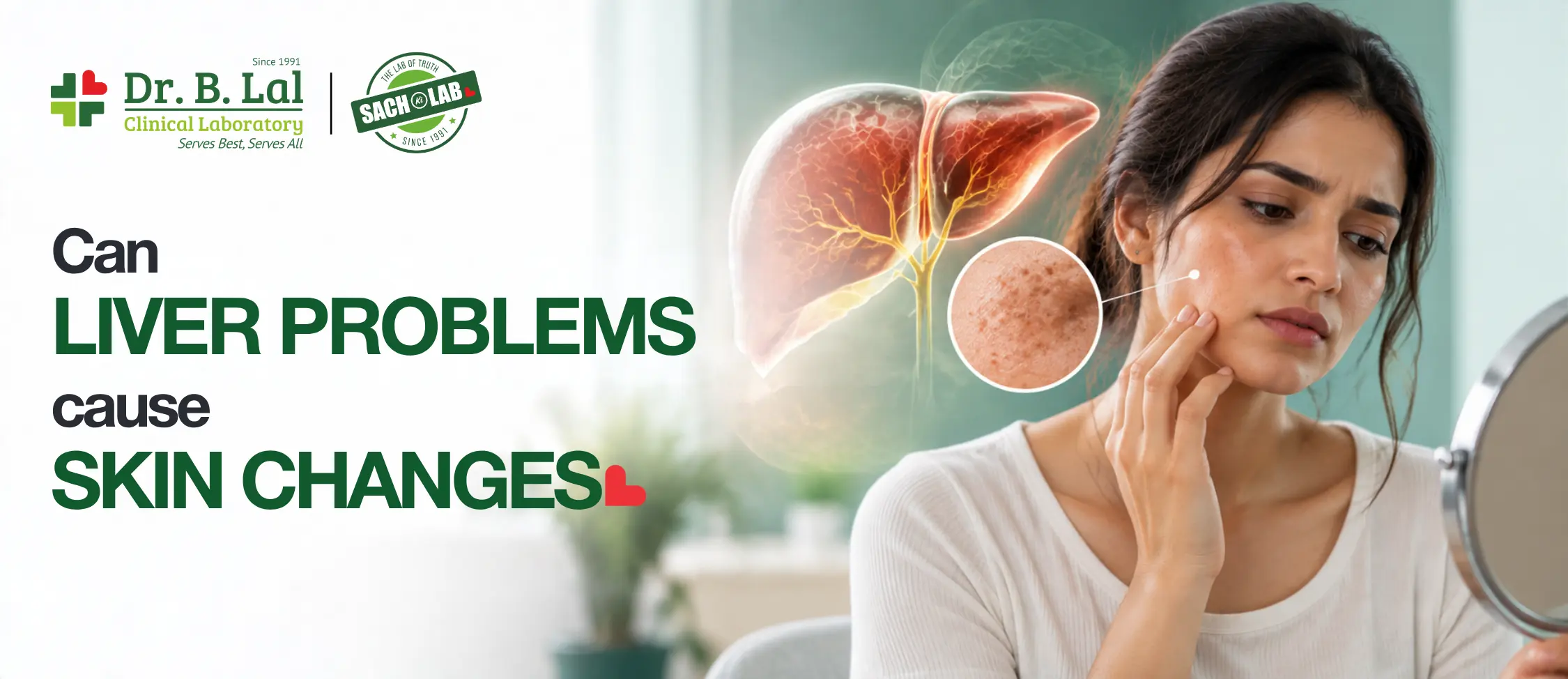
Skin symptoms have a habit of getting treated as purely a skin problem — a new cream, a dermatologist visit, maybe an allergy test, when the actual source is sitting quietly in the liver instead. This isn't a rare coincidence. The liver plays a direct role in detoxifying blood, metabolising hormones, and processing fat, and when it starts struggling, the skin is often one of the very first places that shows it, sometimes before fatigue, jaundice, or any other more "obvious" symptom shows up.
How Liver Problems Actually Cause Skin Changes
The mechanism here is fairly direct once you see it laid out. A healthy liver filters toxins, breaks down bilirubin, metabolises excess hormones like estrogen, and regulates fat and cholesterol processing. When liver function declines, several of these processes back up at once — toxins and bile products build up in the bloodstream, hormones that would normally be broken down start accumulating instead, and fat metabolism becomes disrupted. Skin, being richly supplied with blood vessels and nerve endings, ends up reflecting several of these disruptions directly and visibly.
Liver Problems Causing Jaundice — the Most Recognisable Skin Change
Jaundice is probably the skin change most people already associate with liver trouble, and for good reason — it's caused by a buildup of bilirubin, a yellow pigment normally processed and cleared by the liver. When the liver can't keep up, bilirubin accumulates in the blood and deposits in skin and the whites of the eyes. Visible yellowing typically appears once bilirubin levels exceed roughly 2.5 to 3.0 mg/dL, with milder cases showing a yellow tinge and more severe or prolonged cases sometimes taking on a brownish tinge instead.
Liver Problems Causing Persistent Itching Without a Rash
This is a genuinely distinctive and often overlooked sign — itching (pruritus) that occurs without any visible rash at all, commonly affecting the palms and soles specifically. It's especially pronounced in cholestatic liver diseases, conditions where bile flow is impaired, such as primary biliary cholangitis. The itching is driven by a buildup of bile acids and other substances the liver would normally clear, irritating nerve endings in the skin directly — the mechanism is genuinely complex and not fully understood even now, but the pattern is well recognised clinically. Because there's often no rash to point to, this kind of itching gets misattributed to dry skin or allergies far more often than it should.
Liver Problems Causing Spider Angiomas and Palmar Erythema
These two skin changes are among the most specific visual signs of more advanced liver disease, and they share a common underlying cause: the liver's reduced ability to metabolise estrogen properly, leading to a hormonal imbalance that widens small blood vessels near the skin's surface.
Spider angiomas (spider naevi) appear as small red spots with thin blood vessels radiating outward, resembling a spider's legs — typically showing up on the face, neck, chest, and upper body. Roughly a third of people with cirrhosis develop these, and pressing on the centre of one typically makes it briefly fade, a genuinely useful bedside sign doctors use to distinguish it from other types of red marks.
Palmar erythema shows up as redness on the palms, particularly at the base of the thumb and little finger, while the centre of the palm stays relatively normal. It occurs in around 23% of people with cirrhosis and, like spider angiomas, results from the same underlying hormonal shift rather than any direct skin condition.
Liver Problems Causing Skin Discoloration Patterns Specific to Fatty Liver
Non-alcoholic fatty liver disease (NAFLD) is worth calling out separately, because simple fat accumulation in the liver, on its own, doesn't typically cause skin changes directly. It's when fatty liver progresses toward more advanced stages — NASH, fibrosis, or cirrhosis — that the more recognizable skin signs (spider angiomas, palmar erythema, jaundice) start appearing. That said, NAFLD is frequently accompanied by insulin resistance, and this metabolic overlap independently causes its own skin signs: acanthosis nigricans (dark, velvety patches, typically at the neck or in skin folds) and skin tags, both signals worth paying attention to even in earlier-stage fatty liver, since they point toward the metabolic dysfunction that often travels alongside it.
Liver Problems Causing Fatty Deposits and Bruising-Related Skin Changes
Xanthomas — yellowish, slightly raised fatty deposits, often appearing on the eyelids, elbows, or hands — occur due to elevated cholesterol levels, a downstream effect of disrupted liver fat metabolism. They're not exclusive to liver disease, but their presence, especially alongside other signs on this list, can point toward more severe liver dysfunction or a bile duct obstruction. Separately, petechiae (tiny red dots) and purpura (larger purple patches) reflect a different mechanism entirely — bleeding under the skin caused by low platelet counts and impaired clotting, since the liver produces many of the proteins responsible for normal blood clotting. These are easy to mistake for an allergic reaction, when the actual cause is a liver-related clotting problem.
Why Liver Problems and Skin Changes Are Worth Catching Early
Skin changes can genuinely appear before pain, fatigue, or jaundice become obvious, which makes them a meaningful early clue rather than just a cosmetic afterthought. This matters because the outlook for many of these skin signs depends heavily on timing: early-stage changes like dryness, mild itching, and subtle discoloration often improve substantially, sometimes fully, within weeks to months once the underlying liver condition is properly treated. More established signs like jaundice generally fade as liver function genuinely improves, though this can take longer. Spider angiomas and palmar erythema are a bit more stubborn — they often fade with treatment but can persist even after liver function has meaningfully improved, particularly in people who've progressed to cirrhosis.
When Liver-Related Skin Changes Need Prompt Medical Attention
This problem could be considered an emergency case instead of just visiting a dermatologist when the skin problem is accompanied by more yellowness of the eyes or the skin, increased or worsening itchiness, unexpected bruises, swollen abdomen, confusion, or dark urine. Due to the fact that the root cause of the problem lies in the liver and not in the skin, any form of topical medication would not cure the problem.
Conclusion
Liver problems definitely can and do result in visible changes to the skin, including jaundice, persistent itching without a rash, spider angiomas, palmar erythema, fat deposits, and bruising spots – all recognized and documented liver-induced symptoms, not unrelated skin conditions. As they can occur prior to other symptoms of liver problems, identifying these changes and consulting with a physician about checking liver function, rather than addressing them purely as a cosmetic problem, can really make a difference and help detect liver problems sooner.