
Lactose intolerance is an allergic reaction that occurs in your digestive system to lactose, which is a sugar found in milk. This allergic reaction gives you some unpleasant symptoms after consuming dairy foods. Many people are unable to digest lactose, but not all of them show symptoms from it.
So What Exactly Is Lactose Intolerance?
In milk, there is a form of sugar known as lactose. This requires a particular type of enzyme known as lactase to be digested, and unfortunately, some people just don't produce very much of this enzyme after their early years.
This lactose travels further to your large intestines, where the bacteria ferment it, producing gas. The lactose also leads to water being drawn into the intestines. Hence, gas and excess water is what causes all the symptoms.
This is why one gets it even when growing up drinking milk, in his 20s or 30s. A stomach infection could cause this for several weeks as well as celiac diseases among other illnesses.
Early Signs of Lactose Intolerance You Might Be Ignoring
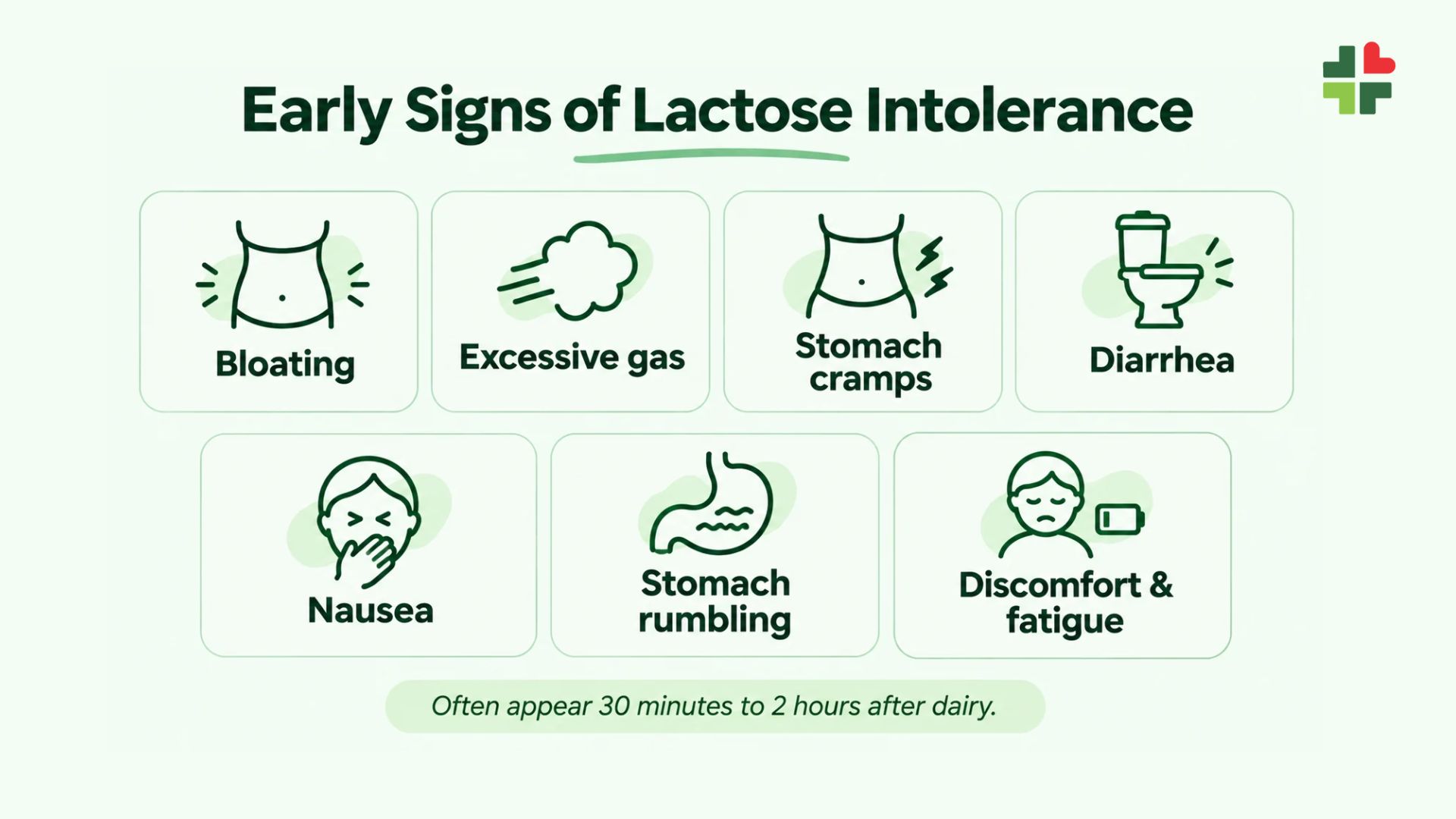
Timing is the biggest clue. Symptoms usually start 30 minutes to 2 hours after dairy, and bigger servings make them worse. A splash of milk in tea might be fine. A tall glass of cold coffee probably won't be.
Bloating
Often the first thing you notice. Your belly feels tight and full, as if you ate twice as much as you did.
Gas
Burping, pressure, and yes, farting more than usual. There's no polite way to put it.
Cramps and Stomach Pain
Usually low in the belly and coming in waves, easing once you pass gas or go to the toilet. Many people blame acidity and take an antacid, which doesn't do much here.
Loose Motions
Watery stools, sometimes with real urgency. If you're scouting for the nearest washroom after a dairy-heavy meal, take note.
Nausea and a Noisy Stomach
Some people feel queasy after milk or creamy dishes, and the stomach may gurgle loudly. Small signs, but part of the same picture.
Symptoms of Lactose Intolerance in Adults
In adults it builds slowly. You've had milk all your life, then paneer or the evening chai starts leaving you bloated. Because it looks a lot like IBS, acidity or stomach pain after meals, people often go years without suspecting dairy.
Symptoms of Lactose Intolerance in Children
True lactose intolerance is uncommon in babies and young kids. It's more likely after a tummy infection, when it usually passes, or as children get older. Watch for belly pain, gas or diarrhea that keeps coming back after milk. Rashes, swelling or vomiting point more toward a milk allergy, so see a pediatrician.
Foods That Can Trigger Lactose Intolerance Symptoms
Milk is the big one, followed by ice cream, cream, milkshakes, soft cheese and most Indian sweets like kheer and rasmalai.
Hidden lactose is what catches people out. It turns up in biscuits, some breads, chocolates, creamy sauces, packet soups and many whey protein powders. Check labels for milk solids, whey or skimmed milk powder.
Curd, buttermilk and aged hard cheese are lower in lactose, and many people handle them fine.
Is It Lactose Intolerance or a Milk Allergy?
They sound alike but aren't the same. One is a digestion problem; the other is the immune system overreacting.
| Lactose intolerance | Milk allergy | |
| What's going on | Gut can't digest milk sugar | Immune system reacts to milk protein |
| Typical signs | Gas, bloating, cramps, loose motions | Hives, swelling, vomiting, wheezing |
| Who it affects most | Teens and adults | Babies and young children |
| How serious | Uncomfortable, not dangerous | Can be severe, even life-threatening |
Swelling of the lips or face, or trouble breathing after dairy, is an emergency.
How Doctors Confirm Lactose Intolerance
A lot of people do the whole test themselves at home. Skip dairy products for a fortnight, and check to see what happens when you go back to having dairy. All you really need is a simple food diary. To be sure, you should talk about a hydrogen breath test. They give you some lactose in a drink and you blow in a machine for a few hours. The more hydrogen, the more the bacteria have fermented the undigested lactose. Sometimes in young children, they use a fecal acid test.
Managing the Symptoms of Lactose Intolerance Day to Day
Most people don't have to quit dairy. It's about finding your limit.
Small amounts with a meal go down far easier than a big glass on an empty stomach. Curd and chaas are usually safe. Lactose-free milk is easy to find in most cities, and oat, soy or almond milk work in chai. Heading to a wedding with paneer in every dish? Lactase tablets before eating can help.
If you cut back a lot, keep your calcium up with ragi, til, leafy greens or fortified plant milk.
When to See a Doctor
You should consult a healthcare provider if you regularly experience lactose intolerance symptoms after consuming dairy products – especially if you are concerned about your calcium intake.
Final Thoughts
The stomach gives you clear indications long before you realize you have it; bloating after drinking chai, wind after consuming paneer, and running to the toilet after having ice cream. Once the link is made between the symptoms and the dairy products, living with lactose intolerance becomes all about portion control.
Medical References & Further Reading
https://www.mayoclinic.org
https://medlineplus.gov/lactoseintolerance.html
https://www.niddk.nih.gov/health-information/digestive-diseases/lactose-intolerance
https://my.clevelandclinic.org/health/diseases/7317-lactose-intolerance