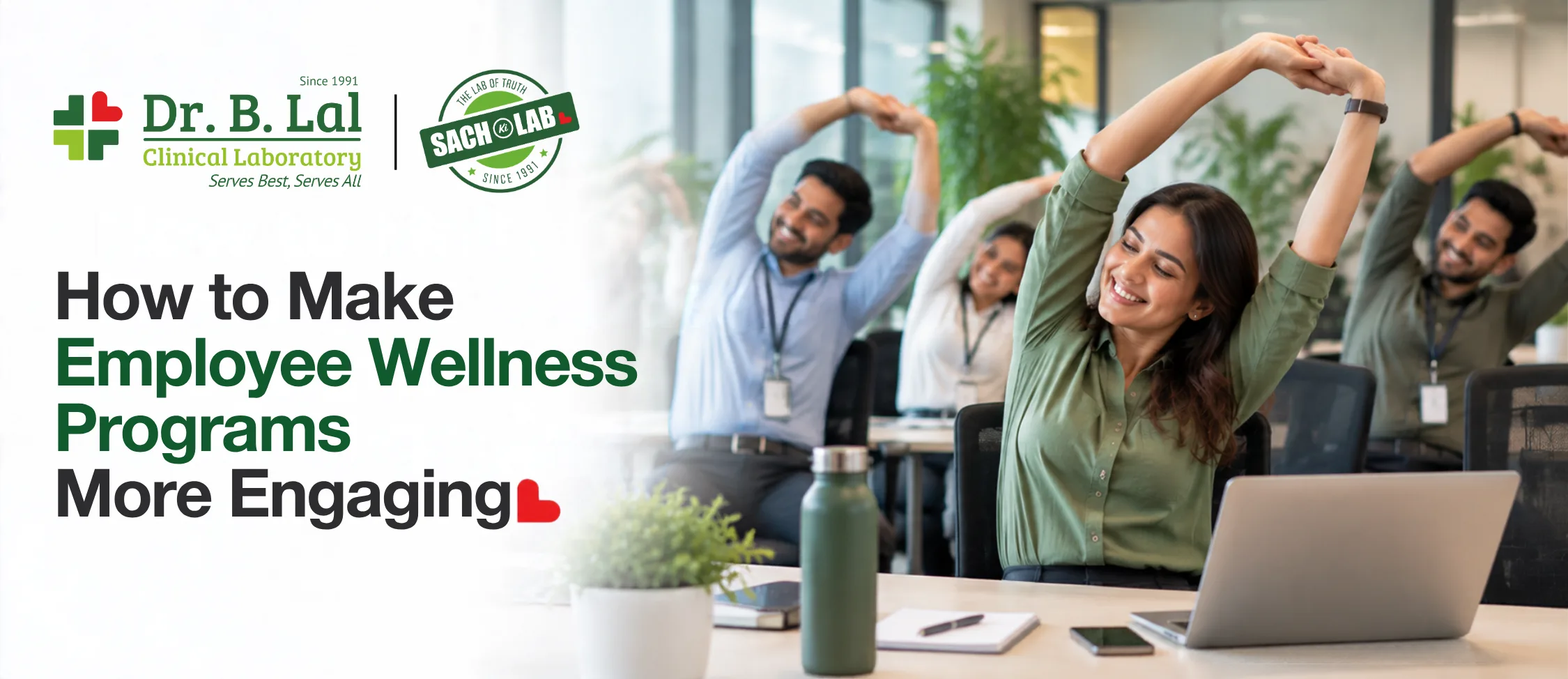
A wellness program can have every structural piece in place — leadership buy-in, decent communication, a fair incentive — and still feel flat to the people it's meant for. That's usually not a participation problem in the mechanical sense; it's an experience problem. Engagement isn't just about getting someone to sign up once. It's about whether the program itself feels worth coming back to, and that comes down to design choices most companies don't spend nearly enough time on.
Making Employee Wellness Programs More Engaging Through Real Personalization
Generic, one-size-fits-all wellness content is one of the most consistently cited reasons engagement stalls. Employees have different health goals, different starting points, and different things that actually motivate them, and a program built around a single generic path tends to lose most of that range. Genuine personalization — letting people choose the challenges, formats, and goals that actually match their own life, rather than assigning everyone the same step-count target — is repeatedly identified as one of the clearest drivers of sustained engagement, precisely because it makes the program feel like it was built for the person using it, not for an average that doesn't really describe anyone.
Making Employee Wellness Programs More Engaging Through Thoughtful Gamification
Gamification gets treated as a gimmick more often than it deserves to be, but the underlying idea is sound: applying game design principles — progress tracking, achievement, social recognition — to something that would otherwise feel like a chore. Award systems, visible progress feedback, and social comparison tap into genuinely basic human drives for achievement and belonging, which is exactly why a simple leaderboard or badge system can shift how a wellness activity feels, even though nothing about the underlying activity has changed.
The detail that separates good gamification from the kind that backfires is fit. Not every employee responds to competition — some are motivated by collaboration, others by personal mastery, others by a sense of purpose or community impact. Frameworks like the Hexad User Types model exist specifically to map different personality types to different game mechanics, since a leaderboard that energises one person can feel alienating or pointless to another. Gamification applied without this kind of thought — forced, one-size-fits-all, purely competitive — can genuinely backfire, coming across as manipulative rather than motivating, which is worth knowing before assuming more points and badges automatically means more engagement.
Making Employee Wellness Programs More Engaging Through Real Variety
Programs that repeat the same handful of activities year after year lose novelty fast, and novelty turns out to matter more than people expect for sustained participation. Offering a genuinely different range of activities — movement-based challenges, mindfulness and digital-detox options, nutrition-focused content, sleep tracking — lets employees engage with whatever actually fits their current interests and life stage, rather than forcing everyone through the same fitness-centric template regardless of relevance. This also matters for inclusion: a program built entirely around step counts or gym-based challenges implicitly excludes employees with mobility limitations, caregiving demands, or simply no interest in fitness specifically, while a program with multiple pathways gives everyone something worth engaging with.
Making Employee Wellness Programs More Engaging Through Real Variety
Programs that repeat the same handful of activities year after year lose novelty fast, and novelty turns out to matter more than people expect for sustained participation. Offering a genuinely different range of activities — movement-based challenges, mindfulness and digital-detox options, nutrition-focused content, sleep tracking — lets employees engage with whatever actually fits their current interests and life stage, rather than forcing everyone through the same fitness-centric template regardless of relevance. This also matters for inclusion: a program built entirely around step counts or gym-based challenges implicitly excludes employees with mobility limitations, caregiving demands, or simply no interest in fitness specifically, while a program with multiple pathways gives everyone something worth engaging with.
Making Employee Wellness Programs More Engaging by Co-Designing With Employees
One of the more effective, and most commonly skipped, moves is simply asking employees what they'd actually want before building the program around assumptions. Involving employees directly in designing challenges — something as simple as asking which wellness themes genuinely interest them — measurably increases buy-in, largely because people engage more readily with something they had a hand in shaping rather than something handed down as a finished product. This same co-design approach helps address resistance to a new program specifically, since employees who feel some ownership over the format are considerably less likely to write it off before giving it a real try.
Making Employee Wellness Programs More Engaging Through Social Connection
Wellness activities done entirely alone tend to fade faster than ones built around genuine social connection. Letting employees share progress, form teams, or support each other through a shared challenge introduces a layer of accountability and camaraderie that solo tracking simply doesn't provide. This matters enough that it's worth building deliberately rather than hoping it emerges naturally — team-based challenges, shared goals, and visible peer progress all create reasons to keep showing up that have less to do with the health outcome itself and more to do with not wanting to let a team down, which is a genuinely powerful, underused motivator in most program designs.
That said, social features in a workplace setting carry a real design tension worth naming: privacy. Because colleagues, not strangers, are the ones seeing shared progress, poorly handled social features can feel exposing rather than motivating, particularly around sensitive metrics like weight or specific health conditions. A rigorous occupational health gamification study found that fairness and privacy concerns were genuine design challenges specific to workplace settings, precisely because the social pool is your actual coworkers — which is exactly why the most effective social features let people choose what to share, rather than making participation visible by default.
Making Employee Wellness Programs More Engaging Through Technology, Used Well
Wearables, apps, and dedicated wellness platforms can automate tracking, deliver instant feedback, and connect team-based experiences in ways that would be genuinely impractical to run manually. The real value isn't the technology itself — it's what it removes: manual logging, delayed feedback, and the friction of not knowing whether progress is actually happening. Used well, this frees up the program to focus on content and community rather than admin. Used poorly — as a mandatory, over-tracked, one-size-fits-all system — it can just as easily feel like surveillance, which undoes a lot of the goodwill personalization and choice were meant to build in the first place.
Conclusion
Making employee wellness programs more engaging isn't really about adding more features or a bigger budget — it's about treating engagement as a design problem rather than an assumption. Real personalization, thoughtfully applied gamification that fits different motivational types, genuine variety, employee input on what gets built, deliberate social connection with real privacy choices, and technology that removes friction rather than adding surveillance all compound on each other. Programs that get these pieces right don't need to work as hard to convince people to participate, because the program itself is finally something worth showing up for.