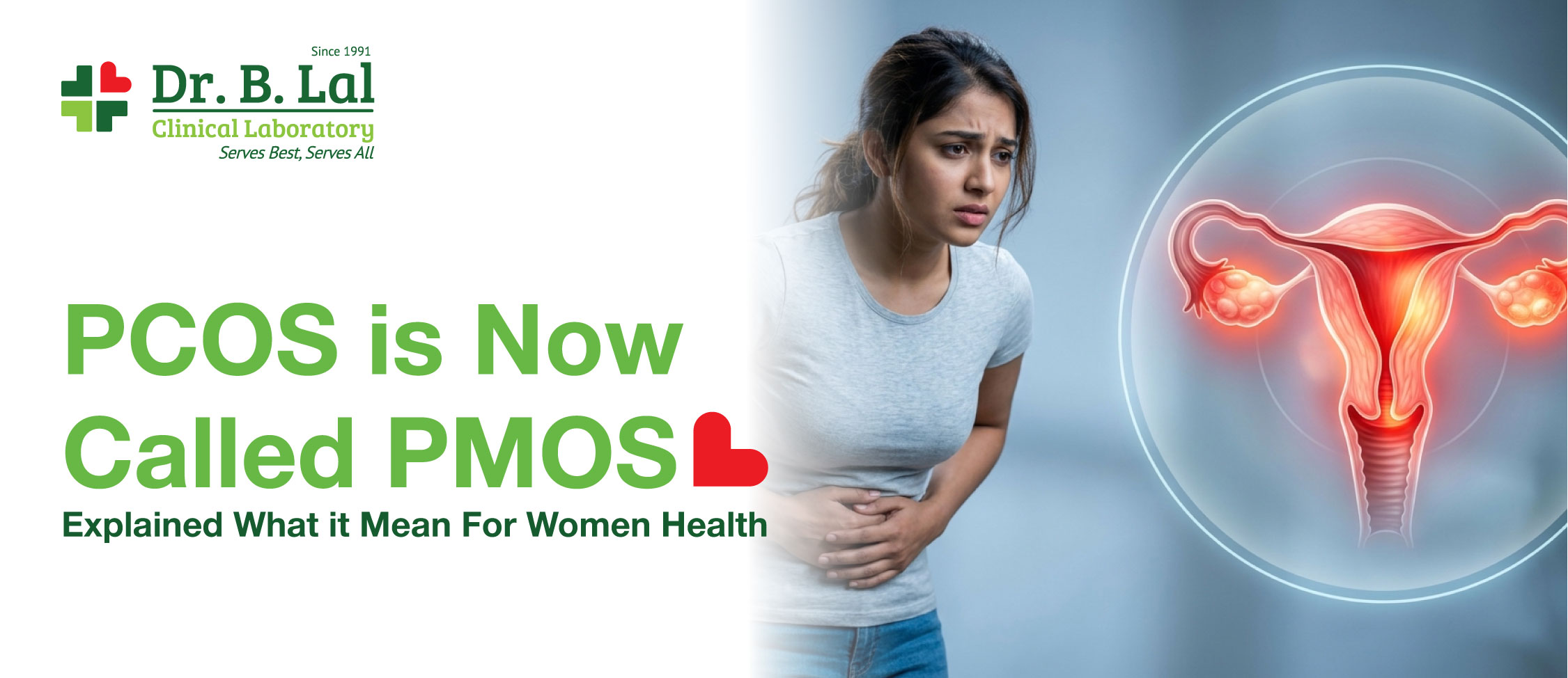
Polycystic metabolic ovarian syndrome (PMOS), previously referred to as polycystic ovary syndrome (PCOS), is an endocrine disorder where your ovaries, which are responsible for the production and release of eggs, make too much of their hormones. People who have PMOS usually have higher than normal amounts of androgens secreted from their ovaries. This leads to hormonal imbalance within the body. Hence, most women with PMOS have irregular periods, missed periods and lack ovulation. You may see small cysts of immature eggs within your ovaries through ultrasound because of anovulation (lack of ovulation). However, the presence of cysts in your ovaries is not required for you to have PMOS.
What Happened? PCOS Has Officially Been Renamed PMOS
On 12 May 2026, a landmark paper published in The Lancet — one of the world's most respected medical journals — officially announced that Polycystic Ovary Syndrome (PCOS) has been renamed Polyendocrine Metabolic Ovarian Syndrome (PMOS).
This was not a sudden decision. It is the result of over 14 years of research, involving more than 22,000 people across six continents — including patients, doctors, researchers, and advocates — from 56 global patient and professional organisations including the Endocrine Society.
The new full name is:
- Polyendocrine Metabolic Ovarian Syndrome (PMOS)
Three letters changed. But the meaning behind those three letters? That is a very big deal.
Why Was the Name Changed? The Problem with "PCOS"
The old name — Polycystic Ovary Syndrome — was always a bit misleading. Here is why:
1. Not All Women with PCOS Have Cysts
The word polycystic means "many cysts." But in reality, what ultrasounds detect are small fluid-filled follicles — not pathological cysts. Many women diagnosed with PCOS never have cysts at all. And many women who do have cysts on scan do not have the syndrome. This caused decades of missed diagnoses and confused patients.
2. The Condition Is Much Bigger Than the Ovaries
The old name pointed everything at the ovaries. But in truth, PCOS/PMOS is a whole-body hormonal and metabolic disorder. It affects:
- Insulin resistance and blood sugar regulation
- Cardiovascular and heart health
- Weight and metabolism
- Skin (acne, excess hair)
- Mental health (anxiety, depression)
- Thyroid and other endocrine functions
- Long-term risk of Type 2 diabetes
By naming it a "syndrome of the ovaries," millions of women had their broader symptoms dismissed or treated in isolation.
3. The Name Was Causing Harm
Women with irregular periods, sudden weight gain, facial hair, mood swings, or insulin resistance — but no visible cysts — were routinely told they did not have PCOS. They were sent away without answers. The wrong name was doing real damage.
What Does PMOS Stand For — And Why Is It Better?
Let us unpack the new name:
| Word | What It Means |
| Poly | Multiple / many |
| Endocrine | Involving multiple hormone systems (not just ovaries) |
| Metabolic | Affecting how the body processes energy, sugar, and fat |
| Ovarian | The ovaries are still involved — but as one part of the picture |
| Syndrome | A cluster of symptoms that occur together |
The new name directly says: "This is a multi-hormone, metabolic disorder that involves the ovaries." That is far more accurate — and far more empowering for patients.
Has My Condition Changed? Do I Need to Be Re-Diagnosed?
No. Absolutely not.
This is important: the condition itself has not changed. Only the name has. If you were diagnosed with PCOS last month or ten years ago, you now simply have PMOS. Your diagnosis, your test reports, your medications — all of these remain completely valid.
What has changed is how doctors, researchers, and the medical world understand and frame the condition. And that change opens the door to better care.
What Does PMOS Mean for Indian Women Specifically?
This name change is especially important for women in India — and here is why.
Indian women carry a disproportionately high burden of PMOS. Studies estimate PCOS/PMOS prevalence in India ranges from 3.7% to over 22% depending on the region and diagnostic criteria used. Yet alarmingly, up to 70% of affected women remain undiagnosed worldwide.
What makes India unique:
- Indian women develop PMOS at lower BMI thresholds than Western populations. A woman may appear slim and yet have significant insulin resistance — a hallmark of PMOS.
- Lean PMOS (in women with normal or low body weight) is frequently missed because doctors focus on weight and visible cysts rather than hormonal markers.
- India already carries a high burden of insulin resistance, prediabetes, Type 2 diabetes, fatty liver disease, and cardiovascular disease — all of which are deeply interlinked with PMOS.
- Mental health impact is significant — anxiety and depression are among the most common co-morbidities in Indian women with this condition.
Under the old ovary-focused framework, countless Indian women were told to "just lose weight" or were dismissed when their ultrasound looked normal. The new PMOS name demands a comprehensive, metabolic-first approach — which is exactly what Indian women need.
Common Symptoms of PMOS You Should Not Ignore
Whether you have been diagnosed before or are reading this for the first time, here are the key symptoms of PMOS to watch for:
- Irregular or absent periods (oligomenorrhoea or amenorrhoea)
- Unexpected weight gain, especially around the abdomen
- Acne that does not respond to regular treatment
- Excess facial or body hair (hirsutism)
- Hair thinning or hair loss from the scalp
- Skin darkening around the neck, armpits, or inner thighs (a sign of insulin resistance)
- Fatigue and low energy
- Difficulty getting pregnant
- Mood swings, anxiety, or depression
- High blood sugar or insulin resistance
If you experience several of these symptoms together, it is important to get tested — not just with an ultrasound, but with a comprehensive hormonal and metabolic panel.
What Tests Are Needed to Diagnose PMOS?
This is where the name change becomes practically important. Because PMOS is now understood as a metabolic-endocrine condition, diagnosis requires looking beyond just an ultrasound scan of the ovaries.
At Dr. B. Lal Clinical Laboratory, we offer all the diagnostic tests necessary for a complete PMOS evaluation:
Hormonal Tests
- LH (Luteinizing Hormone) & FSH (Follicle Stimulating Hormone) — to assess the LH:FSH ratio
- Total & Free Testosterone — to detect elevated androgens
- DHEAS (Dehydroepiandrosterone Sulphate) — another androgen marker
- Prolactin levels — to rule out other causes of irregular periods
- AMH (Anti-Müllerian Hormone) — increasingly used in PMOS evaluation
- TSH (Thyroid Stimulating Hormone) — thyroid disorders can mimic or worsen PMOS
Metabolic Tests
- Fasting Blood Sugar & HbA1c — to assess blood glucose and long-term sugar control
- Fasting Insulin levels — to detect insulin resistance
- HOMA-IR (Insulin Resistance Index) — a calculated marker for insulin resistance
- Lipid Profile (Cholesterol, Triglycerides, HDL, LDL) — cardiovascular risk assessment
Other Investigations
- Pelvic Ultrasound — still useful, but no longer the only or definitive test
- CBC (Complete Blood Count) — general health screening
A single test cannot diagnose PMOS. It requires a holistic evaluation — exactly the kind of comprehensive testing that Dr. B. Lal Lab is equipped to provide.
What Happens After Diagnosis?
Because PMOS is now recognised as a lifelong, multi-system condition, treatment is no longer just about fertility or regulating periods. Modern PMOS management includes:
- Lifestyle changes — dietary adjustments, weight management, and physical activity tailored to hormonal and metabolic health
- Insulin sensitisers like Metformin for women with insulin resistance
- Hormonal therapy for cycle regulation when needed
- Cardiovascular risk monitoring — regular lipid and blood pressure checks
- Mental health support — treating anxiety and depression as part of the condition, not as separate issues
- Long-term follow-up — PMOS is not a condition that goes away; it requires ongoing monitoring
Women should work with both a gynaecologist and an endocrinologist for the most complete care.
Why Early Testing Still Matters — No Matter What You Call It
No matter what it is called—PCOS or PMOS—one thing will always be constant: Early diagnosis means a better prognosis.
It is for this reason that up to 70% of patients with this disorder are left undiagnosed not because they do not have symptoms but because they do not have access to the necessary tests, specialists, or information.
Reference 1: https://my.clevelandclinic.org
Reference 2: https://pmc.ncbi.nlm.nih.gov