"Probiotic" and "prebiotic" get used almost interchangeably in casual conversation, which is a little unfortunate, because they're doing genuinely different jobs inside your gut. One introduces new bacteria. The other feeds the bacteria you already have. Both matter, but understanding the difference actually changes what you should be eating and why, and the good news for anyone eating a typical Indian diet is that both are probably already sitting in your kitchen.
Probiotics vs Prebiotics: The Actual Definitions
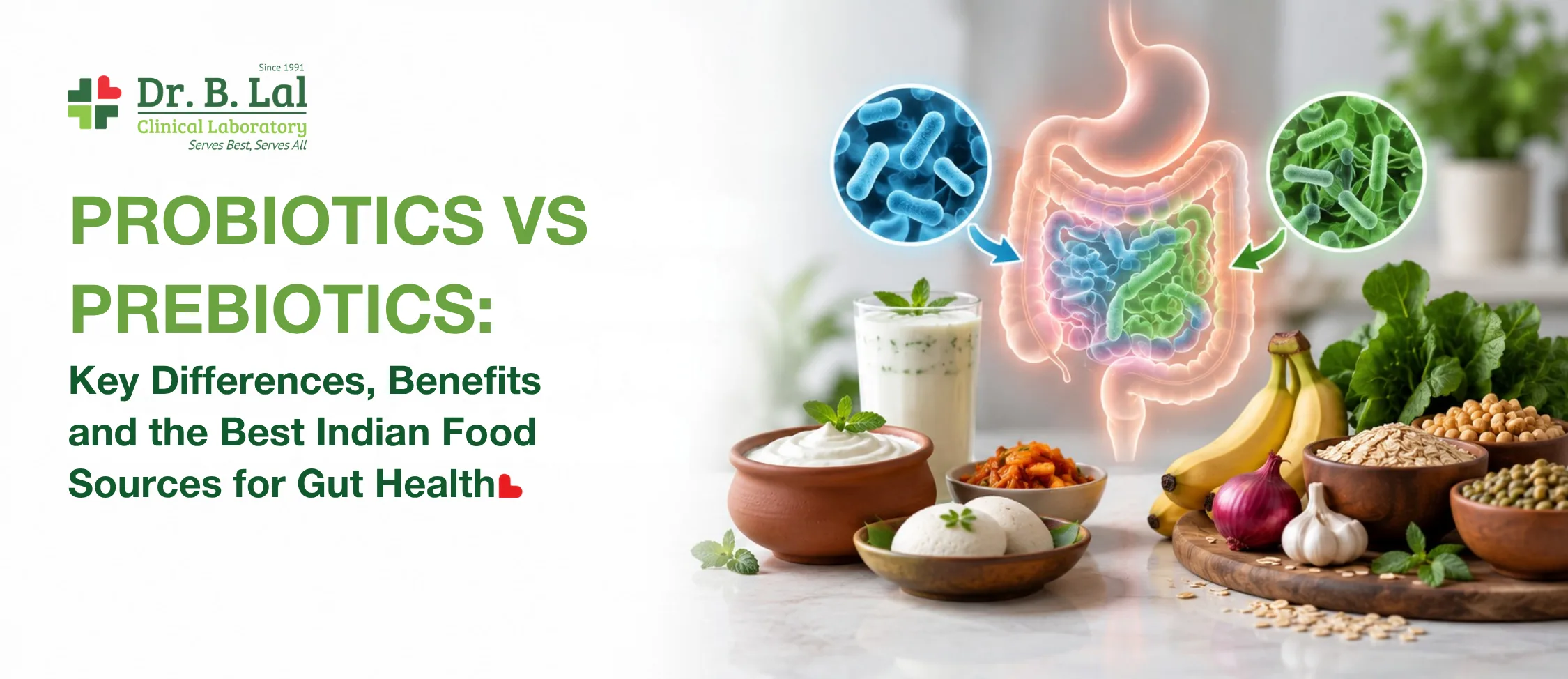
Probiotics are live microorganisms, bacteria and sometimes yeasts that, when consumed in adequate amounts, provide a genuine health benefit. Think of them as new residents moving into your gut, joining the trillions of bacteria already living there. The most common probiotic groups are Lactobacillus and Bifidobacterium, and they show up naturally in fermented foods like curd, kefir, and pickles.
Prebiotics are a completely different case because they do not have any bacteria at all. Prebiotics are special kinds of dietary fiber, which is usually a kind of carbohydrate that cannot be digested by the human body but can be digested by good gut bacteria. Simply put, prebiotics will not add any additional bacteria in the gut, they will just feed the bacteria already present in your gut to make them grow faster and compete with other types of bacteria.
The easiest way to remember the difference between probiotics and prebiotics: one is the seed and the other one is the fertilizer.
Probiotics vs Prebiotics: How Each One Actually Works in the Body
Probiotics work by directly adding beneficial bacteria to your gut, where they can help crowd out harmful bacteria, assist with digestion, and even help produce certain vitamins as a byproduct of their own activity. Their effectiveness depends partly on the specific strain and how well it survives the trip through stomach acid to actually reach the intestine alive.
Prebiotics work more indirectly. Once they reach the colon, beneficial gut bacteria ferment them, producing short-chain fatty acids, including butyrate, propionate, and acetate, that have real, documented effects on the body. Butyrate specifically supports the health of the cells lining your intestine, while these fermentation byproducts more broadly help lower colon pH, support immune signalling, and create an environment less friendly to harmful bacteria. This is really the whole mechanism behind why fibre-rich foods are so consistently linked to good gut health, it's not the fibre itself doing the work directly, it's what your gut bacteria turn it into.
Probiotics vs Prebiotics: Which One Do You Actually Need?
This is actually a wrong question because of the way that they work in practice, and it’s not an either-or situation. Probiotics without prebiotics is akin to moving new people into a community without a food source; they won’t survive. Prebiotics without probiotics can provide nutrition to the bacteria that are already there, which is good, but if the diversity of your current bacterial population isn’t very diverse to begin with, then it won’t make much difference. Most current advice regarding gut health seems to be in favor of using both.
Get a detailed report for your gut - Gut Microbiome Test
Probiotics vs Prebiotics: Best Indian Food Sources for Each
This is where an Indian diet actually has a real advantage, you likely don't need imported supplements or expensive probiotic drinks, since traditional fermented foods already deliver comparable benefits.
Indian probiotic food sources:
- Curd (dahi) is the most accessible probiotic source in the Indian diet, containing Lactobacillus acidophilus and Streptococcus thermophilus. Homemade curd generally has a higher live culture count than most store-bought versions.
- Buttermilk (chaas) and lassi are fermented alongside curd's benefits, with traditional additions like cumin and ginger offering extra digestive support.
- Idli and dosa batter, left to ferment overnight, develops Leuconostoc mesenteroides and other beneficial bacteria — a transformation that happens in almost every South Indian kitchen without anyone necessarily realising its microbiome value.
- Traditionally lacto-fermented pickles (aachar), made without vinegar, contain genuinely diverse Lactobacillus strains — though it's worth knowing that commercial pickles preserved in oil or vinegar generally don't offer the same live-culture benefit.
- Kanji, a fermented carrot or beetroot drink especially popular in North India around Holi, is rich in Lactobacillus plantarum.
- Dhokla, the fermented gram flour snack from Gujarat, also carries beneficial bacteria from its fermentation process.
To actually get the probiotic benefit from any of these, they're best eaten fresh or without excessive heating, high heat kills the live bacteria that make them useful in the first place, which is worth remembering before deeply frying or overcooking anything fermented.
Indian prebiotic food sources:
- Dal and legumes — moong, chana, rajma, masoor, are genuinely excellent prebiotic sources, rich in fibre that feeds beneficial gut bacteria and supports short-chain fatty acid production.
- Onion and garlic, staples in nearly every Indian kitchen, are naturally rich in inulin, one of the most well-studied prebiotic fibres.
- Sabja (basil) seeds offer roughly 7 grams of fibre per tablespoon — more than many people get from an entire meal — and are easy to add to nimbu paani or plain water.
- Bananas, particularly slightly under-ripe ones, contain resistant starch that functions as a prebiotic.
- Whole grains like whole wheat, jowar, and bajra bring fibre that supports the same beneficial fermentation process.
Probiotics vs Prebiotics: A Practical Way to Combine Both
As the most of the dietary advice related to maintaining good gut health suggests that one should ideally have both these things, having a natural Indian style meal is enough because it comes with both the elements by default, such as dal (which acts as prebiotics) and curd/raita (which acts as probiotics) or idli (which acts as probiotics) with sambar full of veggies and lentils (prebiotics).
A Word of Caution Before You Overdo It
If you're new to prebiotic fibre specifically, it's worth easing in gradually rather than adding a large amount all at once, a sudden spike in fibre can cause bloating or gas as gut bacteria adjust to the increased fermentation activity. Starting with a small amount and building up over a couple of weeks tends to go a lot more smoothly. And for anyone managing IBS or SIBO specifically, certain prebiotic fibres (particularly FODMAPs) can worsen symptoms rather than help, this is a case where checking with a doctor before loading up on prebiotic foods is genuinely worth doing.
Conclusion
Probiotics and prebiotics aren't competing categories, and choosing between them isn't really the goal, they work together, one supplying beneficial bacteria, the other feeding what's already there. The genuinely good news for anyone eating a typical Indian diet is that both are already woven into everyday food, from curd and idli to dal and onions, without needing anything imported or expensive. A plate that naturally combines both, the way a traditional Indian thali often already does, is doing more for your gut than most trendy probiotic supplements claim to.