
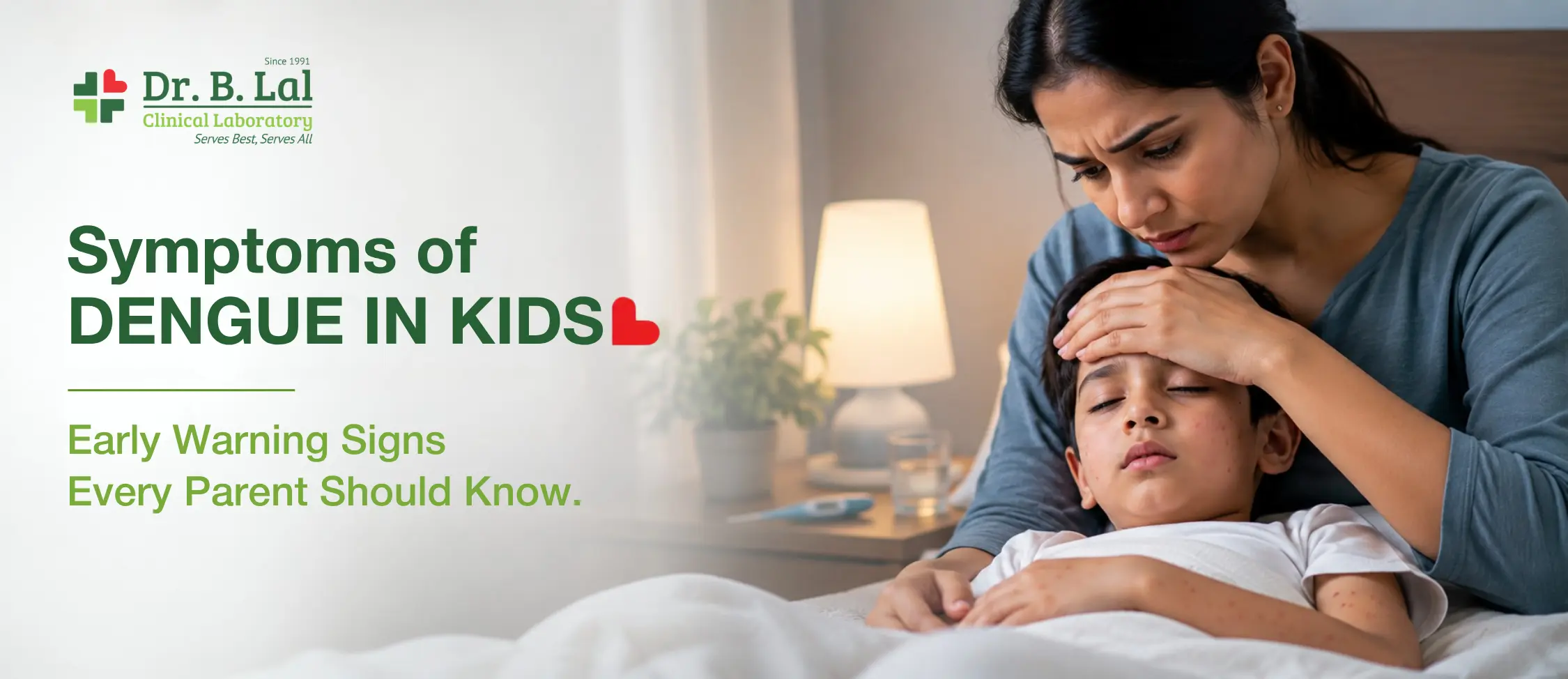
Dengue tends to spike every year once the monsoon sets in, and if you have kids, it's one of those illnesses worth knowing about before it shows up rather than after. Part of what makes dengue tricky in children specifically is that it often starts looking like any other viral fever — and in kids, especially younger ones, it can also turn serious faster and with fewer obvious warning signs than it does in adults. Knowing what to watch for, and more importantly, when the fever breaking isn't actually good news, can genuinely make a difference.
How Dengue Usually Starts
Dengue is spread by the Aedes mosquito, which typically bites during the day rather than at night, and symptoms usually show up 4 to 10 days after a bite. In the early phase, a child with dengue often has:
- A sudden, high fever, frequently reaching 104°F (40°C)
- Body aches, joint pain, and pain behind the eyes — though younger children often can't describe this clearly and may just seem generally miserable
- Headache
- Nausea or vomiting
- Loss of appetite
- A red, blotchy rash that can appear on the face, chest, and limbs a few days into the illness
- Mild bleeding signs, such as occasional nosebleeds or bleeding gums
In babies and toddlers, dengue symptoms can look a little different — instead of clearly describing pain, an infant might just cry more than usual, feed poorly, seem unusually clingy, or sleep more than normal. That's worth keeping in mind, since younger children often can't tell you what's wrong, which puts more weight on watching their behaviour rather than waiting for them to complain.
This early, "acute" phase typically lasts 2 to 7 days, and for most children, the illness resolves on its own with rest, fluids, and fever management. But there's a specific window afterward that parents genuinely need to know about.
The Phase That Actually Matters Most
The surprising thing about dengue for many parents is that the most critical stage does not occur during the peak fever but rather in the 24 to 48 hours after the fever ends. This is also referred to as the critical phase, during which a few percent of dengue cases may develop into a situation where there is plasma leakage from the blood vessels, a marked decrease in the number of platelets, and in some cases, hypotension or organ involvement.
A lot of parents understandably relax once the fever comes down, assuming the worst is over. With dengue, that's exactly the period to be watching most closely, not the one to stop paying attention.
Warning Signs That Need Immediate Medical Attention
If any of the following appear — especially in that window after the fever drops — it means heading to a hospital right away rather than waiting to see if things improve on their own:
- Persistent vomiting — throwing up repeatedly, not just once or twice
- Severe abdominal pain, or a child who's unusually guarded or distressed when their tummy is touched
- Bleeding from any site — nosebleeds, bleeding gums, blood in vomit or stool, or unusually heavy bruising
- Rapid or laboured breathing, or a child who seems to be working hard to breathe even at rest
- Cold, clammy, or pale skin, which can be a sign of poor circulation
- Unusual restlessness, extreme lethargy, or difficulty waking the child — in babies and toddlers, this can show up as excessive crying, poor feeding, or reduced interaction with their surroundings rather than clear drowsiness
- Not urinating for 6 hours or more
- Sudden behavioural changes, confusion, or marked irritability
None of these should be managed by waiting it out at home. They're signals that the illness may be progressing to a more serious stage, and prompt evaluation — including blood tests to check platelet count and haematocrit — makes a real difference in outcome.
Why Testing Matters, Not Just Symptoms
Because early dengue symptoms overlap so much with other common childhood viral infections, a fever alone doesn't confirm dengue — and it shouldn't be assumed either way without testing, especially in areas with an active outbreak. Blood tests, including an NS1 antigen test in the first few days of fever or antibody tests later in the illness, help confirm the diagnosis, while platelet count and hematocrit are tracked closely throughout the illness since changes in these numbers are some of the most useful clues doctors use to catch early signs of severe dengue, sometimes before obvious symptoms appear.
If your child has a high fever during dengue season, getting them tested rather than assuming it's "just a viral fever" is a reasonable, sensible step — particularly because the warning signs of severe dengue are far easier to catch early when you already know a diagnosis is likely.
When it comes to children's health, get blood tests done immediately - Dengue test for kids
Caring for a Child With Mild Dengue
For children who aren't showing any warning signs, care at home usually focuses on:
- Plenty of fluids — water, ORS, coconut water, or soups — to prevent dehydration
- Paracetamol for fever and pain, and specifically avoiding aspirin or ibuprofen, since these can increase bleeding risk in dengue
- Close, ongoing observation, particularly as the fever starts to come down, watching specifically for any of the warning signs above
Even in mild cases, a follow-up with a doctor to monitor platelet counts over the following days is generally advisable, since the illness can shift quickly.
Conclusion
Most kids with dengue recover end up completely from the illness with proper support at home; however, there’s a crucial aspect about dengue which is the period when the fever subsides; this is as significant, if not even more, than the fever itself. The awareness about the danger signs – consistent vomiting, stomach pain, bleeding, respiratory problems, and unusual drowsiness or agitation – along with immediate action instead of procrastination is the only important thing that can be done by the parents. And in case of dengue, it is always safe to assume the worst.