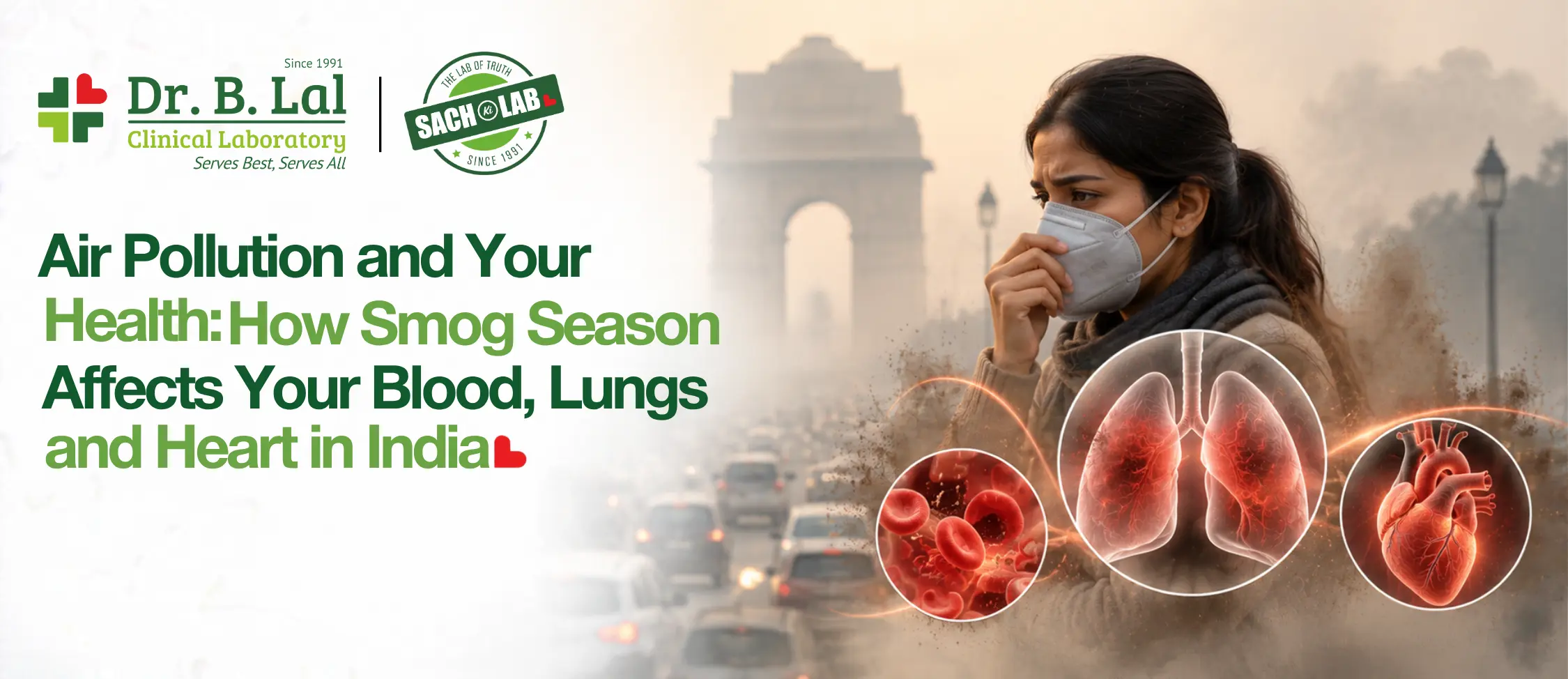
Around this time every year, the morning air in much of north India turns grey and a little sour. Your eyes sting on the way to work. A cough you can't explain hangs around for weeks. Someone at home starts using the inhaler more than usual.
We've almost gotten used to it, which is the worrying part. Air pollution and health are tied together far more tightly than most of us realise, and the damage isn't limited to the lungs.
Air Pollution and Health: Why Smog Season Hits India So Hard
Smog is an aerosol composed of a combination of smoke, dust, exhaust fumes, and other emissions, all suspended close to the ground. Some things come together in an unfortunate manner during October and November. Cool evenings and little wind prevent the dispersion of smog in the atmosphere. Burning crop residues create smoke. Traffic and construction activities and, finally, festival fireworks contribute to it.
The biggest culprit behind smog is the PM2.5 particles, which are less than 2.5 microns in size, much finer than the width of a human hair. One cannot distinguish them with naked eyes and also filter them through the nose. These particles get lodged in the lungs and sometimes even pass into the blood system.
What Air Pollution Does to Your Lungs
The lungs take the first hit. On a bad-air day the airways get irritated and inflamed, which shows up as coughing, a scratchy throat, wheezing, a tight chest or breathlessness on stairs that never bothered you before.
For people with asthma or COPD, smog season often means flare-ups and emergency visits. Even healthy people catch more chest infections, because inflamed airways are worse at fighting germs. The long game is harder to notice. Children who grow up breathing polluted air can end up with smaller, weaker lungs as adults, and that doesn't fully reverse.
Air Pollution and Heart Health: The Part People Overlook
This might come as a shock for many patients; the fact is that much of the damage caused by air pollution is to the heart and blood vessels and not to the lungs.
The fine particles cause inflammation in the body, causing blood vessels to become rigid, and can even raise blood pressure. Studies from various countries have shown that there is a direct link between an increase in air pollution and an increase in heart attacks, stroke, and irregular heartbeat within a few days.
So chest pain, a racing heart or sudden breathlessness during a smoggy week isn't "just the pollution". It deserves a proper check.
How Smog Affects Your Blood
As soon as particles enter the circulatory system, they are seen as an invader. Markers of inflammation like CRP can increase. Blood becomes more liable to form clots, while at the same time, blood vessel linings suffer from damage. Gases such as carbon monoxide, produced through combustion, bind to haemoglobin, thus leaving less space for oxygen transport, which explains fatigue and mental fog after prolonged exposure.
Moreover, research links exposure with high blood sugar issues and poor cholesterol profiles, although there is not much evidence of this yet. All of this does not imply that a week of smog exposure will ruin your blood results. This implies long exposure periods.
Effects of Air Pollution on Human Health: Who Is Most at Risk?
Everyone breathes the same air, but the effects aren't equal. Children, whose lungs are still developing, and older adults are hit hardest. So are pregnant women, people with asthma, COPD, heart disease or diabetes, and anyone who works outdoors, like traffic police, delivery riders, vendors and construction workers.
Common air pollution symptoms to watch for include:
- A cough that lingers beyond two or three weeks
- Burning, watery eyes and an irritated throat
- Wheezing or breathlessness
- Headaches and unusual tiredness
- Worsening of asthma or allergies
Reading the AQI and PM2.5 Numbers
The Air Quality Index (AQI) turns messy pollution data into one number. In India's scale, 0 to 50 is good, 51 to 100 is satisfactory, 101 to 200 is moderate, 201 to 300 is poor, 301 to 400 is very poor, and 401 to 500 is severe.
A useful habit is to check your city's AQI in the morning, the way you'd check the weather. Once it crosses the poor range, it's time to change your routine.
How to Protect Yourself From Air Pollution
You can't clean the whole city, but you can cut your own exposure.
- Wear the right mask. An N95 or FFP2 mask that fits you well is good enough. Cloth and poorly fitting surgical masks will not prevent fine particles. If it lets any air in from the sides of your face, then it is not working.
- Adjust your exercise. On bad or very bad days, change your workout location to indoors or a later time. The more air you breathe, the deeper the pollutants enter your lungs.
- Clean up the air at home. Close the windows on bad outdoor days and use a HEPA air purifier in the bedroom. Clean your house with a damp mop instead of a dry one. Do not burn incense, mosquito coils, or wood.
- Stay on top of your medicines. If you have asthma, COPD or a heart condition, don't skip your regular medication, and keep your reliever inhaler handy.
- Look after the basics. Drink enough water, sleep well, and eat plenty of fruit and vegetables. These won't cancel out pollution, but they support your body's defences.
Tests That Can Help During Smog Season
If you frequently experience shortness of breath, are coughing for weeks, or have heart or lung problems, your physician may advise you to undergo several tests. The tests to be done include lung function test (spirometry) and chest X-ray that will evaluate your lungs. A CBC, CRP, lipids, and blood glucose levels will provide information about your inflammatory process and the risk of heart disease.
Consult your doctor right away if you feel chest pain, extreme shortness of breath, wheezing that won't resolve, hemoptysis, and cyanosis. Don't ignore the signs in children and elderly people.
Conclusion
This year, the smog season will not be an exception, and for most of us, shifting cities is not an option. But then little things do make a difference: using a good mask, checking the AQI before stepping out, and getting an honest evaluation if your body is telling you something.
In case your physician has recommended you to go for a lipid profile, CRP test, blood sugar test or complete health checkup, Dr. B. Lal Clinical Laboratory, which is an NABL certified diagnostic laboratory, can help you with that.