
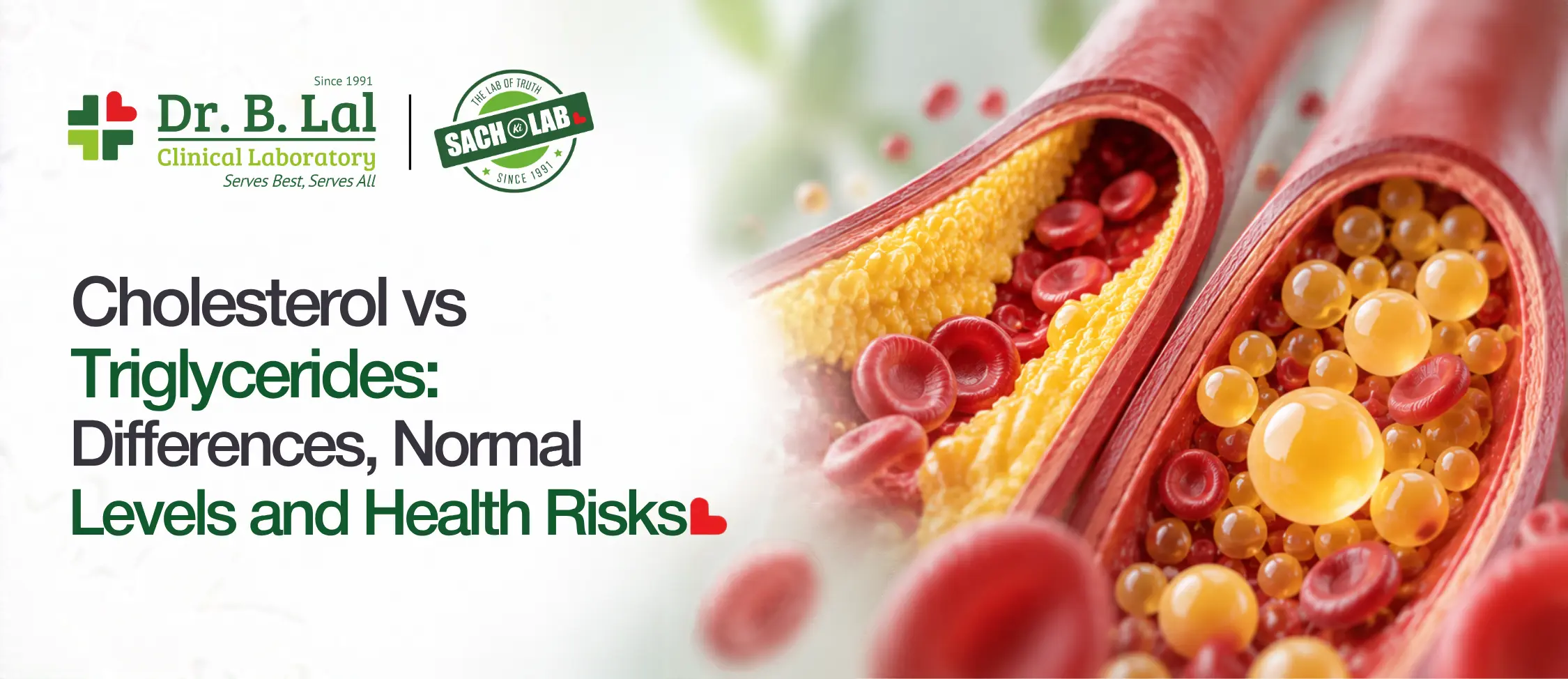
You get your health checkup report back and two lines catch your eye, both in red: cholesterol and triglycerides. Most of us nod, assume they're "the same fat thing", and move on. They're not the same, and knowing the difference can help you protect your heart long before a problem shows up.
Let's break it down in plain words.
Cholesterol vs Triglycerides: What's the Basic Difference?
Both of them are fats (lipids) that are present in your blood and transported within your body in small packages called lipoproteins. However, their functions differ from each other.
Cholesterol is the fatty substance used by the body for creating new cells, production of certain hormones and generation of vitamin D. It is mostly produced by the liver and some of it can be gained through foods such as ghee, butter, red meat, and oily foods.
Triglycerides serve as the fuel reserve in the body. Whenever your calorie intake exceeds the energy expenditure, particularly after consumption of excess sugars, refined carbohydrates and alcohol, the unused portion of calories turns into triglycerides.
Types of Cholesterol: LDL, HDL and VLDL
When people say "cholesterol", the report usually lists several numbers:
- LDL ("bad" cholesterol): carries cholesterol to your arteries, where it can build up as plaque.
- HDL ("good" cholesterol): carries extra cholesterol back to the liver for removal.
- VLDL: mostly carries triglycerides, and is often estimated from your triglyceride level.
- Total cholesterol: the overall figure combining all of these.
This is why one number alone doesn't tell the full story. A high total cholesterol can come from high LDL, but a high HDL can also raise it, which isn't a bad thing.
Cholesterol Normal Range and Triglycerides Normal Range
Here are the commonly used reference values for adults, in mg/dL. Labs and doctors may follow slightly different cut-offs, so always go by your own report.
Total cholesterol normal range
- Desirable: below 200
- Borderline high: 200 to 239
- High: 240 and above
LDL cholesterol normal range
- Optimal: below 100
- Near optimal: 100 to 129
- Borderline high: 130 to 159
- High: 160 to 189
- Very high: 190 and above
HDL cholesterol normal range
- Low (a risk): below 40 for men, below 50 for women
- Better protection: 60 and above
Triglycerides normal range
- Normal: below 150
- Borderline high: 150 to 199
- High: 200 to 499
- Very high: 500 and above
People who already have heart disease, diabetes or other risk factors are often given stricter targets by their doctor, especially for LDL. So "normal" for the lab may not be "ideal" for you.
Health Risks: How Cholesterol vs Triglycerides Affect Your Body
LDL cholesterol deposits plaque in the arteries over time, leading to their narrowing. This increases the chances of developing heart attacks and strokes after some years. The challenge with high LDL cholesterol is that it shows no symptoms.
High triglyceride levels also increase the risk of heart disease, especially when associated with low HDL and high glucose levels. Extremely high levels of triglycerides (above 500 mg/dL) cause acute pancreatitis. Triglycerides tend to be elevated in individuals suffering from diabetes, fatty liver, obesity, and excess alcohol consumption.
Both of them usually increase together, which explains why medical practitioners do not focus on one index only but consider all factors. The Indian style of life with its high-carb food, lack of exercise, and high genetic predisposition to having low levels of HDL makes it especially important.
Lipid Profile Test: How You Find Out Your Numbers
The only way to know your levels is a lipid profile test, a simple blood test that measures total cholesterol, LDL, HDL, VLDL and triglycerides, and sometimes non-HDL cholesterol too.
Do you have to fast? The fasting lipids test that lasts between 9 and 12 hours with no food and only water allowed provides the most accurate result because an eating will raise your triglycerides. It is okay to take non-fasting blood to run your screening but make sure you fast as per your doctor's instruction. Avoid alcohol.
How often should testing be done? Adults are typically recommended to be tested every few years from early adulthood onwards, and more frequently (as recommended by a doctor) in case of diabetes, high blood pressure, heart disease in the family, obesity, or previous high readings.
Lifestyle Changes That Help Both Cholesterol and Triglycerides
The good news: a lot is in your hands.
- Move daily. Around 30 minutes of brisk walking, cycling or swimming on most days helps raise HDL and lower triglycerides.
- Cut back on sugar and refined carbs. Sweets, sugary drinks, maida and white rice in large portions push triglycerides up.
- Choose healthier fats. Go easy on ghee, butter, vanaspati and deep-fried snacks. Add nuts, seeds and oils recommended by your doctor or dietitian.
- Eat more fibre. Oats, dal, vegetables, fruit and whole grains help bring LDL down.
Limit alcohol, which is a major trigger for high triglycerides. - Manage weight and quit smoking. Both make a visible difference to your lipid numbers.
If lifestyle changes aren't enough, your doctor may prescribe medicines. Please don't start or stop any medicine on your own.
Final Thoughts
In the cholesterol vs triglycerides debate, nobody wins: both matter, and both can quietly affect your heart without a single symptom. A regular lipid profile test, a few smart habits, and a conversation with your doctor can keep both in a healthy range.
You can book a lipid profile test or a complete health checkup with Dr. B. Lal Clinical Laboratory, a NABL-accredited diagnostic lab, with home sample collection available in many cities.