
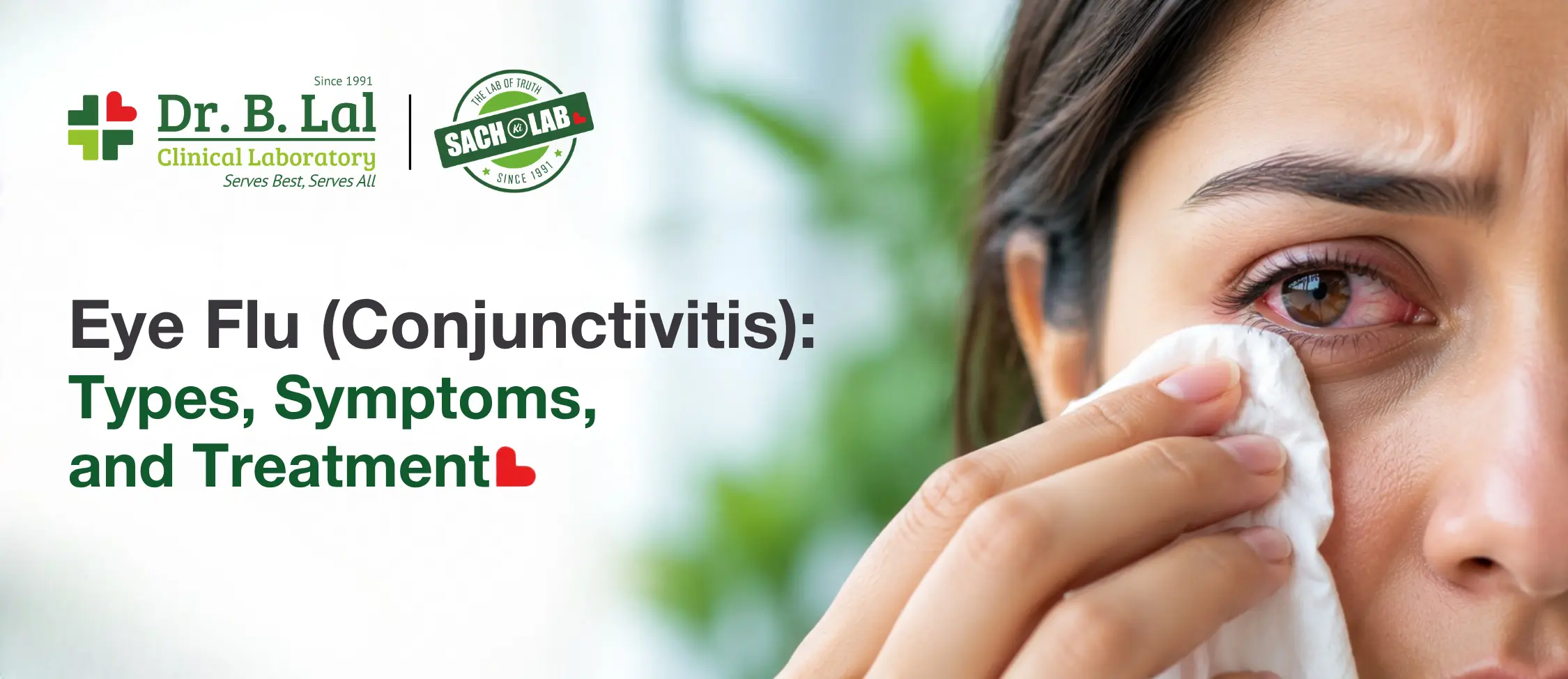
You wake up one morning and one eye is red, gritty and stuck shut with crust. By evening, the other eye has joined in. Within days, your child, your roommate or half the office seems to have the same problem. Sounds familiar? That's eye flu, and it tends to spread fast during and after the rainy season.
The good news is that most cases are mild. The key is knowing what you're dealing with and how to avoid passing it on.
What Is Eye Flu (Conjunctivitis)?
"Eye flu" is another term for conjunctivitis, which is inflammation of the conjunctiva. The conjunctiva is the thin, transparent membrane that covers the white part of the eye and the inner surfaces of the eyelids. When it becomes inflamed due to irritation or infection, its blood vessels enlarge, causing the eye to appear red or pink. That is why it is also referred to as "pink eye".
The condition has nothing to do with the influenza virus; it is just an infection or irritation of the eye. In most cases, the infection is caused by viruses that cause the common cold.
Types of Eye Flu: Viral, Bacterial and Allergic Conjunctivitis
Not every red eye is the same, and the type decides the treatment.
Viral Conjunctivitis
It is the most common kind of conjunctivitis, accounting for most cases of eye flu. It begins with only one eye and spreads to another after a few days. Its discharge is watery and is mostly associated with colds and sore throats. It is very contagious but can heal without treatment in about a week or two.
Bacterial Conjunctivitis
Bacterial infection that produces thick discharge with yellow or green coloration. It may glue your eyelids when you wake up in the morning. It is contagious, and your physician may prescribe you antibiotic eye drops.
Allergic Conjunctivitis
Triggered by dust, pollen, pet dander or smoke. The main sign is intense itching in both eyes, often with watering and swollen eyelids. This type is not contagious.
Irritant Conjunctivitis
Caused by chlorine in swimming pools, smoke, cosmetics, or chemicals splashed in the eye. It usually settles once the irritant is removed.
Eye Flu Symptoms: What to Look For
Eye flu symptoms can vary slightly by type, but these are the common signs:
- Redness or pink colour in the white of the eye
- Watering or discharge (watery, sticky or thick)
- Gritty, burning or "sand in the eye" feeling
- Swollen, puffy eyelids
- Crusting on eyelashes, especially after sleep
- Itching, especially with allergic conjunctivitis
- Mild sensitivity to light
These symptoms usually show up within a day or two of exposure. Most people feel well otherwise, though viral cases may come with a cold and fever.
When Eye Flu Needs Urgent Attention
Most conjunctivitis is harmless, but please see an eye doctor right away if you notice:
- Severe eye pain
- Blurred vision or reduced vision that doesn't clear on blinking
- Strong sensitivity to light
- A newborn baby with red or sticky eyes
- Symptoms in a contact lens wearer
- No improvement after a week, or symptoms getting worse
- A weak immune system, or an existing eye condition
These can point to a more serious problem, such as a corneal infection, that needs prompt treatment.
Conjunctivitis Treatment: What Actually Helps
This disease can be effectively treated depending on its causes. An ocular examination will normally suffice. In cases where the infection does not respond easily, the fluid from the eye may need to be analyzed in a laboratory to establish the exact pathogen causing the infection.
For viral conjunctivitis: It generally runs its course in one to two weeks. Care at home includes:
- Cold compresses on closed eyelids for comfort
- Lubricating (artificial tear) drops, as advised by your doctor
- Gently cleaning the eyelids with clean cotton and boiled, cooled water
Bacterial Conjunctivitis: You may get an antibiotic eye drop or an ointment from your doctor. Complete the entire treatment despite improvement in the condition of the eye.
Allergic Conjunctivitis: Try to stay away from the causative agent as much as possible, apply cold compresses, and use the antihistamine/anti-allergic eye drops recommended by your doctor.
As an aside, do not use any leftover eye drops or home remedies on your own accord as they can have serious consequences for your eyes. Eye drops containing steroids in particular should never be taken without consulting an eye specialist.
How to Stop Eye Flu from Spreading
Viral and bacterial eye flu spread through hands, shared items and surfaces. A few habits make a big difference:
- Don't touch or rub your eyes. If you do, wash your hands right away.
- Wash hands often with soap and water.
- Use your own towel, pillowcase and handkerchief, and wash them in hot water.
- Avoid sharing eye drops, makeup, glasses or contact lenses.
- Skip contact lenses until the eye is completely healed, and discard the pair you wore while infected.
- Stay home from school or work while the eyes are red and watery, especially for children.
- Don't make eye contact myths a worry. You don't catch it just by looking at someone. It spreads through touch and contaminated surfaces.
Sunglasses won't stop the spread, but they can make light-sensitive eyes more comfortable.
Final Thoughts on Eye Flu
Eye flu is a frequent problem, irritating yet not serious, but with proper treatment, you can save yourself from suffering for several days and help stay healthy within your family. Don’t forget: maintain hygiene in your hands, don’t treat yourself, and visit an ophthalmologist in case of pain or vision impairment.
In case of any recommendations by your physician for a swab culture test and other tests, they can be scheduled through Dr. B. Lal Clinical Laboratory – a NABL-certified laboratory with the option of home sample collection in most cities.