Hepatitis C is sometimes called a "silent" infection, and there's a good reason for that. Many people live with the virus for years without a single symptom, while it slowly damages the liver. By the time something feels wrong, the liver may already be scarred.
The encouraging part? A simple blood test can find it, and modern treatment can cure it in most people. Let's go through what you need to know.
What Is Hepatitis C, and Why Is a Hepatitis C Test Important?
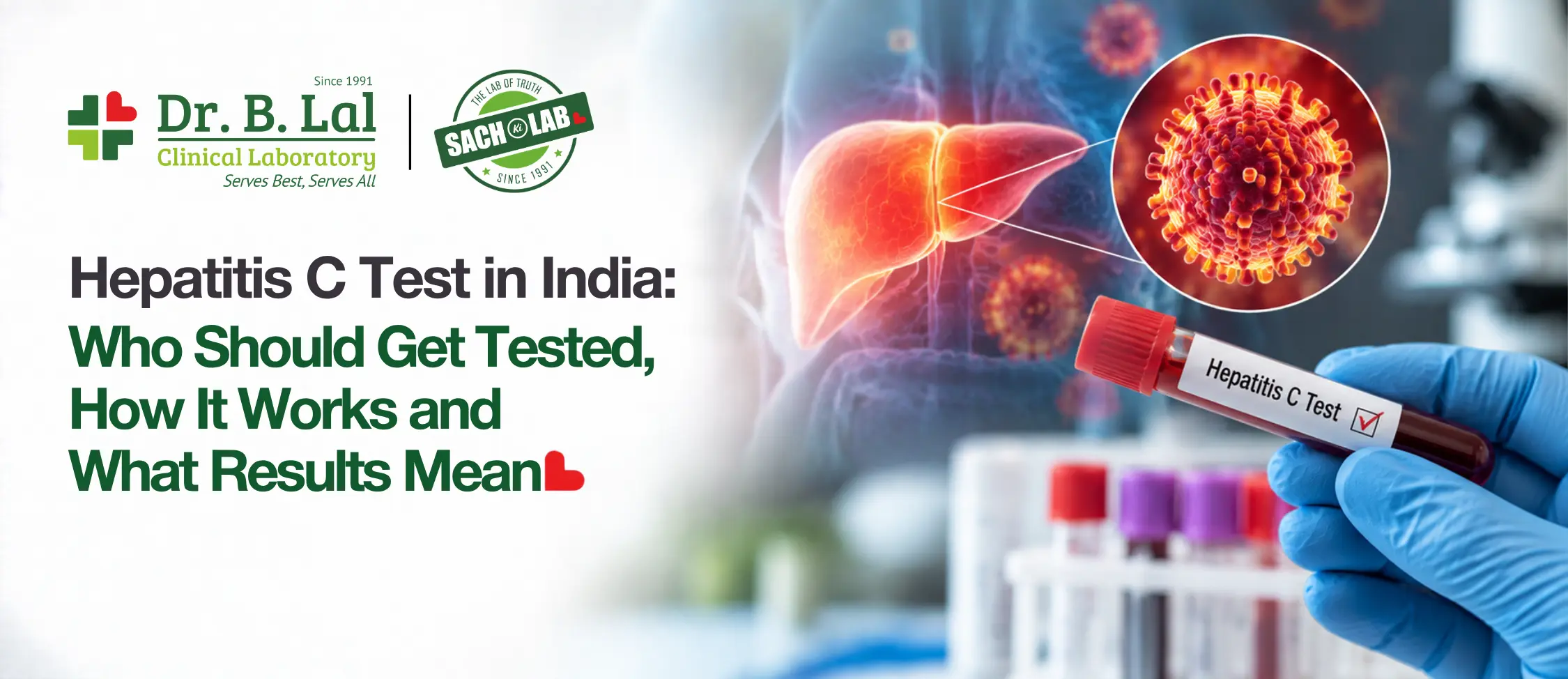
Hepatitis C is a liver infection caused by the hepatitis C virus (HCV). It spreads through blood. Unlike hepatitis A, it doesn't spread through food or water.
For some individuals, their body fights off the virus naturally. For most other individuals, it results in a persistent (chronic) infection. If untreated for years, the chronic hepatitis C infection may cause permanent liver damage (cirrhosis), liver failure and liver cancer.
Since symptoms of early-stage hepatitis C are mostly either missing or hard to detect, like fatigue, mild nausea or lack of appetite, testing remains the only option. Some other symptoms may include yellowing of the whites of the eye and skin, dark-colored urine, swelling in the legs or abdomen and easy bruising.
Don’t Wait—Get Your Hepatitis C Test - Total Antibody to Hepatitis C Test
Who Should Get a Hepatitis C Test (HCV Test)?
You may need a hepatitis C test if any of these apply to you:
You've had a blood transfusion or organ transplant, particularly many years ago, before blood screening became routine
- You've had injections or procedures with reused or poorly sterilised needles or equipment
- You have a history of injecting drugs, even once
- You've had tattoos or piercings done with unsterile tools
- You're on long-term dialysis
- You're a healthcare worker with a needle-stick injury
- You have HIV or hepatitis B
- Your liver function tests are abnormal, with no clear reason
- You're pregnant. Doctors often include HCV in routine antenatal screening, since the virus can pass from mother to baby, although this is uncommon.
- Your mother or a family member has hepatitis C
Also, many doctors advise a one-time screening for adults, even without risk factors, since so many infections go unnoticed. India's National Viral Hepatitis Control Programme provides testing and treatment at government facilities, so do ask your doctor or nearest centre about it.
How the HCV Test Works: Anti-HCV and HCV RNA Tests
Testing usually happens in two steps, and understanding them clears up most of the confusion.
Step 1: Anti-HCV Test (Screening)
The anti-HCV test detects antibodies that are produced by the body once the infection enters the body. This test uses the blood sample and can be done using the ELISA method or rapid test. There is no need to fast before the test. In case the test shows non-reactive results (negative), then there is no HCV infection. But in case of reactive (positive) results, another test is required.
Step 2: HCV RNA Test (Confirmation)
This test, also known as the HCV RNA PCR test, determines the presence of the genetic material of the virus in the blood. This test reveals whether the virus is active at the moment. Moreover, the quantitative test shows how much of the virus is in your blood.
Other Tests Your Doctor May Order
If infection is confirmed, expect a few more checks:
- Liver function test (LFT) to see how your liver is coping
- HCV genotype test, which can guide the treatment choice
- Liver scan or FibroScan to check for scarring
- Complete blood count and other routine tests
What Does a Positive HCV Test Mean?
Here's the part people worry about most, so let's keep it simple.
Anti-HCV non-reactive (negative): No antibodies found. You most likely haven't been infected. One exception: if you were exposed very recently, antibodies can take several weeks to appear (the "window period"). Your doctor may advise a repeat test or an RNA test in that case.
Anti-HCV reactive (positive) and HCV RNA detected: The virus is active. You have a current hepatitis C infection and need treatment.
Anti-HCV reactive (positive) and HCV RNA not detected: You were exposed in the past, but the virus is not active now. Either your body cleared it naturally, or you were treated successfully. Antibodies often stay in the blood for life, so an anti-HCV test will keep showing positive even after a cure.
A reactive anti-HCV on its own does not confirm active infection. That's why the HCV RNA test matters. Don't panic over a screening result alone, but don't ignore it either.
Hepatitis C Treatment: The Good News
There have been many advancements in the treatment of hepatitis C. The oral tablets or the direct-acting antivirals (DAAs) used for around 8 to 12 weeks cure over 95% cases in most people. The cure is detected through an HCV RNA test a few months after completing the treatment.
The specific drug prescribed will depend on the status of your liver and many other factors. Please do not buy or discontinue these medications without consulting your doctor.
Preventing Hepatitis C
There is no vaccine for hepatitis C, so prevention comes down to avoiding blood contact:
- Insist on new, sealed, disposable syringes and needles
- Choose tattoo and piercing studios that use sterile equipment
- Never share razors, toothbrushes or nail clippers
- Use gloves and proper precautions if you handle blood
- Take the hepatitis A and B vaccines if your doctor advises, as they protect your liver further
It's also worth knowing that hepatitis C doesn't spread through hugging, sharing meals, coughing or everyday contact, so there's no need to isolate from family.
Final Thoughts on the Hepatitis C Test
A hepatitis C test takes a few minutes and a small blood sample, but it can protect your liver for decades. If you have any of the risk factors above, or simply haven't been screened before, talk to your doctor and get tested. Early detection means simpler treatment and a much better outcome.
You can book an anti-HCV test, HCV RNA test or a complete liver profile with Dr. B. Lal Clinical Laboratory, a NABL-accredited diagnostic lab, with home sample collection available in many cities.