You've been feeling low for weeks. Tired all the time, no interest in things you once enjoyed, sleep all over the place. Naturally you wonder: is something wrong with my body, or is this depression? And the question that usually follows is, "Can't a simple blood test tell me?"
It's a fair question, and the honest answer is a little more nuanced than a yes or no. Let's walk through it.
Is There a Blood Test for Depression?
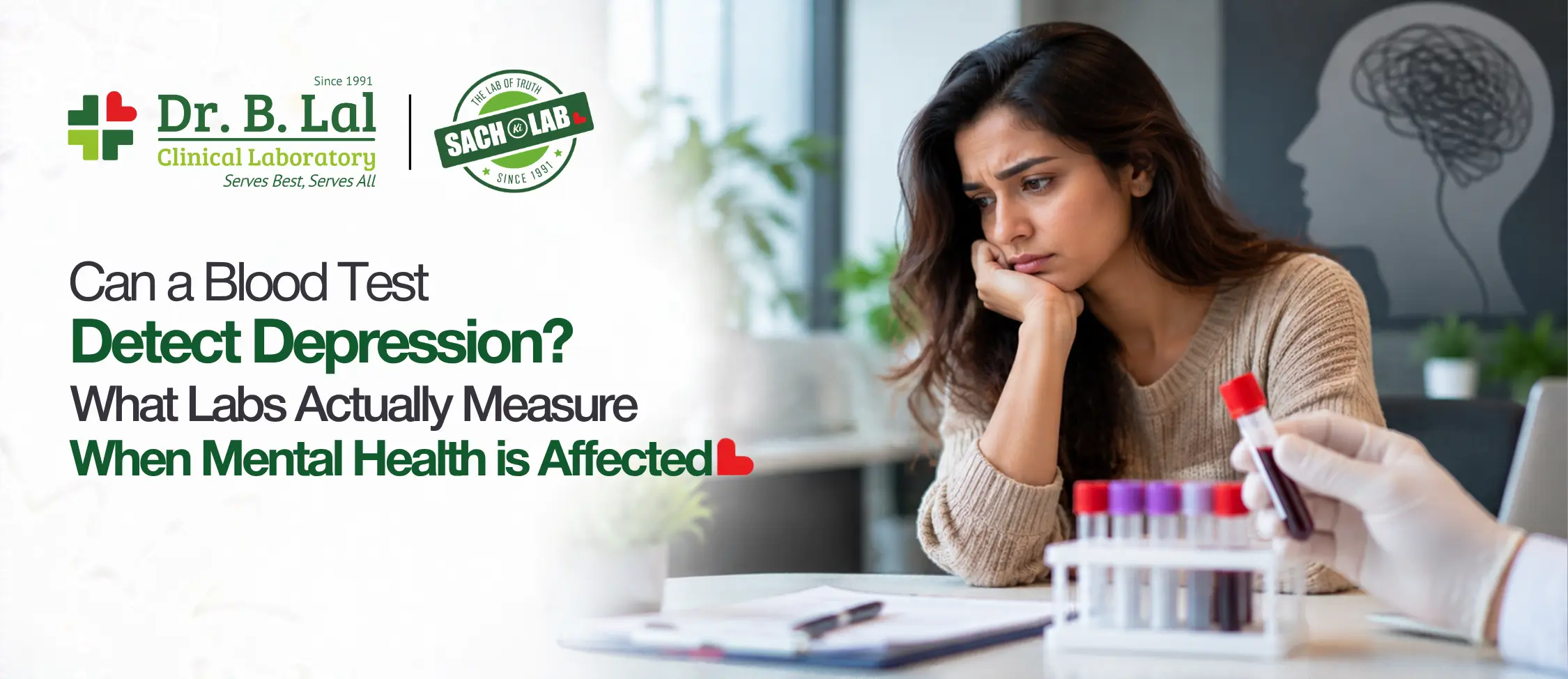
The short answer to that question is no. There are no blood tests that diagnose depression alone right now.
Doctors diagnose depression according to your symptoms, the duration of the illness, and how it affects your everyday life. Doctors typically use standardized questionnaires like PHQ-9 during consultations. Scientists are investigating potential biomarkers, among which inflammation biomarkers, but nothing is validated yet. So, if some laboratory claims there is a single blood test for depression, do not believe them.
However, here is when blood tests play an important role.
Why a Blood Test for Depression Still Matters: Ruling Out Physical Causes
Several diseases have symptoms that are similar to those of depression. Fatigue, depression, poor concentration, and problems with food consumption or sleeping can be caused by something going on inside the body. Usually, when patients see their physicians, the blood tests will be ordered in order to determine the cause and to provide appropriate treatment.
In other words, blood tests cannot show that a person is suffering from depression. However, it can indicate that the thyroid is underactive, or a person has very low B12 levels in his/her blood.
Thyroid Test and Depression: A Very Common Link
The thyroid gland controls your metabolism, energy and mood. When it's underactive (hypothyroidism), people often feel sluggish, low, forgetful and tired, all of which overlap with depression. A thyroid test, usually TSH along with T3 and T4, is among the first things doctors check when someone reports low mood.
Thyroid and depression are closely connected, and this is especially worth knowing in India, where thyroid problems are common and often go unnoticed for a long time.
Vitamin D Test and Mood: What We Know and Don't Know
Low vitamin D is very common in India despite all the sunshine, largely because of indoor lifestyles, pollution and clothing habits. A vitamin D test is simple, and low levels have been linked with low mood in studies.
But the evidence is mixed. A deficiency may not be the cause of depression, and fixing it doesn't always lift mood. It's worth testing and correcting, but it shouldn't replace proper mental health care.
Vitamin B12 Deficiency Symptoms That Mimic Depression
B12 helps maintain the good condition of the nervous system and blood cells. The signs of B12 deficiency are weakness, fatigue, numbness in the extremities, memory loss, irritability, and feeling depressed. People who are vegetarians or vegans are more prone to develop B12 deficiency. The same goes for those suffering from prolonged acidity or gut disorder and those taking certain medications.
Since the symptoms can be easily mistaken with depression, B12 is usually evaluated together with folate.
Other Blood Tests Doctors May Suggest
Depending on your symptoms, your doctor may also advise:
- CBC (complete blood count): to check for anaemia, which causes fatigue and low energy.
- Iron and ferritin: low iron stores can affect energy and concentration, even without full anaemia.
- Blood sugar and HbA1c: diabetes and mood problems often go hand in hand.
- Liver and kidney function tests: to check that your organs are working well.
- Electrolytes (such as sodium): imbalances can cause confusion, weakness and mood changes.
- Cortisol test: sometimes used if a hormone disorder is suspected, but not a routine test for low mood. Cortisol varies through the day, so results need a doctor's interpretation.
What a Blood Test for Depression Cannot Do
It helps to be clear about the limits:
- A normal report does not mean you're "fine" or imagining things. Depression is real even when every number is normal.
- An abnormal report does not automatically explain your mood. Mild vitamin deficiencies are very common and don't always cause symptoms.
- No lab value can tell how severe your depression is or which treatment will suit you.
If you've seen an online "mental health test" or "depression test", treat it as a screening tool at best. It's a starting point for a conversation with a professional, not a diagnosis.
When to Get a Depression Blood Test and See a Doctor
Consider speaking to a doctor if you've noticed any of the following for two weeks or more:
- Persistent sadness, emptiness or irritability
- Loss of interest in things you usually enjoy
- Constant tiredness or changes in sleep and appetite
- Trouble concentrating or making decisions
- Feeling worthless or hopeless
Your doctor will be able to examine you, give you proper blood tests to eliminate any physical problems, and even refer you to a psychiatrist/counsellor, if required. Both aspects are important – the physical aspect and the psychological aspect.
If you ever feel like hurting yourself, do get in touch immediately. In India, you can contact the toll-free line called Tele-MANAS on 14416, or contact someone who you trust or an emergency service in your vicinity.
Final Thoughts
Can depression be diagnosed through a blood test? No, but it will help diagnose problems with thyroid, vitamin deficiency, anemia, and other illnesses that could be contributing to how you are feeling, which is very important. Treatment for mental well-being should always consider a holistic approach.
If your doctor recommends that you have a thyroid test, vitamin D test, vitamin B12 test or a complete health check-up, you can have these tests conducted at Dr. B. Lal Clinical Laboratory, an NABL-accredited diagnostic center, through a home sample collection service available in many cities.