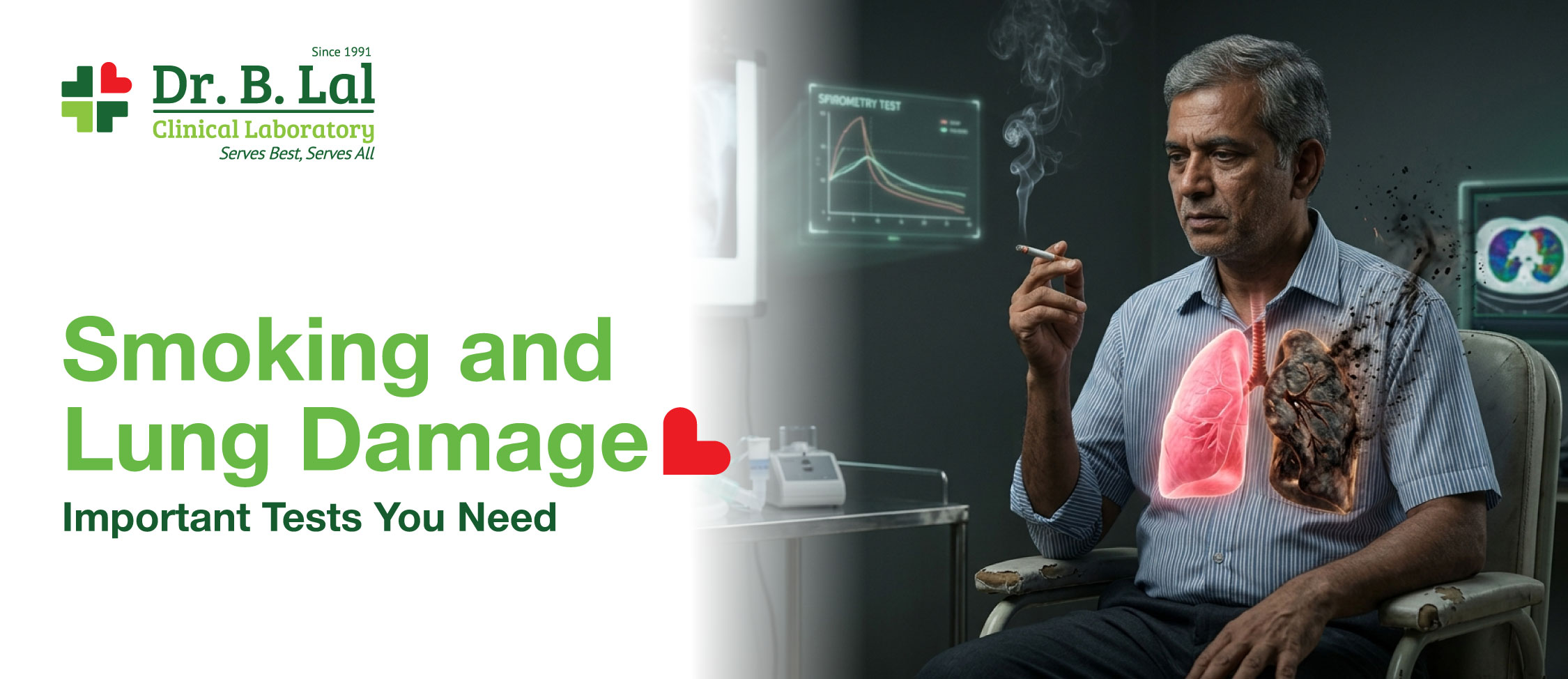
If you are a smoker — or have smoked in the past — your lungs may be silently paying a price you cannot yet feel. That persistent morning cough, slight breathlessness while climbing stairs, or unexplained fatigue could be early signs of serious lung damage unfolding beneath the surface. The frightening reality is that most smoking-related lung diseases develop quietly for years before causing noticeable symptoms. By the time many patients receive a diagnosis, significant and often irreversible damage has already occurred.
In this article, we will tell you all there is to know about smoking-induced lung disease damage and the possible ways it manifests. We will also tell you which signs should trigger your immediate attention. Finally, here you will learn about the medical testing procedures necessary to detect any possible problems at an early stage.
How Smoking Damages Your Lungs: Understanding the Biology
Every cigarette you smoke releases over 7,000 chemicals, hundreds of which are toxic and at least 70 of which are known carcinogens. When these chemicals enter your airways, they trigger a cascade of harmful effects:
Chronic Inflammation: The smoke from tobacco is irritating to the airways, which leads to an inflammatory process. The result of such inflammation is a scarring process within the airways, thus narrowing them, resulting in difficulty breathing.
Destruction of Air Sacs (Alveoli): The function of oxygen exchange in the lungs is carried out by alveoli in the lungs. These structures get destroyed with smoking, thus reducing the effective area of oxygen transfer — hence emphysema.
Mucus Overproduction: Smoking causes damage to the cilia lining the respiratory tract, which help move mucus and other particles out of the body. Failure to do so results in accumulation of mucus, which is characteristic of bronchitis.
DNA Damage and Cancer Risk: These carcinogens present in tobacco smoke have a damaging effect on the DNA of the lung cells. The build-up of mutations in the DNA causes uncontrollable cell proliferation, resulting in lung cancer, which is considered one of the most lethal and prevalent types of cancer in the world.
Weakened Immune Defence: Tobacco smoking affects your body's immune system and makes it less capable of fighting respiratory ailments such as pneumonia and tuberculosis.
Read Also: Harmful Effects of Smoking on Women Health
India bears one of the heaviest burdens of smoking-related lung disease in the world. Studies estimate that India accounts for approximately 37.8 million COPD cases, representing nearly 17.8% of the global COPD burden. Alarmingly, the disease burden is disproportionately high in northern states — including Rajasthan — where tobacco use is widespread. Research shows that among Indian adult smokers, the pooled prevalence of COPD stands at around 37%. In other words, more than one in three smokers in India may already have chronic obstructive pulmonary disease.
Despite these numbers, COPD and early-stage lung cancer remain massively underdiagnosed in India, largely because people delay testing until symptoms become severe.
Warning Signs That Tell You to Get Tested Immediately
Do not wait for symptoms to become unbearable. Seek diagnostic testing if you experience any of the following:
- A persistent cough lasting more than three weeks, particularly one associated with sputum or blood
- Difficulty breathing while doing normal activities such as walking up stairs
- Repeated chest infections, pneumonia, or cases of bronchitis
- Weight loss without an identifiable cause, accompanied by tiredness
- Audible wheezing or a high pitched noise while breathing
- Chest pain that is persistently present
- A change in your voice that you cannot explain
Even if you feel completely fine, the absence of symptoms does not mean your lungs are healthy. Research confirms that Pulmonary Function Tests (PFTs) can detect changes in lung function in asymptomatic smokers — before any signs or symptoms develop. Early testing is the only reliable way to know your true lung health status.
Essential Tests for Smokers: A Complete Diagnostic Guide
1. Pulmonary Function Test (PFT) / Spirometry
What it is: Lung function tests should always be done using spirometry. Spirometry assesses your lung function through the amount of air that you can breathe in and out of your lungs and the speed at which you can expel air from your lungs. The tests include FEV1 and FVC tests.
Why smokers need it: The test serves to assess COPD, emphysema, and chronic bronchitis, conditions that occur commonly among smokers. Importantly, the spirometry test can identify a decrease in lung function among smokers who consider themselves perfectly fine healthwise, enabling early intervention into lifestyle choices to prevent permanent damage to their lungs.
When to get it: Doctors typically recommend spirometry for all smokers aged 40 and above, or earlier if symptoms are present. If your results are normal today, annual repeat testing is advisable.
2. Chest X-Ray
What it is: A chest X-ray provides a two-dimensional image of your lungs, heart, and chest cavity, helping doctors spot structural abnormalities.
Why smokers need it: Chest X-rays can detect lung masses, collapsed lungs, fluid accumulation, enlarged lymph nodes, and early signs of pneumonia, emphysema, or lung cancer. While it cannot catch very small early-stage tumours, it remains an important first-line screening tool for any smoker experiencing respiratory symptoms.
Who should get it: Any smoker presenting with a persistent cough, unexplained chest pain, or breathlessness should undergo a chest X-ray as an initial screening step.
3. High-Resolution CT Scan (HRCT) of the Chest / Low-Dose CT (LDCT)
What it is: A CT scan provides highly detailed cross-sectional images of the lungs, far more sensitive than a standard X-ray. A Low-Dose CT (LDCT) specifically is designed for lung cancer screening in high-risk individuals.
Why smokers need it: Low-dose CT scans are strongly recommended for lung cancer screening in smokers, particularly those aged 50 to 80 with a significant smoking history (20 pack-years or more). LDCT can detect lung cancer at a far earlier stage than a chest X-ray, significantly improving survival outcomes.
Additionally, HRCT is the best tool for identifying and staging emphysema, detecting small airways disease, and evaluating early COPD changes that spirometry alone may miss.
The key advantage: Early-stage lung cancer detected by LDCT has a dramatically better prognosis compared to cancer found after symptoms develop.
4. Complete Blood Count (CBC)
What it is: A Complete Blood Count measures the levels of red blood cells, white blood cells, haemoglobin, and platelets in your blood.
Why smokers need it: Smoking continuously will result in inflammation all throughout the body as well as changes in the composition of your blood. High counts of white blood cells will be an indicator of inflammation and infections in your body. High counts of red blood cells (polycythaemia) mean that there is less oxygen in your body and your body is producing excess red blood cells because of this, which means you have advanced COPD.
A CBC provides a broad, affordable baseline picture of your body's response to long-term tobacco use.
5. C-Reactive Protein (CRP) Test
What it is: CRP is a protein produced by the liver in response to inflammation. A high-sensitivity CRP (hs-CRP) test measures even low levels of this inflammatory marker.
Why smokers need it: Smoking has been identified as one of the strongest inducers of systemic (total body) inflammation. The presence of high levels of CRP in smokers is linked to increased cases of COPD exacerbations, cardiovascular disease, and lung infections. Measurement of CRP helps your doctor evaluate how much inflammation is taking place in your body and its improvement once you stop smoking.
6. Alpha-1 Antitrypsin (AAT) Deficiency Test
What it is: This blood test checks for a genetic condition where the liver produces insufficient levels of Alpha-1 Antitrypsin — a protein that protects the lungs from damage caused by inflammation.
Why smokers need it: People suffering from deficiency of AAT are at a very high risk of suffering from severe emphysema, particularly if smoking is involved. The risk factor could be as high as 10 times that in people who have normal levels of AAT. Early detection of this problem would definitely change the management of the patient's condition.
Who should get it: Doctors particularly recommend this test for smokers who develop COPD at a younger age (under 45) or whose disease severity seems disproportionate to their smoking history.
7. Sputum Cytology and Culture
What it is: A sputum test involves examining the mucus (phlegm) you cough up under a microscope. A cytology test looks for abnormal or cancerous cells, while a culture test identifies bacterial or fungal infections.
Why smokers need it: Smokers who have a productive cough are at an increased risk of developing respiratory infection as well as possible malignancies. Pre-cancerous or cancer cells can be detected in sputum cytolysis even before being seen on any radiographic study. Sputum culture is the method used to detect which infecting organism is present and which antibiotics would treat the infection.
8. Arterial Blood Gas (ABG) Test
What it is: An ABG test measures the levels of oxygen (O2) and carbon dioxide (CO2) in your arterial blood, along with blood pH and bicarbonate levels.
Why smokers need it: In advanced stages of COPD or emphysema, the lungs lose their ability to maintain normal blood oxygen and CO2 levels. An ABG test provides real-time information about how effectively your lungs are performing gas exchange. Results guide treatment decisions including whether supplemental oxygen therapy is required.
9. Lipid Profile and Blood Glucose Test
What it is: These tests measure cholesterol, triglycerides, and blood glucose levels.
Why smokers need it: It is important to understand that smoking increases the probability of developing cardiovascular disorders by a huge margin; indeed, more smokers die from heart diseases than lung problems. This unhealthy habit reduces good cholesterol levels while increasing bad cholesterol and triglyceride levels, which contributes to atherosclerosis and coagulation within the blood vessels.
How Often Should Smokers Get Tested?
| Test | Recommended Frequency |
| Spirometry / PFT | Annually (from age 40, or earlier if symptomatic) |
| Chest X-Ray | As recommended by your doctor |
| Low-Dose CT (LDCT) | Annually for high-risk smokers aged 50–80 |
| CBC & CRP | Annually as part of a full health panel |
| Lipid Profile & Blood Glucose | Annually |
| Alpha-1 Antitrypsin Test | Once, if COPD diagnosed at early age |
| Sputum Tests | When chronic productive cough is present |
Can Quitting Smoking Reverse Lung Damage?
The short answer is: partially, yes — and every year without cigarettes matters enormously. Within just 20 minutes of quitting, your blood pressure drops. Within a few months, your lung function begins to improve and your risk of respiratory infection decreases. Over years, the risk of lung cancer drops significantly — though it never returns to the same level as a lifetime non-smoker.
However, structural damage caused by emphysema (the destruction of air sacs) cannot be fully reversed. This is precisely why early testing while you are still smoking is so critical — it identifies damage before it becomes permanent, and it may be the most powerful motivation to quit for good.
Final Word: Your Lungs Cannot Wait
It is still the most avoidable risk factor for the development of lung disease and cancer. However, it is true that knowledge is power. The choice to test your lungs is the best step you can make towards ensuring your well-being.
If you are either a smoker, ex-smoker, or even worried about the health of your loved one's lungs, don’t waste any more time. Schedule your lung health checks at Dr. B Lal Clinical Laboratory.