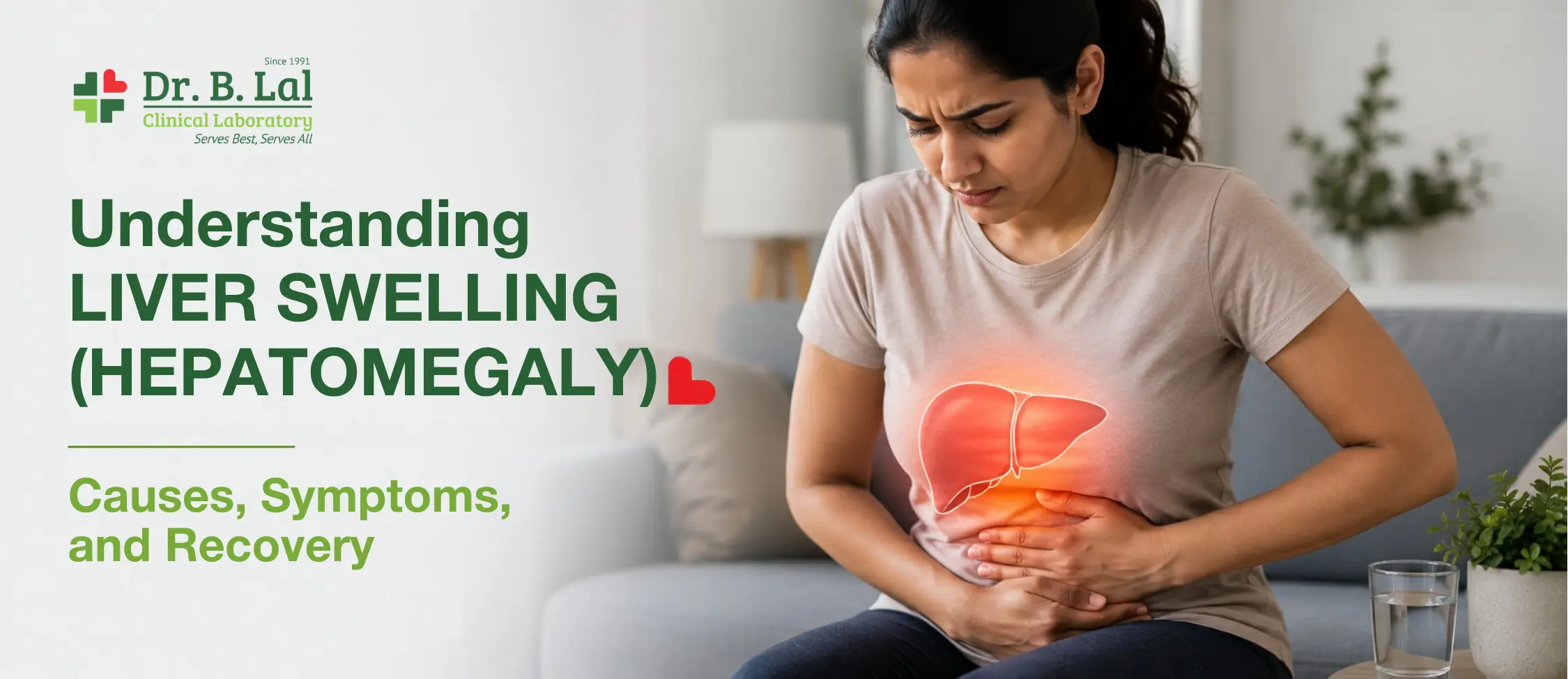
Hearing that your liver is "enlarged" or "swollen" during a check-up or scan can be confusing, mostly because it's rarely explained well in the moment. Hepatomegaly — the medical term for an enlarged liver - isn't a disease by itself. It's a physical sign that something else is affecting the liver, and figuring out what that something is matters far more than the swelling itself.
Here's what's actually going on when the liver enlarges, what tends to cause it, and what recovery realistically looks like.
What Hepatomegaly Actually Means
The liver sits tucked under the right ribcage and normally weighs around 1.5 kilograms in an adult, doing an enormous amount of behind-the-scenes work — filtering toxins out of the blood, producing bile to digest fat, storing glucose for energy, and manufacturing many of the proteins your blood needs to function. When something disrupts any of these processes, the liver often responds by swelling, whether from inflammation, fat accumulation, blocked blood flow, or an infiltrating disease process.
Physicians will diagnose this condition through either of the two methods: detecting the enlarged liver when examining the patient physically, where a normal liver is not supposed to be detected below the rib cage; hence any palpable edges can indicate an enlarged liver, or detecting it from the ultrasound, computer tomography, or MRI that was conducted because of other purposes. In most cases, slight hepatomegaly cases are detected accidentally because a slightly enlarged liver does not produce any signs.
What Causes the Liver to Swell
The list of possible causes is genuinely long, which is part of why proper diagnosis matters so much. Broadly, they fall into a few categories:
Fat accumulation: One of the commonest reasons behind the liver becoming mildly to moderately enlarged is that of fat liver disease, irrespective of its being associated with alcohol consumption or metabolic reasons such as obesity, diabetes, and insulin resistance.
Infections and inflammation: Hepatitis caused by viruses (types A, B, C, among others) leads to inflammation of liver cells. Other infections (parasitic and bacterial among others) can also cause liver enlargement.
Alcohol-related liver disease: Apart from the changes occurring due to fatty deposits, alcohol consumption is responsible for inflaming the liver.
Circulatory problems: Since the liver processes a large share of the body's blood supply, conditions that back up blood flow congestive heart failure, or blockages in the veins draining the liver - can cause it to swell as blood pools within it.
Cancer: Both primary liver cancer and cancers that have spread to the liver from elsewhere in the body can cause enlargement, sometimes quite significant.
Cirrhosis: Interestingly, in advanced cirrhosis, the liver can sometimes shrink rather than enlarge, but earlier stages of scarring often present with hepatomegaly first.
Metabolic and genetic conditions: Rarer causes include storage disorders where fat, certain proteins, or other substances build up abnormally within liver cells, along with conditions like amyloidosis.
Symptoms to Watch For
A mildly enlarged liver frequently produces no symptoms at all - which is exactly why it's so often discovered incidentally rather than reported by the patient. When symptoms do appear, they tend to relate more to the underlying cause than to the swelling itself:
- A feeling of fullness, pressure, or discomfort in the upper right abdomen
- Fatigue or general low energy
- Loss of appetite or unintended weight loss
- Nausea
- Yellowing of the skin or eyes (jaundice), which points toward more significant liver dysfunction
- Swelling in the legs or abdomen, which can occur when the liver's protein production is affected
- Itchy skin, sometimes related to bile processing issues
More severe symptoms — confusion, significant jaundice, marked abdominal swelling, or vomiting blood - signal advanced liver dysfunction and need urgent medical attention rather than a routine follow-up.
How It's Diagnosed
Since hepatomegaly is a sign rather than a diagnosis, working out the cause usually involves several steps:
- Physical examination to assess how enlarged the liver feels and whether the spleen is also involved
- Blood tests, including liver function tests (ALT, AST, bilirubin, albumin), which help distinguish inflammation from other liver processes
- Imaging - ultrasound is typically the first step, since it's quick and non-invasive, with CT or MRI used when more detail is needed
- Viral hepatitis screening, if infection is suspected
- Additional specific tests, such as iron or copper studies, autoimmune markers, or tumor markers, depending on what the initial results suggest
- A liver biopsy, in select cases where imaging and blood tests haven't clarified the underlying cause
Know your liver health before symptoms appear - Liver Function Test
What Recovery Looks Like
This is really where the message becomes encouraging: in many cases, hepatomegaly caused by fatty liver, alcohol use, or a treatable infection is genuinely reversible once the underlying trigger is addressed.
For fatty liver-related enlargement, weight loss, dietary changes, regular exercise, and cutting back on alcohol often lead to measurable improvement in liver size and function over several months. For viral hepatitis, antiviral treatment can control or clear the infection, allowing the liver to gradually return to a more normal size. When heart failure is the underlying driver, treating the cardiac condition typically resolves the associated liver congestion as well.
However, cases that may be connected with conditions like cirrhosis, some types of hereditary diseases, or cancer are more complicated and normally need long-term treatment from specialists instead of any "quick fix," but even in such cases, proper treatment can significantly reduce progression.
The most important factor in successful treatment is early identification and treatment of the root cause of this problem, which is precisely why an enlarged liver should never be ignored, despite the fact that it does not show any symptoms.
When to See a Doctor
These symptoms should prompt immediate medical attention: pain in the upper right part of the abdomen; feeling tired for no apparent reason; appetite changes; the presence of yellowness in the skin and/or the whites of your eyes; edema in your legs or in your abdominal area. In case you've already been diagnosed with an enlarged liver, but don't have any symptoms at all, blood tests should be the logical next step to take.
Conclusion
An enlarged liver is the body's way of signalling that something else needs attention - not a standalone problem to fix directly. The range of possible causes is wide, from something as manageable as early fatty liver to conditions that need more intensive care, which is exactly why proper evaluation matters more than the finding itself. With the right diagnosis and timely treatment, many causes of hepatomegaly are genuinely manageable, and in a good number of cases, fully reversible.