In today's busy lifestyle, many health conditions develop silently without showing any early symptoms. Problems like diabetes, high cholesterol, thyroid disorders, liver diseases, and high blood pressure can remain unnoticed for years. This is why a full body health checkup plays an important role in maintaining long-term health and preventing serious complications.
But what exactly happens during a full body health checkup? If you're planning your first preventive screening, understanding the process can help you feel more comfortable and prepared.
In this article, we'll explain everything in simple terms, including the tests involved, the procedure, and why regular health checkups are essential.
What Is a Full Body Health Checkup?
Full Body Health Checkup is a total package of a health screening test which assesses the overall condition of your body system through various kinds of blood tests, urine tests, scanning and physical tests so that you may get to know about any possible problem within your body at an earlier stage.
Preventive health checkup mainly aims at identifying health risks rather than diagnosing diseases only.
Why Is a Full Body Health Checkup Important?
Many chronic diseases do not show obvious symptoms in their initial stages. Regular health screening helps in:
- Early detection of diabetes, hypertension, and heart diseases
- Monitoring cholesterol and cardiovascular health
- Evaluating liver and kidney function
- Identifying thyroid disorders
- Detecting vitamin deficiencies
- Checking overall immunity and infection markers
- Preventing complications through timely treatment
Healthcare professionals generally recommend a full body checkup once a year, especially for adults above 30 years of age or individuals with a family history of chronic illnesses.
Also Read: Why Early Detection Saves Lives
What Happens Before the Health Checkup?
Preparation is an important part of obtaining accurate test results.
Before your appointment, you may be advised to:
- Fast for 8 to 12 hours if blood sugar and lipid profile tests are included
- Drink sufficient water unless instructed otherwise
- Avoid alcohol consumption for at least 24 hours
- Inform your doctor about any medications you are taking
Wear comfortable clothing if imaging or physical examinations are planned
Following these instructions ensures reliable and accurate health reports.
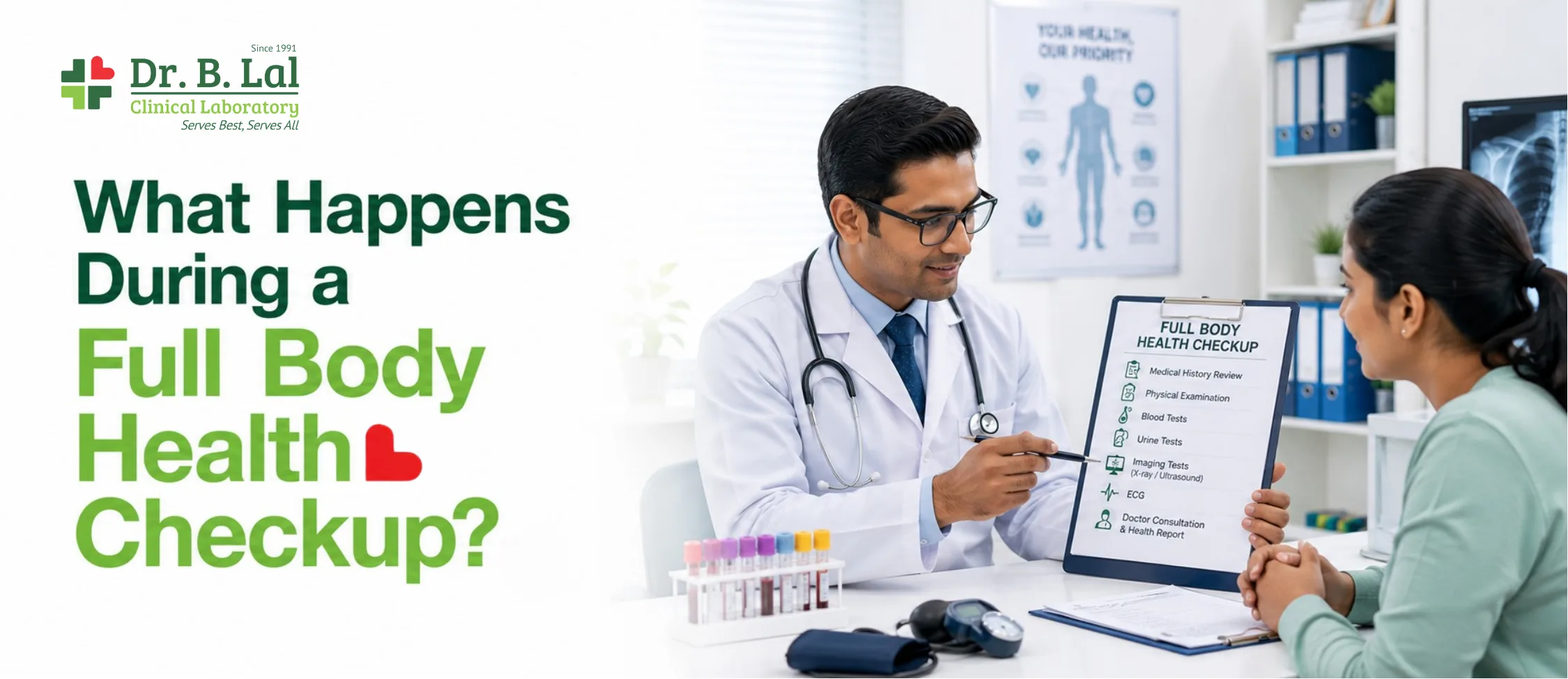
Step-by-Step: What Happens During a Full Body Health Checkup?
1. Registration and Medical History Review
The process usually begins with registration and basic documentation.
Healthcare professionals may ask about:
- Your age and lifestyle habit
- Medical history
- Family history of diseases
- Existing health conditions
- Current medications
- Symptoms or concerns, if any
This information helps doctors interpret your test results more effectively.
2. Physical Examination
A physical assessment is generally performed before laboratory investigations.
This may include:
- Height and weight measurement
- Body Mass Index calculation
- Blood pressure monitoring
- Pulse rate assessment
- Temperature check
- Oxygen saturation measurement
These basic parameters provide an overview of your current health status.
3. Blood Sample Collection
Blood tests form the most important part of a full body health checkup.
A trained phlebotomist collects blood samples for various investigations, such as:
Complete Blood Count (CBC)
A CBC test evaluates:
- Red blood cells
- White blood cells
- Hemoglobin levels
- Platelets
It helps identify anemia, infections, and certain blood disorders.
Blood Sugar Tests
These tests help detect diabetes and prediabetes:
- Fasting Blood Sugar (FBS)
- HbA1c
- Postprandial Blood Sugar (if required)
Lipid Profile
The lipid profile measures:
- Total cholesterol
- LDL (bad cholesterol)
- HDL (good cholesterol)
- Triglycerides
These values help assess heart disease risk.
Liver Function Test (LFT)
Liver function tests evaluate:
- Liver enzymes
- Bilirubin levels
- Protein levels
They help identify liver inflammation, infections, or other abnormalities.
Kidney Function Test (KFT)
Kidney tests typically include:
- Blood urea
- Serum creatinine
- Uric acid
- Electrolytes
These tests assess how effectively your kidneys are functioning.
Thyroid Profile
A thyroid function test checks hormones such as:
- T3
- T4
- TSH
This helps detect hypothyroidism or hyperthyroidism.
Vitamin Tests
Many comprehensive health packages also include:
- Vitamin D
- Vitamin B12
Deficiencies in these vitamins can contribute to fatigue, weakness, bone problems, and neurological symptoms.
4. Urine Examination
A urine test provides valuable information about various aspects of health.
It can help identify:
- Kidney disorders
- Urinary tract infections
- Diabetes-related complications
- Protein leakage in urine
- Dehydration
The sample collection process is simple, painless, and usually takes only a few minutes.
5. Cardiac Assessment
A number of preventive health programs offer assessments that will check on one’s heart function.
These may include:
Electrocardiogram (ECG)
This test checks the electrical activity of the heart and enables to diagnose:
- Irregular heartbeat
- Past heart problems
- Heart disease
Blood Pressure Monitoring
High blood pressure, which is sometimes referred to as a “silent killer,” is frequently asymptomatic.
Monitoring of blood pressure decreases the risk of cardiovascular diseases.
6. Imaging Tests
Depending on the package and age group, imaging investigations may be included.
Common examples include:
Chest X-Ray
A chest X-ray helps evaluate:
- Lung health
- Respiratory infections
- Certain heart conditions
- Ultrasound Examination
An ultrasound may assess:
- Liver
- Gallbladder
- Kidneys
- Pancreas
- Reproductive organs
It helps identify structural abnormalities that blood tests alone cannot detect.
7. Doctor Consultation and Health Report Review
Once all investigations are completed, healthcare professionals review the reports.
The doctor explains:
- Normal and abnormal findings
- Risk factors
- Lifestyle modifications
- Dietary recommendations
- Additional tests if necessary
- Treatment plans, if required
This consultation helps individuals understand their health status and take preventive actions for the future.
How Long Does a Full Body Health Checkup Take?
The duration depends on the number of tests included.
Typically:
- Basic packages may take 1 to 2 hours.
- Comprehensive health checkups may require 3 to 4 hours.
- Report availability can range from the same day to 24-48 hours, depending on the investigations performed.
Who Should Get a Full Body Health Checkup?
Although preventive screening benefits everyone, it is particularly recommended for:
- Adults above 30 years
- People with a family history of diabetes or heart disease
- Individuals with sedentary lifestyles
- Smokers and alcohol consumers
- People experiencing stress or obesity
- Those with high blood pressure or high cholesterol
- Working professionals with irregular routines
Annual health screening can help detect potential issues before symptoms appear.
Benefits of Regular Full Body Health Checkups
Routine health assessments offer several advantages, including:
- Early diagnosis of medical conditions
- Better treatment outcomes
- Lower healthcare costs in the long term
- Improved quality of life
- Personalized lifestyle recommendations
- Greater peace of mind regarding overall health
Prevention is always more effective than treating advanced diseases.
Final Thoughts
Body checkup is considered one of the best ways to keep track of your overall health and uncover any existing problems early on. Body checkup usually involves such procedures as physical examination, testing of your blood and urine, heart examination, imaging procedures, and consultations with a medical specialist.
Knowing what exactly will happen when you go for your annual health checkup can relieve you from unnecessary stress and motivate you to do these procedures regularly. You will spend just several hours but get priceless information about your overall health state.
Regular checkups will not just help you diagnose various illnesses but will also prevent many possible complications.