Moringa isn't exactly a new discovery. It's grown in backyards across India for generations, gone into sambar and dal, and shown up in traditional remedies long before "superfood" became a marketing word. What's changed recently is that researchers have started actually testing what moringa does for skin, rather than just taking traditional use at face value - and the results, while still limited, are genuinely interesting.
If you've come across moringa powder in a health store or seen it recommended for glowing skin, here's what the science actually says, and how to use it sensibly.
What Makes Moringa Worth Looking At
Moringa leaves (from the moringa oleifera tree, sometimes called the drumstick tree) are unusually nutrient-dense. Gram for gram, the dried leaf powder contains notably more vitamin C than an orange, along with vitamin A, several B vitamins, and a good spread of antioxidant compounds like quercetin and chlorogenic acid. For skin specifically, three of these components matter most: vitamin C, which the body uses to build collagen; antioxidants, which help neutralise the free radicals responsible for a lot of visible skin aging; and anti-inflammatory compounds, which may help calm irritation and breakouts.
None of that alone proves moringa "works" for skin - plenty of foods are nutrient-dense without having a measurable effect when applied or eaten. So it's worth looking at what's actually been tested.
What the Research Shows
The evidence here is a mixed bag - some genuinely promising, some still early-stage - and it's worth being upfront about that rather than overselling it.
Antioxidant levels in the body: One study on humans involved the intake of 7 g of moringa leaf powder per day for three months by post-menopausal women. These women recorded significantly higher antioxidant levels in their bloodstream. High antioxidant activity can help in fighting off oxidative stress that causes early aging of the skin.
Topical use and collagen: In one small-scale human trial, a facial cream was prepared using the extract of moringa leaves and used on volunteers for three months. This led to an increase in collagen production and elastic skin, which they credited to the presence of natural chemicals in the plant – a rather direct form of evidence, albeit in a small-scale trial.
Wound healing: An animal study using a topical moringa gel found improved wound healing and collagen formation at the site of application, suggesting a possible role in skin repair, though this hasn't been extensively confirmed in humans yet.
What's weaker: Claims around moringa as a dramatic skin-lightening agent are common in marketing content but aren't well supported by strong clinical evidence. Vitamin C and antioxidants can contribute to a more even skin tone over time, but "brightening" is a more honest description than "whitening," and results tend to be gradual rather than dramatic.
In conclusion, moringa is a useful supporting compound for skincare, primarily because of its antioxidant and collagen benefits, and not a miraculous remedy for any particular skin problems. This is quite an appropriate destination for a natural product to reach, and it conforms to the use of moringa as an ingredient in people’s diets.
How to Use Moringa Powder for Skin
There are two broad ways people use moringa for skin - eating it, and applying it directly. Both have some evidence behind them, though through different mechanisms.
Drinking or eating it: This is the simpler, lower-effort option, and it's how the antioxidant-boosting study was done. A teaspoon or two of moringa powder mixed into warm water, buttermilk, or a smoothie once a day is a common way to take it. It's a gradual approach — you're supporting skin health from the inside through better antioxidant status and nutrient intake, not expecting overnight results.
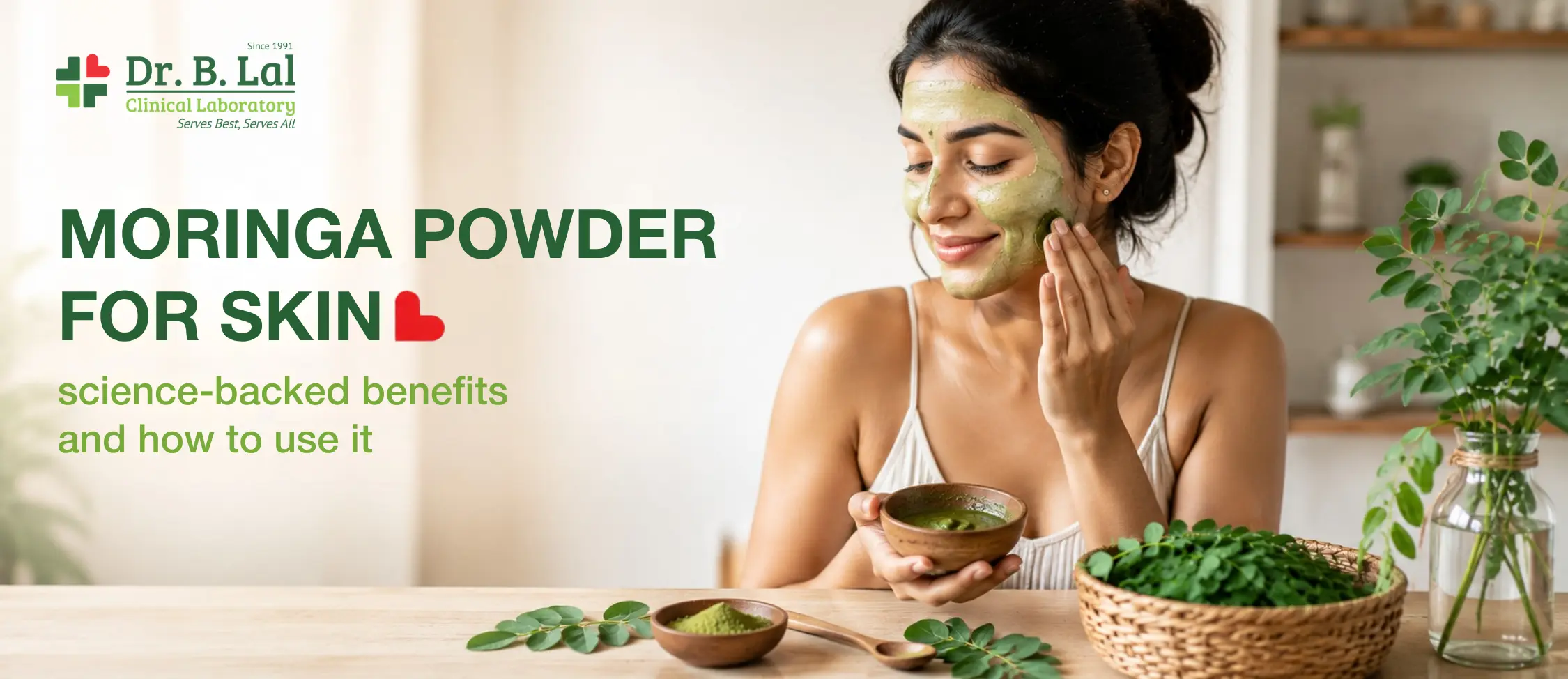
- Making a face pack: This is the traditional topical route, and it's simple to do at home:
- Mix one to two teaspoons of moringa powder with plain curd, honey, or rose water to form a smooth paste.
- Apply an even layer to clean, dry skin, avoiding the delicate area around the eyes.
Leave it on for 10–15 minutes. - Rinse off with lukewarm water and follow with a light moisturiser.
- Use two to three times a week rather than daily, since moringa can be slightly drying for some skin types with frequent use.
A quick patch test first: Before applying any new ingredient to your face, it's worth dabbing a small amount on your inner arm and waiting 24 hours to check for irritation, especially if you have sensitive skin.
Book our special health package tailored for youth - Youth Suraksha Package
A Few Things Worth Knowing
Moringa powder isn't a replacement for sunscreen, a proper skincare routine, or medical treatment for skin conditions like acne, eczema, or pigmentation disorders. It's best thought of as a supportive addition - something that can contribute to overall skin health alongside the basics, not instead of them.
If you're pregnant, breastfeeding, on blood-thinning medication, or managing thyroid conditions, it's worth checking with a doctor before adding moringa in significant quantities, since it can interact with certain medications and has some effects on blood sugar and blood pressure that are worth being aware of if you're on related medication.
Quality also matters more than people realise - moringa powder can vary a fair bit depending on how it's dried and stored, so buying from a source that specifies proper processing and testing is worth the small extra effort.
The Takeaway
Moringa powder has a reasonable, if still developing, body of evidence behind its benefits for skin - mainly through antioxidant support and a boost to collagen production, both of which play a real role in how skin ages over time. It's not a substitute for sunscreen or a proper skincare routine, but as a natural addition — whether taken internally or used as an occasional face pack - it's one of the more evidence-backed traditional ingredients out there, rather than just another wellness trend.