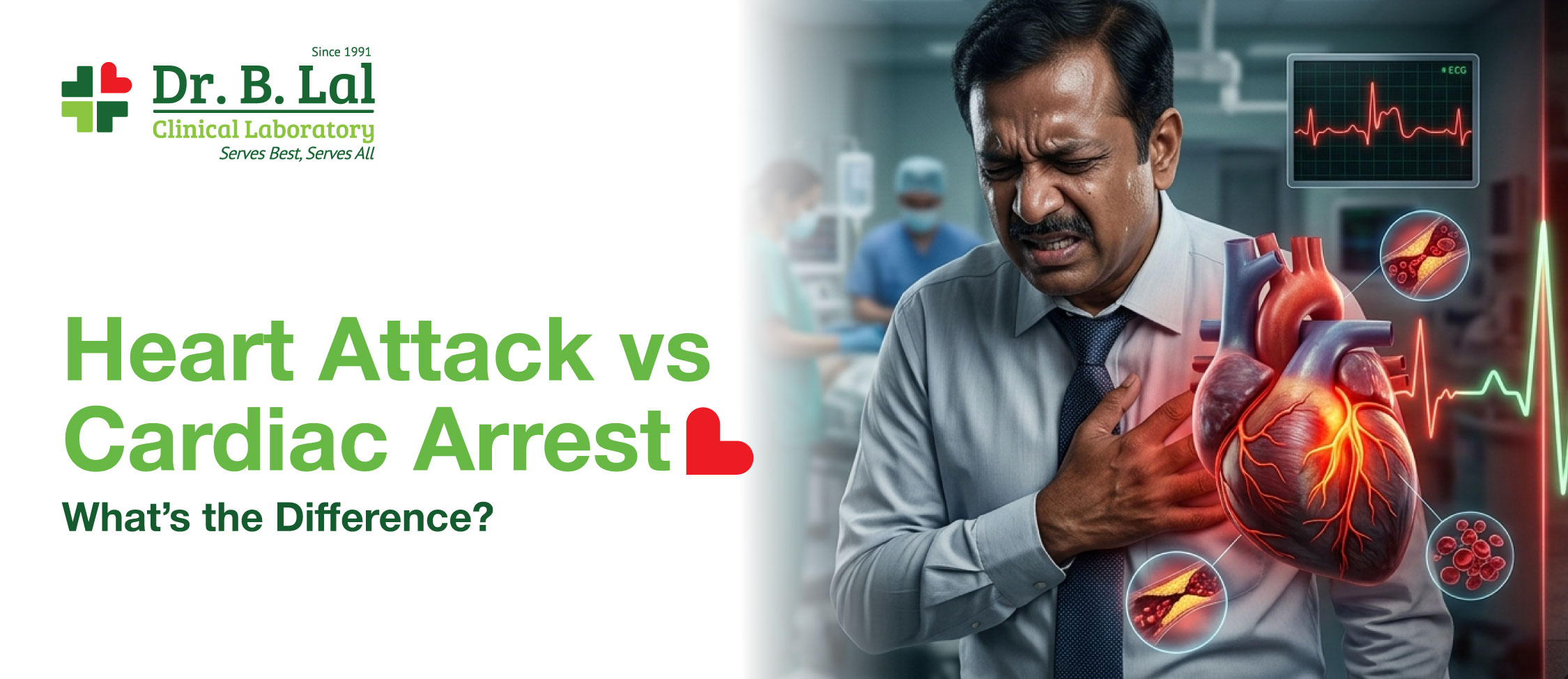
When someone suddenly collapses or experiences severe chest pain, many people immediately assume it's a heart attack. While heart attacks and cardiac arrests are both serious medical emergencies involving the heart, they are not the same condition.
Being aware of the distinction between a heart attack and cardiac arrest will help you spot the early signs, receive proper care, and in turn, save a life. However, the problem is that many people confuse these terms, resulting in an inability to handle the situation properly.
In this article, we will analyze the main differences between heart attack and cardiac arrest and look at their causes, symptoms, possible treatments, and instances where it’s necessary to call for professional medical help.
In this article, we break down the key differences between heart attack and cardiac arrest in simple terms, discuss their symptoms, causes, treatment options, and explain when you should seek emergency medical help.
Heart Attack vs Cardiac Arrest: The Core Difference in One Line
- A heart attack is a circulation problem. Cardiac arrest is an electrical problem.
That single distinction is the foundation of everything else. Now let's go deeper.
What Is a Heart Attack?
A heart attack, medically called a myocardial infarction (MI), occurs when blood flow to a section of the heart is blocked. Think of it as a "plumbing" failure in your heart's supply system.
When a fatty deposit (plaque) ruptures or a blood clot forms in one of the coronary arteries, it cuts off the oxygen-rich blood that your heart muscle depends on. The longer this blockage goes untreated, the more heart tissue begins to die — which is why the phrase "time is muscle" is so commonly used in cardiology.
Crucially, during a heart attack, the heart usually keeps beating. The person remains conscious. This gives a critical window for intervention if symptoms are recognized early.
Common Causes of a Heart Attack:
- Build-up of cholesterol and fatty deposits
- Blood clots in the coronary arteries
- Severe arterial spasm restricting blood flow
- High blood pressure damaging arterial walls over time
- Diabetes and obesity accelerating plaque formation
What Is Cardiac Arrest?
Cardiac arrest, also called sudden cardiac arrest (SCA), is an "electrical" failure of the heart. The electrical signals that coordinate the heart's pumping rhythm go haywire, causing the heart to either stop beating entirely or beat so chaotically that it cannot pump blood effectively.
When this happens, blood flow to the brain, lungs, and other vital organs stops almost immediately. A person in cardiac arrest will lose consciousness within seconds and can suffer brain damage or death within minutes without intervention.
Unlike a heart attack, cardiac arrest often strikes without any prior warning. There may be no chest pain, no slow build-up — just a sudden collapse.
Symptoms: How to Tell Them Apart
This is where recognizing the difference becomes life-saving knowledge.
Heart Attack Warning Signs
Heart attack symptoms can range from mild to severe, and may build over hours, days, or even weeks. Many people, particularly women, experience subtle symptoms they dismiss as something less serious.
Common symptoms include:
- Chest discomfort — a feeling of pressure, squeezing, fullness, or pain that may come and go
- Pain radiating to the arm, neck, jaw, shoulder, or back — especially on the left side
- Shortness of breath — even without chest pain
- Cold sweats, nausea, or vomiting — more commonly seen in women
- Unusual fatigue or lightheadedness
- Feeling of impending doom
An important note: it is possible to have a heart attack with mild or even no symptoms. This is sometimes called a "silent heart attack," which is more common in people with diabetes.
Cardiac Arrest Warning Signs
Cardiac arrest symptoms typically start without warning, though some patients do experience early signs hours or days before the event:
Immediate signs during an episode:
- Sudden loss of consciousness — the person collapses
- No pulse — the heart has stopped pumping
- No normal breathing — they stop breathing or gasp for air
- Unresponsiveness — they cannot be woken up
Possible warning signs before cardiac arrest (not always present):
- Chest pain or palpitations
- Dizziness or fainting episodes
- Shortness of breath
- Extreme fatigue
Research from Cedars-Sinai has found that early warning symptoms may differ by sex: women are more likely to experience shortness of breath, while men more commonly report chest pain in the days before cardiac arrest.
Can a Heart Attack Cause Cardiac Arrest?
Yes — and this is where the two conditions intersect dangerously.
A heart attack can damage the heart's electrical system, which then triggers cardiac arrest. In other words, a heart attack can lead to cardiac arrest, but they are not the same event. Similarly, other heart conditions like arrhythmias, cardiomyopathy, or heart failure can also trigger sudden cardiac arrest without a prior heart attack.
However, most heart attacks do not result in cardiac arrest. Recognizing a heart attack early — and getting treatment — significantly reduces the risk of it progressing to something more deadly.
What To Do in Each Emergency
If Someone Is Having a Heart Attack:
- Call Ambulance immediately — do not wait to see if symptoms improve
- Keep the person calm and seated — have them rest in a comfortable position
- Do not let them drive themselves to the hospital
- Note the time symptoms began — this information is critical for doctors
- If available and not contraindicated, aspirin may be given (only under medical advice)
If Someone Is in Cardiac Arrest:
- Call 108 immediately
- Begin CPR (Cardiopulmonary Resuscitation) — push hard and fast on the centre of the chest, at least 100–120 compressions per minute
- Use an AED (Automated External Defibrillator) if one is nearby — these devices are designed for use by bystanders
- Continue CPR until emergency services arrive
Survival rates for cardiac arrest improve dramatically with immediate bystander CPR. Every minute without CPR reduces the chance of survival by 7–10%.
Risk Factors: What Puts You in Danger?
Both conditions share many of the same underlying risk factors, which is why managing your overall cardiovascular health is the most powerful form of prevention.
Key risk factors include:
- High blood pressure
- High cholesterol
- Diabetes
- Smoking and tobacco use
- Obesity
- Sedentary lifestyle
- Family history of heart disease
- Stress and poor sleep
- Prior heart disease
India's cardiovascular burden is driven heavily by these factors, compounded by increasingly sedentary urban lifestyles, rising rates of diabetes, and dietary patterns high in refined carbohydrates and trans fats.
The Role of Diagnostic Testing in Preventing Cardiac Events
This is the critical point that most people overlook: both heart attacks and cardiac arrest are largely preventable when risk factors are identified and managed early.
The vast majority of cardiovascular events don't happen out of nowhere. They develop silently — through years of uncontrolled blood pressure, elevated cholesterol, creeping blood sugar, and lifestyle factors that gradually damage the heart and blood vessels.
Routine diagnostic testing is the earliest warning system available to you.
Key Cardiac & Preventive Blood Tests
Lipid Profile (Cholesterol Panel) Tests - total cholesterol levels, LDL (low-density lipoprotein), HDL (high-density lipoprotein), and triglyceride levels. High levels of LDL and triglycerides are responsible for most heart attacks, which are caused by arterial plaque buildup. People older than 30 years should perform this test annually.
Blood Glucose & HbA1c - Untreated diabetes can be a potent multiplies for cardiac risks. HbA1c reflects the blood glucose level over the past three months, thereby helping to diagnose pre-diabetes or poorly managed diabetes before causing heart damage.
Cardiac Risk Markers — hsCRP (High-Sensitivity C-Reactive Protein) Heart disease is characterized by inflammation. High levels of hsCRP are predictors for heart problems in the future. This occurs even when a person has normal levels of cholesterol.
Complete Blood Count (CBC) - It detects anemia and other problems within the blood that place more strain on the heart.
Kidney Function Tests (KFT) & Thyroid Profile - Kidney problems and thyroid disorders increase the risk of heart disease and are frequently undetected conditions.
Blood Pressure Monitoring The silent killer, high blood pressure, causes harm to the body but produces no symptoms. It is important to monitor and test for any potential organ damage.
When Should You Get Tested?
You don't need to wait for symptoms to get a cardiac risk profile done. In fact, that's precisely the wrong approach — because by the time symptoms appear, significant damage may already have occurred.
Get tested if you:
- Are over 30 years of age
- Have a family history of heart disease, diabetes, or hypertension
- Are overweight or living a sedentary lifestyle
- Smoke or consume alcohol regularly
- Have been experiencing unusual fatigue, breathlessness, or palpitations
- Have not had a health checkup in the past year
The Bottom Line
Heart attack and cardiac arrest are different emergencies, with one being a blockage and the other a failure of the electrical circuitry of the heart. They are both very serious emergencies, have similar underlying causes, but they can both be much easier managed if recognized early on.
India is now experiencing a cardiac emergency situation, but that does not have to be the case. With proper diagnostic testing and knowledge about living habits, along with utilizing expert laboratories, the problem can definitely be lessened.