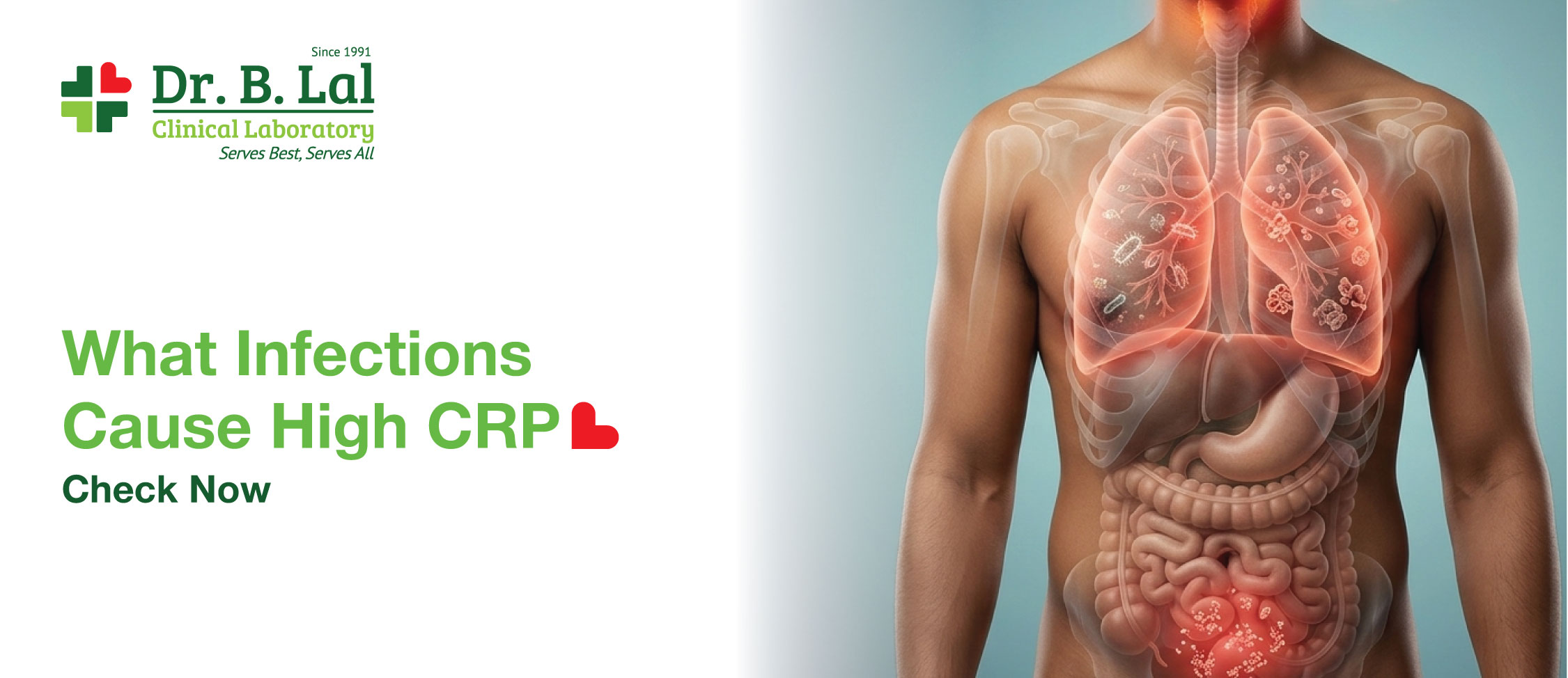
If your blood test shows high CRP (C-Reactive Protein), it usually means your body is fighting some kind of inflammation — and infections are one of the most common reasons behind it.
CRP itself is not a disease, but a marker that something is going wrong inside the body.
What is CRP and Why It Rises?
CRP is a protein made by the liver. Its level increases when there is:
- Infection
- Inflammation
- Tissue damage
It can rise within hours after infection starts, which makes it a very useful early indicator.
But one thing to remember — higher CRP doesn’t always mean more dangerous, it just means more inflammation is present.
Types of Infections That Cause High CRP
1. Bacterial Infections
Bacterial infections are the main reason for very high CRP levels.
Common examples:
- Pneumonia
- Tuberculosis (TB)
- Urinary tract infections (UTI)
- Sepsis
In such cases, CRP can rise very sharply, sometimes going above 100 mg/L. That’s why doctors often suspect bacterial infection when CRP is very high.
2. Viral Infections
Viral infections also increase CRP, but usually mild to moderate levels.
Examples include:
- Flu
- COVID-19
- Dengue
In some severe viral infections, CRP can increase more than expected, so it’s not always low.
3. Fungal Infections
Fungal infections are less common, but they can cause long-lasting CRP elevation.
Seen mostly in:
- People with weak immunity
- ICU or hospitalized patients
CRP may not spike suddenly, but it stays high for longer duration.
4. Parasitic Infections
Certain parasitic infections also raise CRP.
Examples:
- Malaria
- Amoebiasis
CRP levels here can vary — sometimes moderate, sometimes higher depending on severity.
Can CRP Be High Without Infection?
Yes, and this is where many people get confused.
CRP can also increase in:
- Autoimmune diseases
- Heart-related conditions
- Injury or trauma
- Chronic inflammation
So high CRP does not always mean infection, but infection is one of the most common causes.
When Should You Take It Seriously?
You should not ignore high CRP if:
- You have fever or weakness
- CRP levels are very high
- Symptoms are getting worse
- CRP is not reducing over time
Doctors usually recommend more tests to find the exact cause.
Final Thoughts
High CRP is like a warning signal from your body. It doesn’t tell the exact problem, but it tells something is not right.
Infections — whether bacterial, viral, fungal, or parasitic — are major reasons behind it, but proper diagnosis is always needed.
So instead of guessing, it’s better to get tested and consult a doctor on time, because early detection can make treatment much easier.