Getting a health checkup is a great step toward taking care of your body. Whether your reports are completely normal or show a few areas that need attention, the next step is equally important—making healthy lifestyle changes.
Many people undergo regular health checkups, obtain their reports, but end up forgetting about them. Your report is important because it shows you the state of your body and the changes that will help you avoid any health challenges in the future.
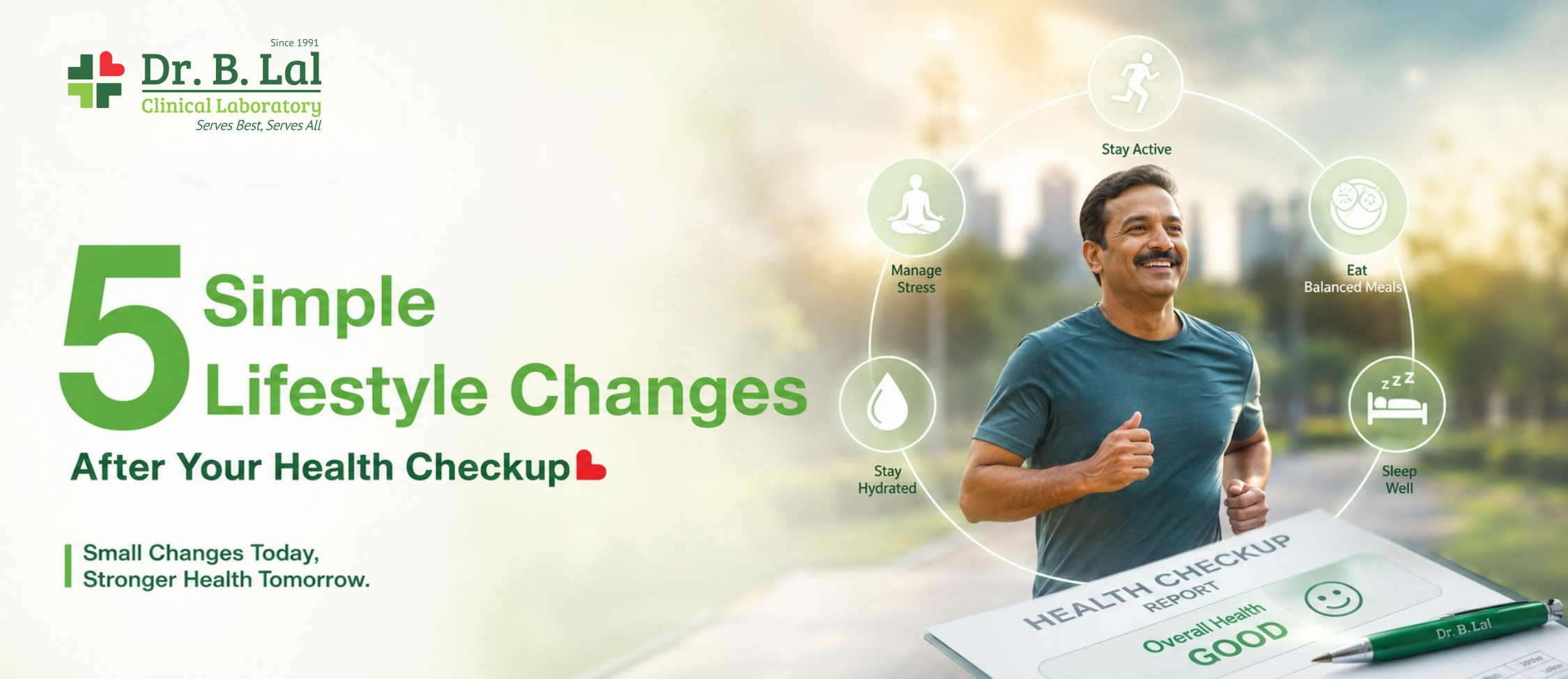
The great thing is that no major changes are required for improving your health; rather, small and consistent actions will bring a significant impact on your health status. Below are five changes you can adopt after undergoing your health checkup.
1. Improve Your Diet and Eat Mindfully
One of the most important suggestions that a doctor will make after a health screening test is dietary changes. In case there is an identification of high cholesterol, high blood sugar, fatty liver, and vitamin deficiencies, then this can be changed through improved dietary changes.
What you can do:
- Eat fruits and vegetables.
- Choose whole grains.
- Eat lean proteins such as fish, eggs, lentils, and beans.
- Reduce sugary drinks and processed food.
- Limit excess salt and unhealthy fats.
Healthy eating does not mean giving up your favorite foods completely. Instead, focus on balance and portion control.
2. Stay Physically Active Every Day
Physical activities are among the simplest ways of staying healthy. Being physically active will ensure that you keep your body weight, improve the functioning of the heart, reduce blood sugar levels, and have more energy.
It is recommended by healthcare experts that adults should get about 150 minutes of physical activity in a week.
Easy ways to stay active:
- Take a 30-minute brisk walk daily.
- Use stairs instead of elevators.
- Do yoga or stretching exercises.
- play outdoor sports.
- Avoid sitting continuously for long hours.
Even small amounts of daily movement can improve your overall health and reduce the risk of chronic diseases.
3. Get Enough Sleep and Manage Stress
Several physical ailments are associated with lack of sleep and stress. Not getting enough sleep can cause high blood pressure, weak immunity system, diabetes, and psychological disorders.
Chronic stress, which is not controlled, can cause heart conditions, anxiety, and indigestion.
Some stress-management methods:
- Sleeping 7 to 9 hours per night.
- Keeping your sleeping schedule consistent.
- Meditating and practicing deep breathing.
- Spending time with your loved ones.
- Avoiding use of electronic devices before bed time.
Your mind needs to be healthy in order for your body to be healthy. Stress management is equally important as eating healthy food.
4. Drink More Water and Avoid Harmful Habits
Hydration is required for efficient digestion, proper functioning of kidneys, and general body performance. Nonetheless, most individuals do not take adequate amounts of water on a daily basis.
On the other hand, smoking, alcohol abuse, and consumption of sweetened drinks may pose health risks to you.
Healthy habits to adopt:
- Drink 2–3 liters of water daily.
- Reduce soft drinks and packaged juices.
- Avoid smoking.
- Limit alcohol intake.
Choose healthier beverages like coconut water, buttermilk, or fresh lemon water.
These simple change can significantly improve your energy levels.
5. Follow Up on Your Health Reports and Stay Consistent
Health screening is important and gives you an insight into your present health condition, however, it is not a single-time process.
If you find any problems such as:
- High Cholesterol
- Pre-diabetic
- Hypertension
- Vitamin D or B12 deficiency
- Diseases in liver or kidneys
Your doctor would recommend you for further testing to see if everything is okay. Following medical suggestions and remaining consistent while taking medicines or changing lifestyles could avoid many troubles.
Remember:
- Undergo health screening regularly.
- Schedule regular health checkups.
- Take medicines prescribed by your physician regularly.
Monitor weight and other level of blood pressure and sugar in the blood.
Consult your doctor if symptoms worsen.
Why Lifestyle Changes Matter After a Health Checkup
A health checkup is not just about identifying diseases—it is about preventing them. Many conditions, such as diabetes, hypertension, obesity, and heart disease, develop slowly and often show no symptoms in the early stages.
By adopting healthy habits after your health checkup, you can:
- Improve your overall quality of life.
- Reduce the risk of chronic diseases.
- Maintain healthy cholesterol and blood sugar levels.
- Increase energy and productivity.
- Support long-term physical and mental well-being
Final Thoughts
Your health assessment is not merely about numbers; it’s your chance to do something good for yourself. You don’t have to change everything about yourself overnight. Begin by making some minor adjustments, such as eating better, exercising, having a good sleep, hydrating yourself, and following your doctor’s recommendations.
The most important thing is to be consistent, not perfect. Minor changes in your lifestyle now can result in a healthy and happy future.