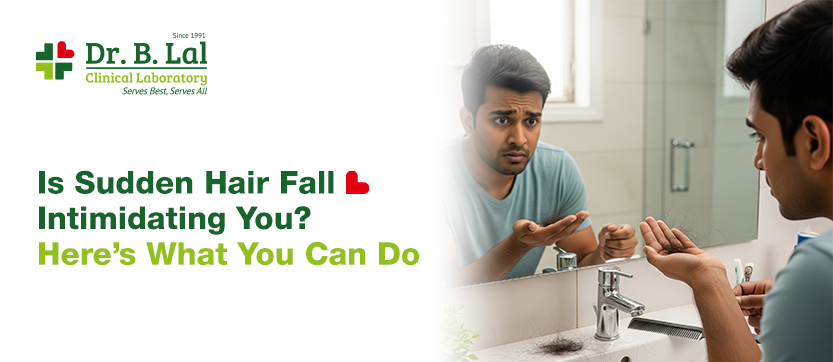
Sudden hair loss can be a frightening shock when it happens all of a sudden personally, and usually causes concern for what might be going on and how you might stop it. If you've ever looked in the shower or noticed on your pillow that too much hair fell out instead of each day, you're not alone. When sudden hair loss occurs, understanding why it happens, what you can do, and different treatment options can help restore confidence in your hair.
For comprehensive diagnostic testing to identify the root causes of sudden hair loss, visit DBCL - your trusted pathology partner.
What Causes Sudden Hair Fall?
There are a multitude of possibilities for sudden hair fall driven by both physiological and these reasons could be a combination of health, lifestyle and environmental issues. Here are some of the reasons associated with sudden hair loss:
Hormonal Changes
Hormonal disturbances from pregnancy, childbirth, menopause or polycystic ovary syndrome (PCOS) can affect the growth cycle of hair.
we offer comprehensive hormone panels to diagnose hormonal imbalances affecting hair health.
Medical Conditions
Certain medical conditions including, thyroid abnormalities, certain auto-immune conditions including alopecia areata, or infections can become causes combined with other stresses leading to abrupt shedding of hair.
Medications and Treatments
Some medications can create side effects that are solely on men and women. Drugs and medications that are being used to treat cancer (chemotherapy), arthritis, or hormonal treatments may lead to hair fallout.
Nutritional Deficiencies
Nutritional deficiencies, such as shortages of iron, protein, vitamin d, or shortage of B complex vitamins, can negatively impact hair follicle health and cause sudden shedding hair.
Stress and Trauma
Other factors that have a physiological impact include stress and trauma. Both emotional and physical stresses and trauma may significantly lead to a disturbance in the hair growth cycle, which may lead to sudden hair loss as telogen effluvium, or the resting phase is premature and thus the roots can release the hair and thus this hair is gone or shed within a day of washing your hair.
Hair Care Practices
Of course, if a person is using excessive heat or tight pony tails, braids and buns or chemical treatments may release hair during the washing process. In terms of using and having good hair care practices that will generally be cause, but some people simply are not aware of the use of such treatments.
Understanding these reasons for sudden hair loss is an important step to taking care of the situation.
Sudden Hair Loss: What to Do?
When you notice sudden hair loss, act quickly and purposefully by:
Don't Panic
Sudden hair loss is usually reversible when treated, and the hair loss is usually temporary.
Look at Your Lifestyle
Are there any changes in your diet, stress, hair care, medication, or health you need to consider?
Consult a Health Provider
Consult with a dermatologist or trichologist who can assess and diagnose your hair loss and suggest treatment.
Be Gentle on Your Hair
Use quality mild shampoos, avoid heat and tight hairstyles, and use a gentle touch when brushing your hair.
Eat Well
Make sure you are getting adequate vitamins, minerals and proteins for hair growth.
How to Stop Sudden Hair Fall: Treatments and Remedies
There are many solutions a professional can offer for sudden hair loss that vary, depending on the cause:
Medical Options
Depending on the cause such as auto-immune or hormonal, treatments may be prescription medications like corticosteroids for inflammation or hormone treatments to stabilize a hormonal imbalance.
Minoxidil
It is a topical solution that may stimulate hair growth. There are many types of hair loss that Minoxidil can be effective!
Low Level Laser Therapy (LLLT)
LLLT is a non-invasive and non-contact treatment that improves health and vitality in hair follicle function and will stimulate hair growth.
Mesotherapy
Mesotherapy is a treatment option where substances (such as vitamins, minerals, plant extracts, hormones, etc.) are injected into the scalp to feed the hair follicles and improve health.
Hair Transplant
If the hair follicles are incapable of producing hair, this treatment option could provide a permanent solution.
Consulting with a medical professional for follow-up hair loss treatment options, in conjunction with recommendations for lifestyle modifications, will prove most effective!
Start your hair loss journey with proper diagnostic testing at Dr. B. Lal Lab - Book your test online or call for home collection.
Home Remedies for Sudden Hair Fall
Individuals who prefer natural treatment options or would like to support medical treatment options with additional home treatment options, here are some suggestions if you are dealing with sudden hair loss:
Aloe Vera
When applied to the scalp, aloe vera supports inflammation associated with itching, while also strengthening the hair.
Onion Juice
Onion juice is high in sulfur, which aids in stimulating hair growth. Onion juice can also support blood flow; this may support hair loss and promote growth.
Coconut Oil
One of the benefits of coconut oil is that it moisturizes the scalp and hair strands preventing breakage.
Fenugreek Seeds
Fenugreek seeds soaked and used as a paste help to nourish the roots of the hair.
Green Tea
Green tea has great antioxidants that may assist in reducing hair loss.
Home treatment options may not treat medical problems leading to hair loss; however, they are safe and may assist in supporting the health of hair!
Conclusion:
Experiencing sudden hair loss can be scary, but when you understand why it's happening, do something about it, and choose an appropriate treatment for sudden hair loss from a variety of options – medical or lifestyle changes, or even home remedies for sudden hair loss – it is possible to have your hair healthy again. Just remember, your hair health is often a reflection of your health as a whole. So, take care of both your body and your mind for the best possible outcomes.
FAQs About Sudden Hair Fall
Q: Is sudden hair loss irreversible?
A: More often than not, no, especially if the hair fall occurs due to stress, nutritional deficiencies, or hormonal fluctuations. If the underlying cause of the hair loss is addressed, it should resume normal (and complete) growth.
Identify the underlying cause with accurate diagnostic testing at Dr. B. Lal Lab.
Q: Once I've experienced a sudden loss of hair, how long will it be until I begin to see regrowth?
A: There is no "one size fits all" approach for the regrowth of hair. In general, if the cause is addressed, you will likely see hair regrow within one to several months. Full regrowth may take six months to one year.
Q: Can diet really help with my hair loss?
A: Yes. A well-balanced diet with adequate iron, protein, vitamin D and Vitamin B complex nourishes and strengthens your hair follicles, supports and overall health of your hair.
Check your nutritional levels with comprehensive vitamin and mineral testing at DBCL
Q: When should I consult a doctor regarding my experience with sudden hair loss?
A: If hair loss starts very rapidly, is patchy, has accompanying symptoms (itchiness, pain to the scalp), or simply does not improve with basic hair care, please speak with your healthcare provider.
Get diagnostic tests done before your doctor consultation at Dr. B. Lal Lab to help your physician make an accurate diagnosis.
Q: Can I have possible side effects from hair loss treatment options?
A: Yes, some treatments (such as minoxidil or corticosteroids), have possible side effects. You should always use treatments with doctor supervision and adhere to treatment direction.
Contact Dr. B. Lal Lab today for:
- Comprehensive hair loss diagnostic panels
- Home collection services
- Online report access
- Expert consultation support
- Affordable and accurate testing
Call +91-9166125555 or visit our website to book your hair loss diagnostic tests today.
Related Services: Home Collection | Online Reports | Health Packages